Desert west, mountains east
The flat Ustyurt Plateau spreads across the west and the Kyzylkum Desert across the centre. The Tien Shan and Gissar-Alai ranges rise in the east and southeast.
Source: FAO, Irrigation in Central Asia
World Geography Atlas › Asia › Central Asia
O'zbekiston
The heart of the Silk Road · Samarkand and the Registan.
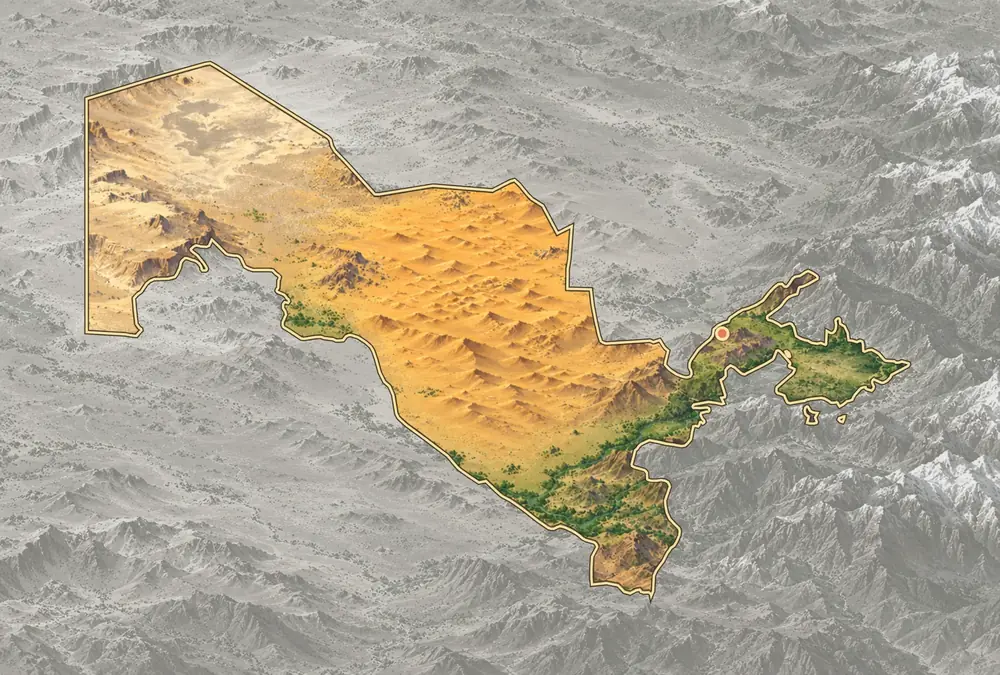
Uzbekistan has no sea. Wide deserts cover the west, and tall mountains rise in the east. Towns and farms gather where rivers flow.
Uzbekistan is landlocked. The Ustyurt Plateau in the west, the Kyzylkum Desert in the centre, the Tien Shan ranges and the Fergana Valley in the east, and the Amu Darya and Syr Darya rivers shape life here.
The flat Ustyurt Plateau spreads across the west and the Kyzylkum Desert across the centre. The Tien Shan and Gissar-Alai ranges rise in the east and southeast.
Source: FAO, Irrigation in Central Asia
The Fergana Valley is a lowland between the eastern mountains. Fields and towns have grown around canals fed by mountain rivers. The capital, Tashkent, lies on the plain west of the mountains.
Source: FAO, Irrigation in Central Asia
The Amu Darya and Syr Darya carry meltwater from distant mountain snow and glaciers. The Kyzylkum Desert lies between them, with green oasis strips along their banks.
Source: NASA Earth Observatory, World of Change: Shrinking Aral Sea · FAO, Irrigation in Central Asia
The Aral Sea in the northwest was once the fourth-largest lake in the world. Since the 1960s, heavy use of river water for farming has made it shrink dramatically, and its exposed bed has turned to desert.
Source: NASA Earth Observatory, World of Change: Shrinking Aral Sea
The Ustyurt in the west and the Amu Darya basin in the southwest hold thick layers of sedimentary rock laid down long ago under seas and lakes. That record lies beneath today’s desert.
Source: USGS, Amu-Darya Basin Province
Water from the mountains cuts valleys and drops sediment in low places. On the dry plains, wind blows the sand and moves the dunes.
Source: FAO, Irrigation in Central Asia
A city, a heritage site, nature, a plant, culture, food, an animal, a greeting and the flag of Uzbekistan, each drawn as pixel art.
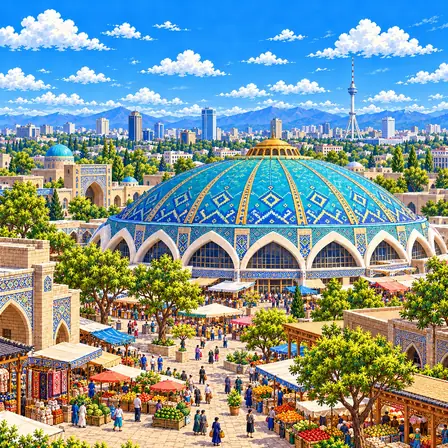
Tashkent is the capital of Uzbekistan. Chorsu Bazaar sits under a huge blue dome. Fruit, bread and spices are sold there.
Tashkent, Uzbekistan’s capital, combines old markets with broad streets and parks. Beneath Chorsu Bazaar’s large blue dome, traders sell fruit, spices and bread. The city has a long trading history, and many areas were rebuilt after the major earthquake of 1966. The Tashkent Television Tower, rising in the distance, is the tallest tower in Central Asia.
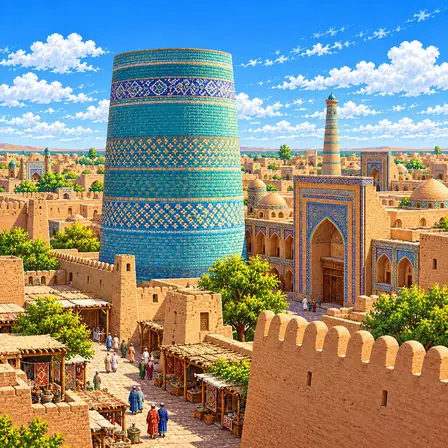
Itchan Kala is an old city inside earth-colored walls. Long ago, traveling traders stopped to rest there. A short, chubby blue tower called Kalta Minor stands out.
Itchan Kala is the historic inner city within Khiva’s walls. An important stop on Central Asian trade routes, it preserves mosques, madrasas, palaces and minarets. The broad, short blue cylinder is Kalta Minor, whose construction was left unfinished. The slender Islam Khoja minaret rises farther behind it. Itchan Kala was inscribed on the UNESCO World Heritage List in 1990.
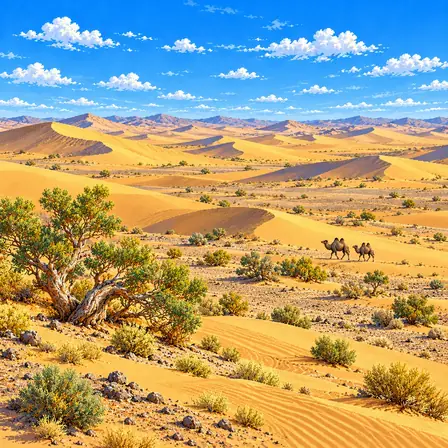
The Kyzylkum is a wide desert whose name means "red sand." Small shrubs grow here and there on its dunes and gravel. Villages and fields sit near the rivers.
The Kyzylkum is a broad desert between the Amu Darya and Syr Darya rivers, extending through Uzbekistan and neighboring countries. Its name means “red sand,” but its dry landscapes include dunes, gravel plains and scattered shrubs. Farmland and oasis settlements developed where river water could be used.
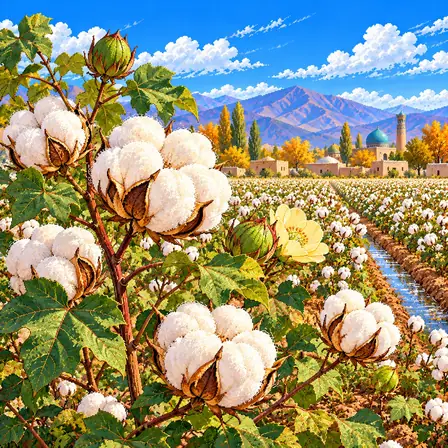
Cotton is a plant that grows fluffy white balls. The fluff is not petals but fibers wrapped around the seeds. It is spun into thread to make cloth.
The white part of cotton is seed fibre rather than flower petals. After flowering, a rounded boll develops; when it ripens and opens, the fluffy fibres are exposed. Cotton has long been important to Uzbekistan’s agriculture and textile traditions. Growing crops in a dry climate also makes irrigation and careful water management important.
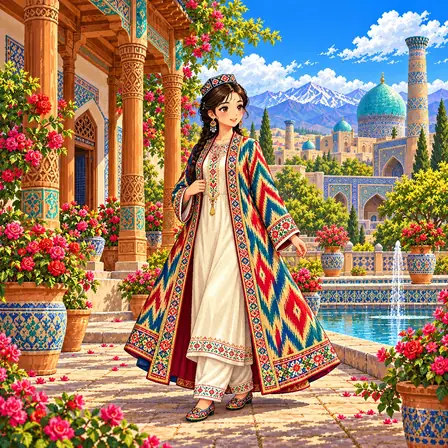
The chapan is a long, roomy coat worn over other clothes. The doppi is a square cap with embroidery. They are worn together on holidays and at weddings.
A chapan is a long, loose traditional outer coat. Its fabric, lining, quilting and embroidery vary with season and use. Some are made from ikat cloth, whose pattern is created by dyeing threads before weaving. The doppi is a traditional cap with shapes and embroidery that vary by region. Chapans and doppi can also be seen at celebrations such as holidays and weddings.
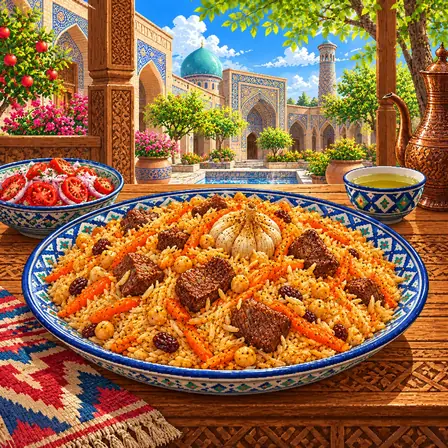
Plov is meat, carrots and rice cooked together in a big pot. It is shared at weddings and parties. People in Uzbekistan love it.
Plov, also called palov, is an Uzbek rice dish. Meat, carrots and onions are cooked in a pot called a kazan before rice is added to bring the flavors together. Garlic, chickpeas or raisins may be included, depending on the region and recipe. Beyond family meals, palov is associated with sharing food at weddings and community gatherings. Its culture and tradition were inscribed on UNESCO’s Representative List of the Intangible Cultural Heritage of Humanity in 2016.
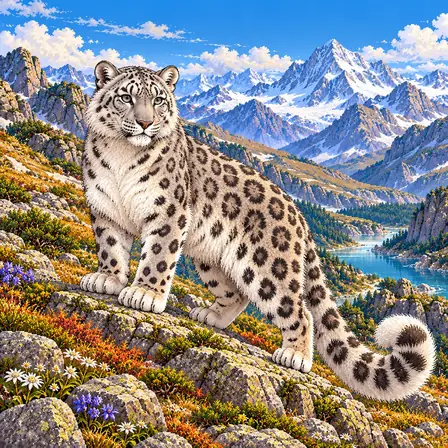
The snow leopard is a wild cat that lives high in the mountains. The pattern on its gray fur helps it hide among rocks. Its long, thick tail helps it balance on steep cliffs.
Snow leopards inhabit high mountains in Central and South Asia, including mountain areas of eastern Uzbekistan. Dark rosettes on grey fur help them blend into rocks and shadows. Their long tails aid balance on steep terrain, while thick fur and broad paws are adaptations to cold conditions. Habitat changes, reduced prey and poaching threaten these cats, making protection across national borders important.
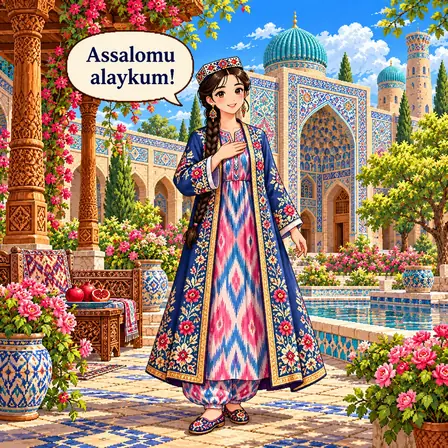
Assalomu alaykum means "peace be with you." People in Uzbekistan say it when they meet. The reply is "Va alaykum assalom."
Assalomu alaykum means “peace be upon you.” This greeting of Arabic origin is also used in Uzbek. One reply is “Va alaykum assalom,” wishing peace in return. Uzbek belongs to the Turkic language family. The official script of Uzbek is the Latin alphabet, though the Cyrillic alphabet is still used alongside it.
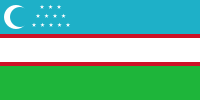
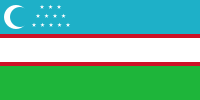
Uzbekistan's flag has three stripes: blue, white and green. In the top left are a white crescent moon and 12 stars. The 12 stars are said to stand for the 12 months of the year.
Uzbekistan's flag is made of three level stripes - blue, white, and green - with two thin red lines between them. In the upper left are a white crescent moon and 12 stars. Officially, blue stands for the sky and water, white for peace, and green for nature. The 12 stars are said to mean the twelve months of the year. It was adopted as the new flag when the country became independent in 1991.
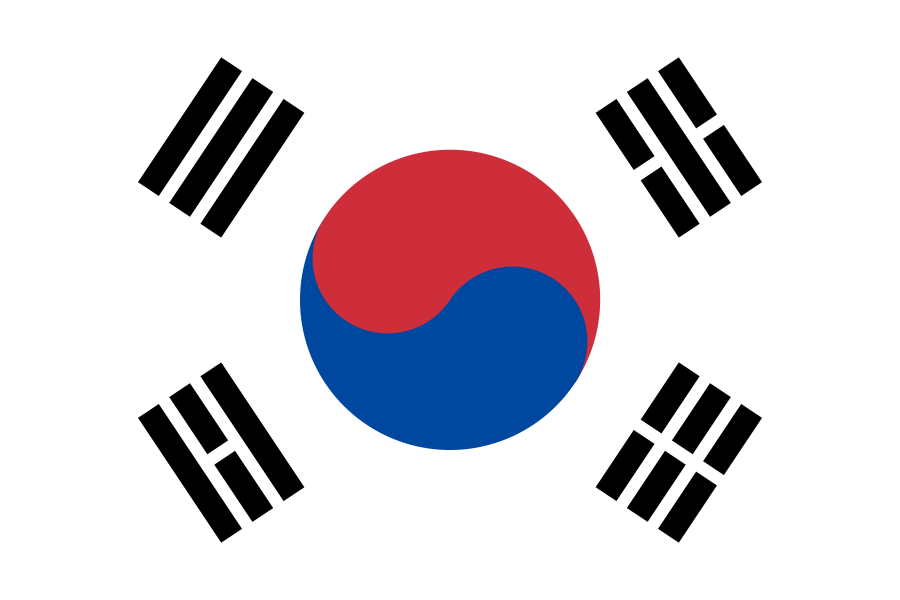 South Korea
K-pop, taekwondo, and kimchi · an East Asian peninsula country that invented its own alphabet, Hangul.
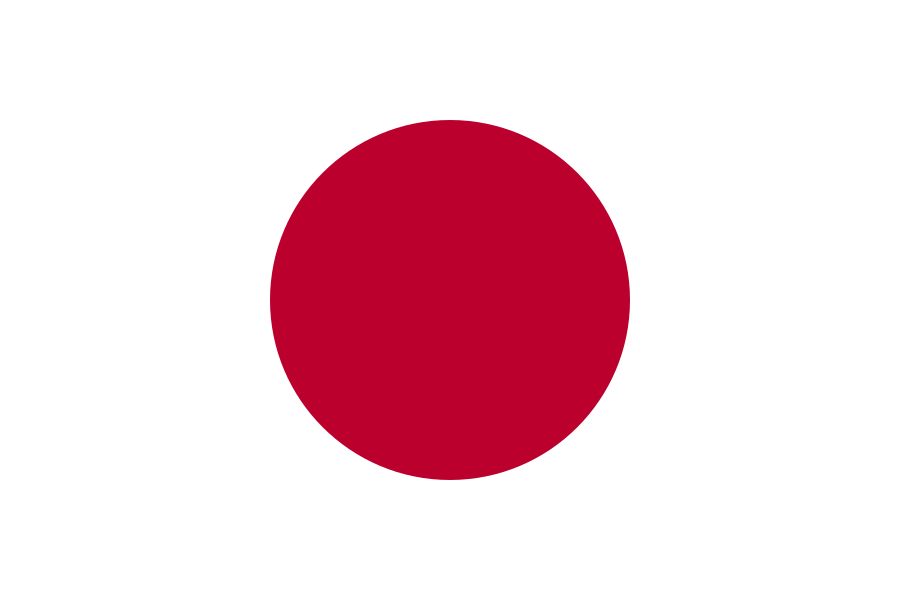 Japan
An island country · sushi and Mount Fuji.
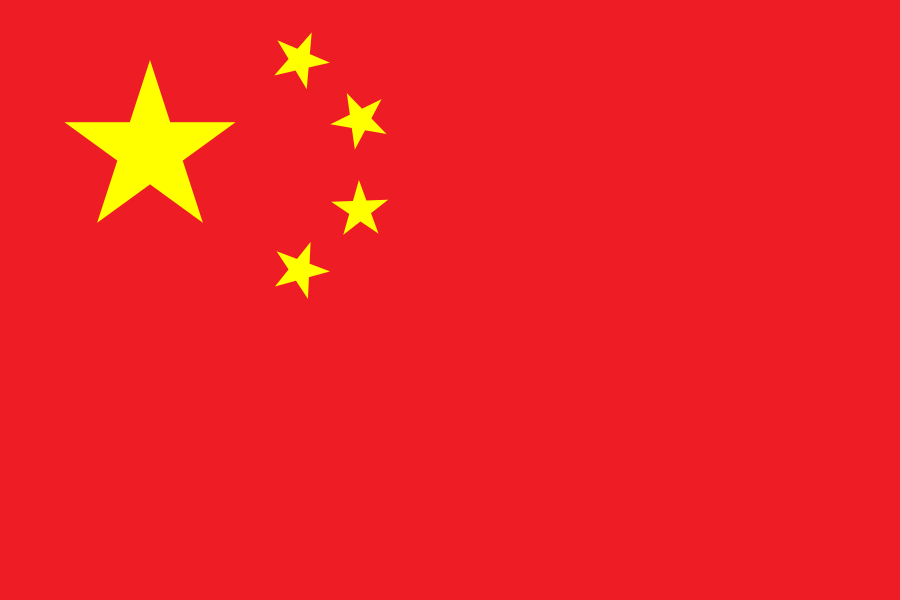 China
One of the most populous countries in the world · the Great Wall.
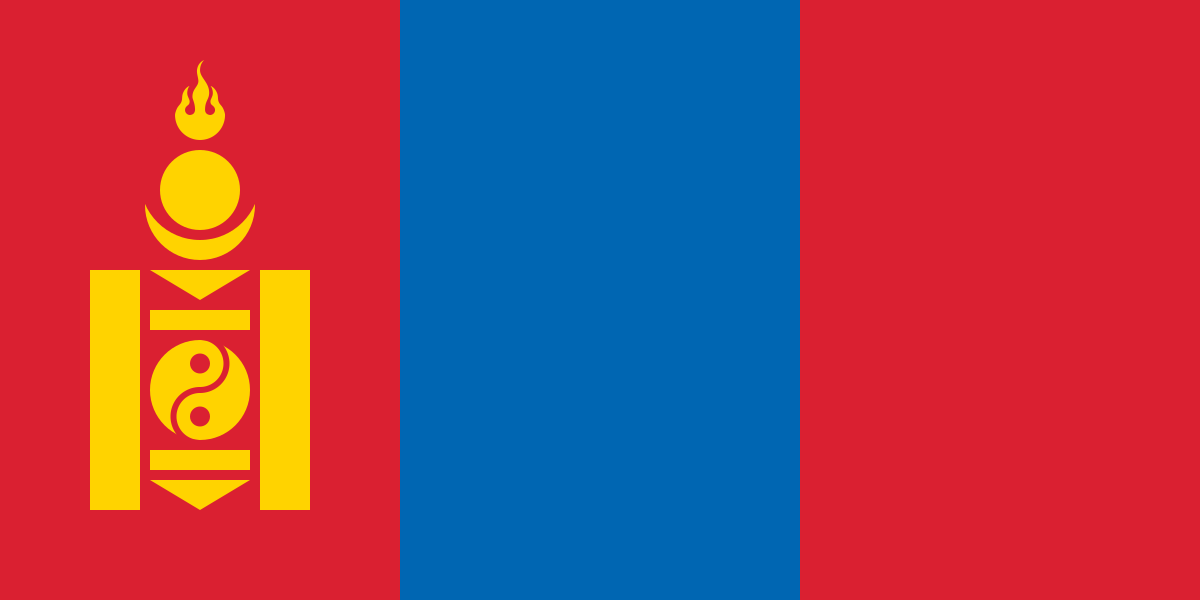 Mongolia
A land of grasslands and nomads · life in a ger.
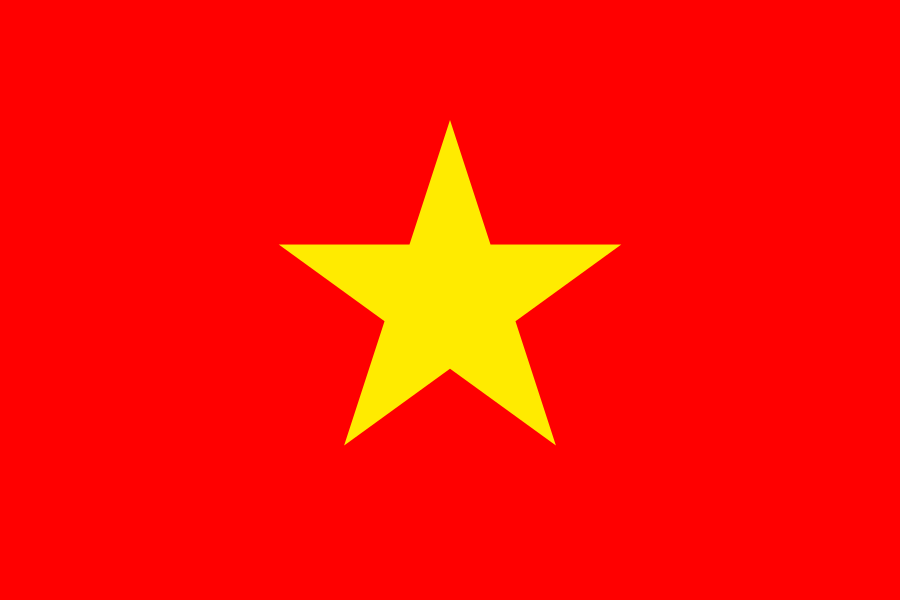 Vietnam
An S-shaped country · pho noodles and the ao dai.
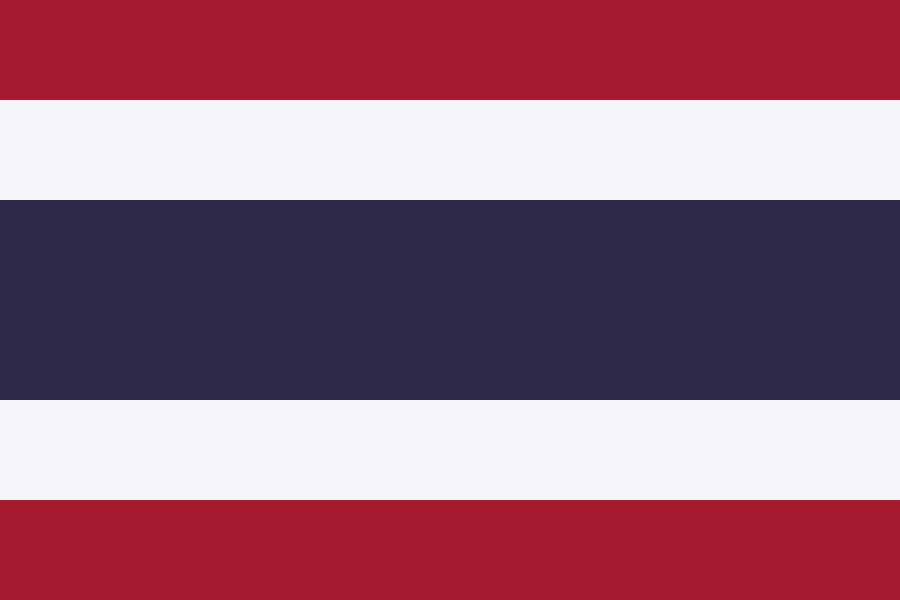 Thailand
The land of smiles · elephants and temples.
 Indonesia
One of the countries with the most islands in the world · Bali.
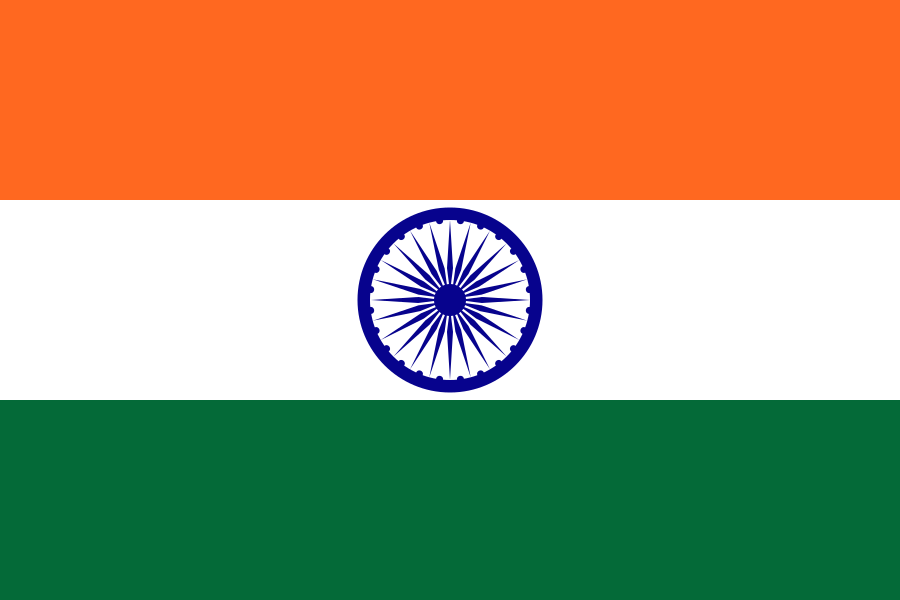 India
The land of the Taj Mahal and curry.
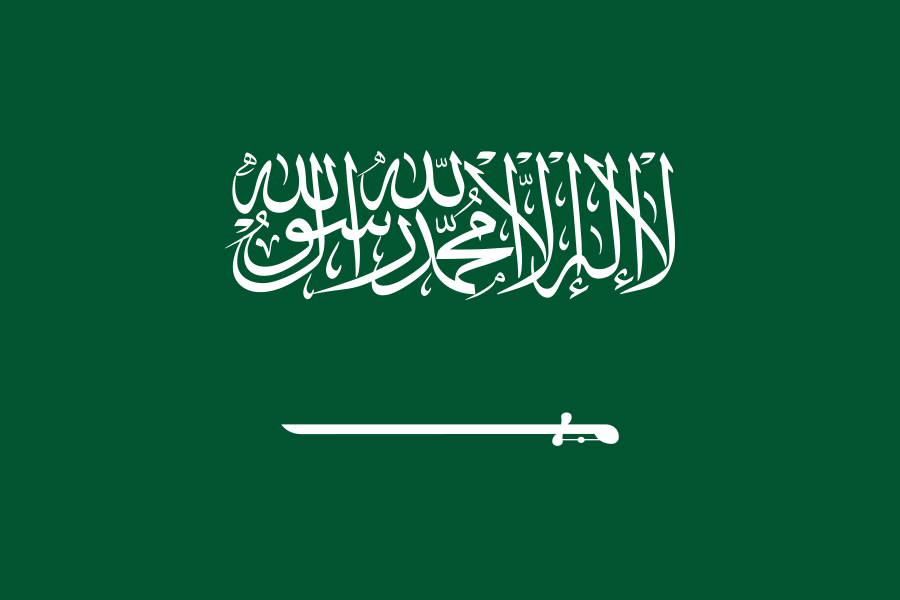 Saudi Arabia
A country of wide deserts and oases · camels.