World Geography Atlas › South America › South America

Peru

Perú

The land of the Inca civilization · Machu Picchu.

Capital LimaPopulation About 34 millionArea 1,285,216 km²Language Spanish
Map

Reading the land

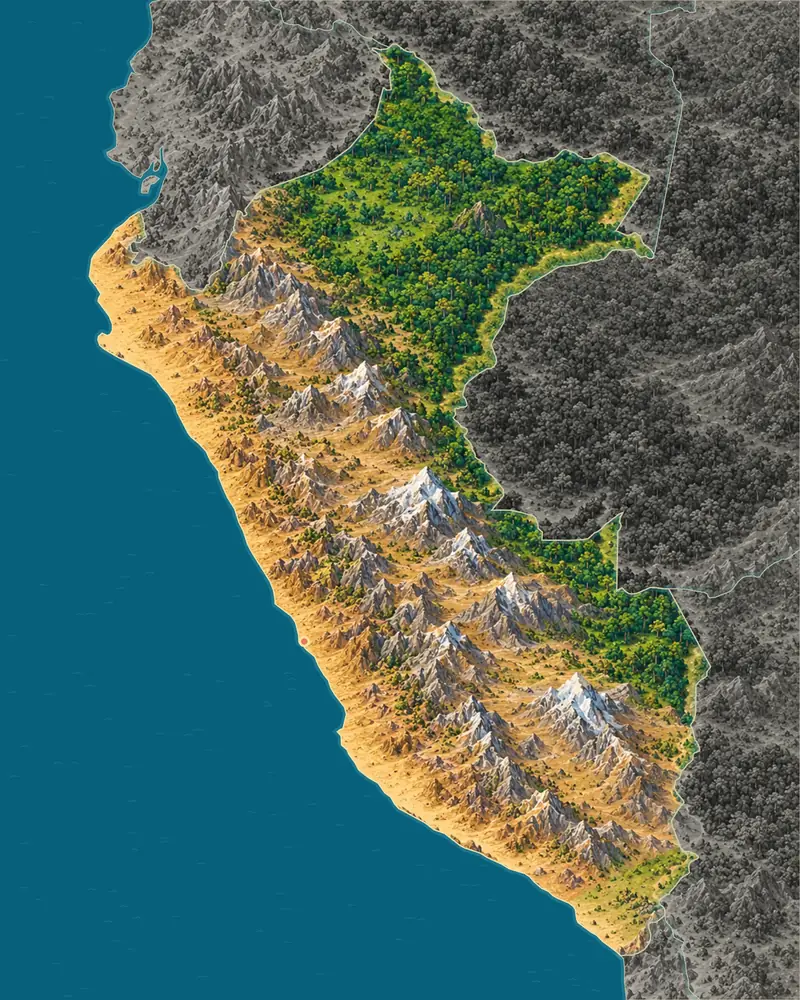
Illustrated map of Peru
Illustrated map: yenalab. Country outlines: Natural Earth (public domain).

Peru has three parts: a sandy desert by the sea, the high Andes in the middle and tropical forest in the east. The Andes have many tall, snowy peaks.

Peru is divided into three regions: the coast (Costa), the Andean highlands (Sierra) and the Amazon jungle (Selva). The Andes hold forty snow-covered peaks over 6,000 m.

Terrain

A land in three strips

Peru covers about 1.28 million km², with three regions lying side by side from north to south: the coast, the Andean highlands and the Amazon jungle. Each differs sharply in height and climate.

Source: Library of Congress Country Studies, Peru: Geography

The highest tropical range

The Cordillera Blanca in the Andes is the highest mountain range in the tropics. It has 27 peaks over 6,000 m, and the highest, Huascarán, is 6,768 m.

Source: UNESCO, Huascarán National Park

Seas & rivers

Geology

Tropical glaciers and glacial lakes

Although it lies near the equator, the high peaks of the Cordillera Blanca carry many glaciers. Deep valleys carved by the ice now hold lakes of meltwater.

Source: UNESCO, Huascarán National Park

Collection

Peru Collection

A city, a heritage site, nature, a plant, culture, food, an animal, a greeting and the flag of Peru, each drawn as pixel art.

Lima
City

Lima

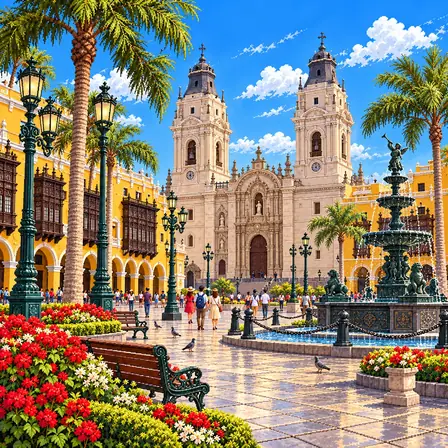
Lima is the capital of Peru. It is built on a desert by the sea, so it almost never rains. It is famous for delicious food.

Lima is the capital of Peru, where about 10 million people live in the metropolitan area. It was founded in 1535 by the Spanish, and because it had better access to a port than the Inca capital Cusco, it became the administrative center of South America. It is a desert city that gets only about 10 mm of rain a year. Its historic district was listed as a UNESCO World Cultural Heritage site in 1988, and it is counted as one of the world's food capitals.

Nazca Lines
Heritage

Nazca Lines

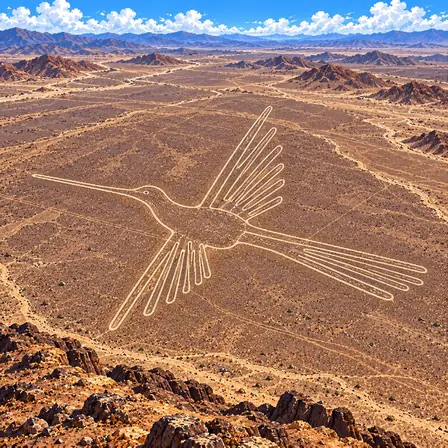
The Nazca Lines are giant drawings on the desert ground. Animal shapes like a hummingbird and a monkey can be seen from the sky. Why they were made is still a mystery.

The Nazca Lines are giant ground drawings carved into the desert of southern Peru between 500 BCE and 500 CE. They were made by removing the red stones on the surface to reveal the lighter ground below. There are more than 70 animal shapes - like a hummingbird (96 m), a monkey (93 m), and a condor (130 m) - and more than 800 straight lines and triangles. Thanks to the very dry climate they have lasted 2,000 years, and why they were made is still a mystery.

Amazon Rainforest
Nature

Amazon Rainforest

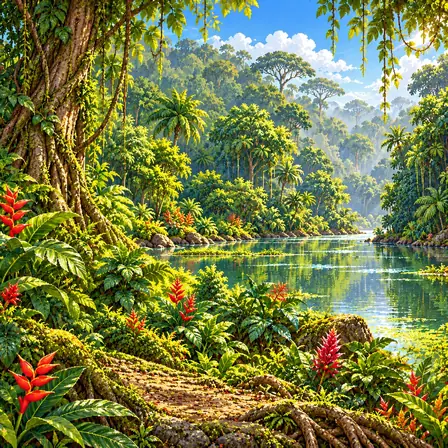
Peru's Amazon rainforest covers more than half of the country. Countless birds, monkeys and trees live there. One city there can be reached only by boat or plane.

Peru's Amazon Rainforest is a vast ecosystem covering 60% of the country. It boasts the highest biodiversity in the world, home to many primate, bird, and plant species found only in Peru. More than 50 Indigenous tribes live in this forest. Iquitos, with no road links, is the largest city in the world that can be reached only by boat or plane.

Cantuta
Plants

Cantuta

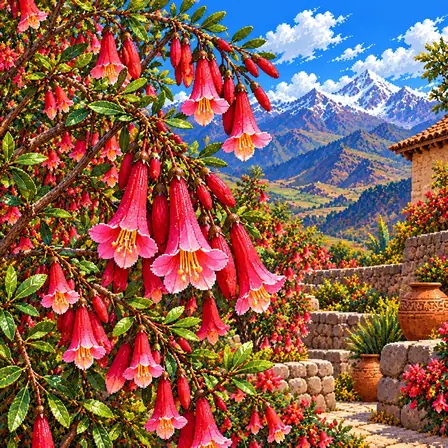
The cantuta is a flowering shrub that grows high in the mountains. Its bell-shaped flowers hang downward. The Inca thought it was sacred.

The cantuta is a flowering tree that stands for Peru's high Andes. It has been held sacred since the days of the Inca Empire and is still used in traditional Andean festivals and ceremonies in Cusco. Its pink, red, and purple bell-shaped flowers are special for blooming facing downward. It can also be seen well around Lake Titicaca, in the border area of Peru and Bolivia.

Poncho & Traditional Dress
Culture

Poncho & Traditional Dress

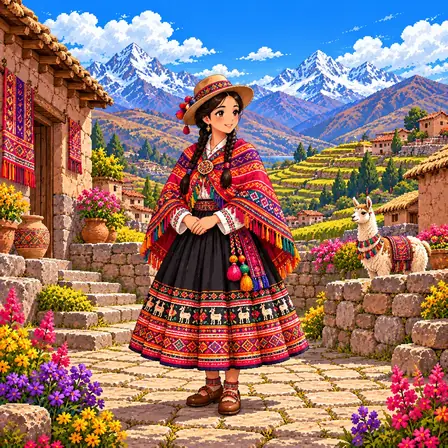
A poncho is a cloak you put on through a hole in the middle of the cloth. It keeps out the cold mountain wind. Each village has its own colors and patterns.

The poncho is a traditional Andean cloak worn by putting the head through a hole in the middle of the cloth and draping it over the shoulders. It keeps off the cold wind of the highlands, 3,000 to 4,000 m up. Cloth woven from alpaca wool is light and warm, and each village has its own colors and patterns, so you can tell which village someone is from. The weaving skill carried on since Inca times is passed from mother to daughter. It is worn with a brimmed traditional hat, and you can see it at Sunday markets and festivals.

Ceviche
Food

Ceviche

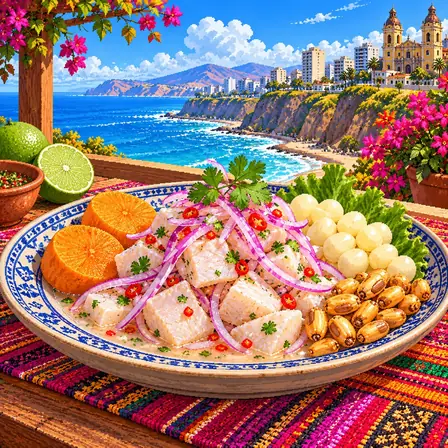
Ceviche is raw fish soaked in lime juice. Without any heat, the lime juice turns the fish white like it was cooked. It is served with sweet potato and big-kernel corn.

Ceviche is Peru's best-known dish, made by curing raw fish in lime juice. Without any fire, the sour part of the lime cooks the fish white. Fresh white fish is cut into cubes and tossed with lime juice, red onion, and chili, finishing in about ten minutes. It is served with sweet potato and large-kernel corn, which gently support its spicy-sour taste. It is a national dish so proud that Peru even set June 28 as the Day of Ceviche to celebrate it.

Llama
Animals

Llama

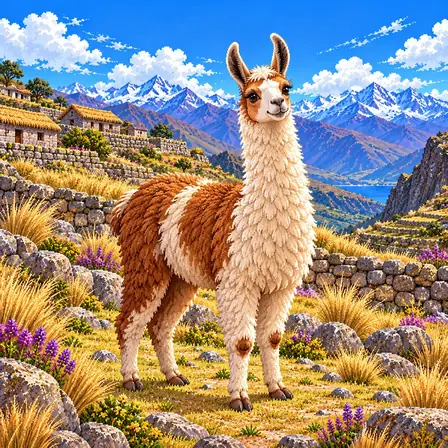
The llama is a relative of the camel but has no hump. It carries heavy loads along high mountain paths. When it is upset, it spits.

The llama belongs to the same family as the camel but has no hump on its back. Andean people tamed wild guanacos into livestock thousands of years ago. It does fine even on highlands 4,000 m up where there is little oxygen, and it walks mountain paths carrying loads of around 30 kg at a time. When it gets angry, it spits from its mouth to make its feelings known. It is still a precious companion in Andean villages, carrying loads and giving wool, and you can meet it around Machu Picchu.

Hola
Greeting

Hola

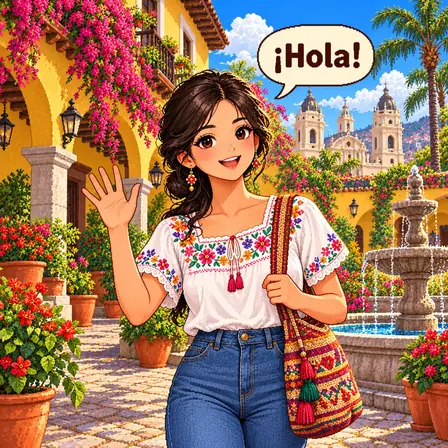
¡Hola! means "hello" in Spanish. In Peru people also speak Quechua, an Indigenous language. The names "puma" and "condor" come from Quechua.

"¡Hola!" is a Spanish greeting, read "OH-lah," and the most widely used in Peru. Along with Spanish, Peru is a country that has also made the Indigenous languages Quechua and Aymara official languages. Quechua is a language that spread across the Andes in Inca times and is still spoken by millions today. In Andean villages, many people speak a mix of Spanish and Quechua. Animal names like "puma" and "condor" are words that spread from Quechua to the world.

Peru's Flag
Flag

Peru's Flag

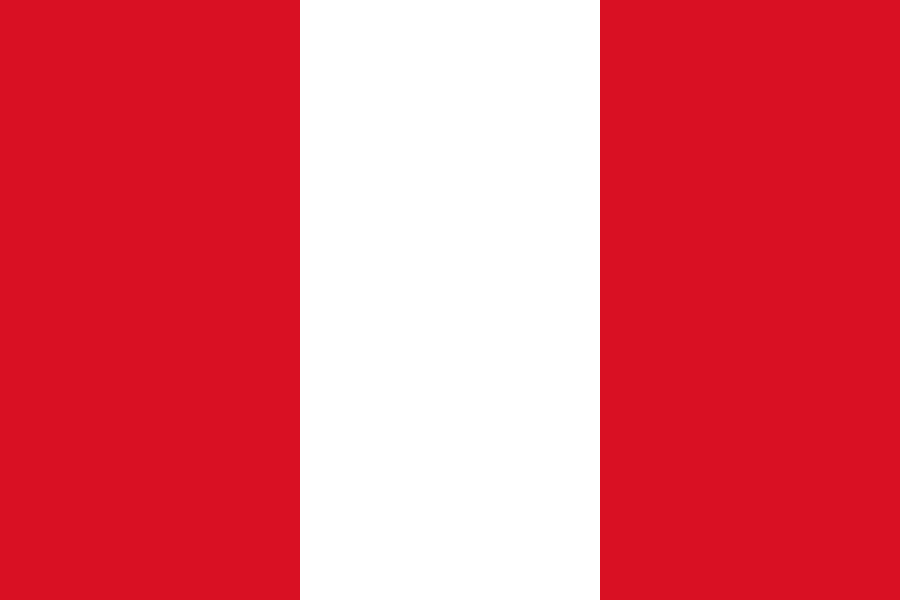
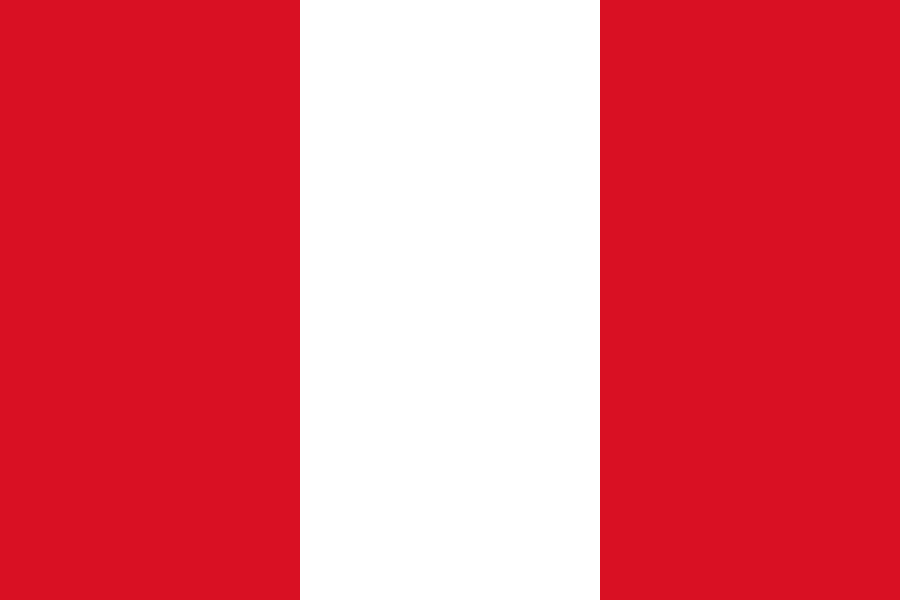
Peru's flag has three stripes: red, white and red. The stripes stand side by side from top to bottom. A story says the colors were chosen after seeing a flock of red and white flamingos.

Peru's flag is made of three upright stripes - red, white, and red. The everyday flag is the plain three colors, and for official state events a flag with a national emblem in the middle is used. The emblem holds Peru's animal the vicuña, the cinchona tree, and a horn of plenty pouring out gold coins. As for choosing red and white, there is a story that it was decided after seeing a flock of red-and-white flamingos. It was set in its present form in 1825.
Sources