World Geography Atlas › Africa › West Africa

Nigeria

Nigeria

Africa's most populous country · talking drums and jollof rice.

Capital AbujaPopulation About 230 millionArea 923,768 km²Language English
Map

Reading the land

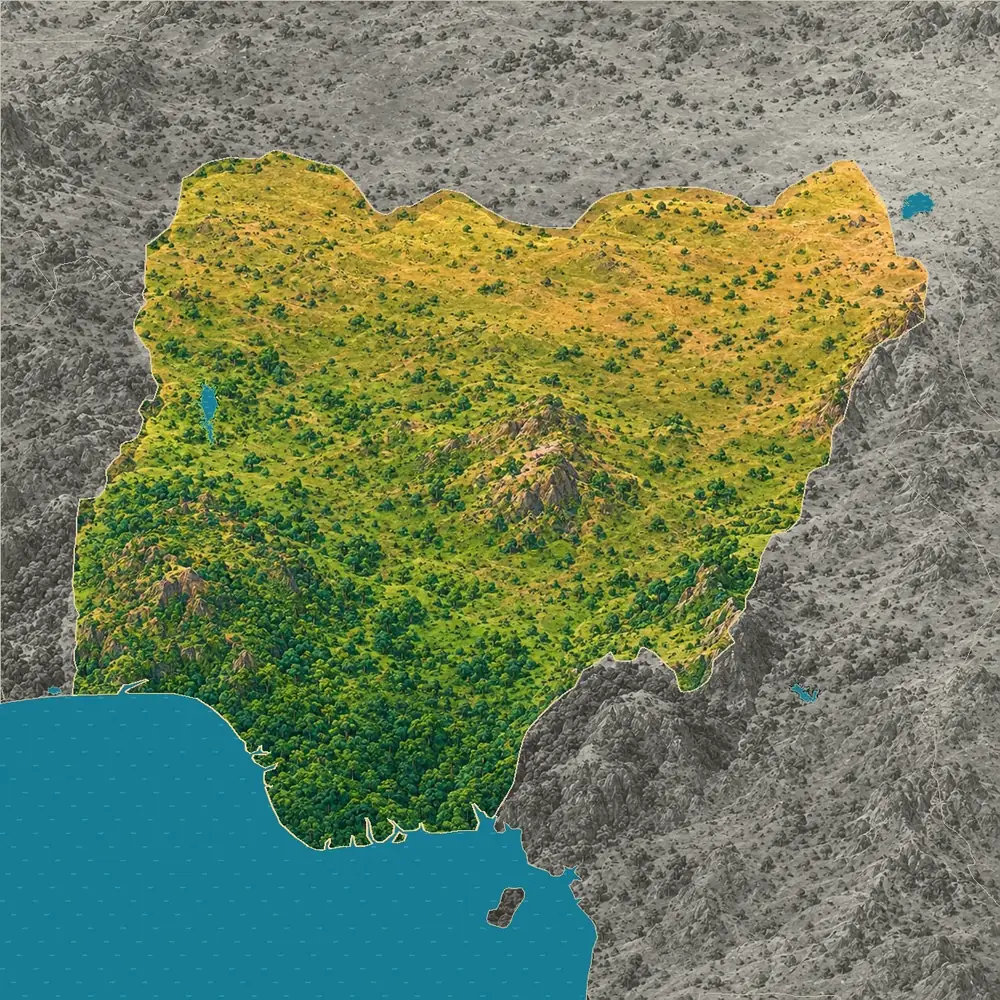
Illustrated map of Nigeria
Illustrated map: yenalab. Country outlines: Natural Earth (public domain).

Northern Nigeria is wide savanna, and the forest grows thicker the farther south you go. On the southern coast lies the Niger Delta, low land built from soil carried by a great river. The high, flat Jos Plateau rises in the middle of the country.

Nigeria changes from dry savanna in the north to tropical forest and the swamps of the Niger Delta in the south. The Jos Plateau rises in the middle, and highlands run along the eastern border with Cameroon.

Terrain

From northern savanna to southern forest

A belt 50 to 250 km wide along the coast holds mangroves, swamp forest and rainforest. Farther north the rain decreases and the dry season grows longer, so the forest turns into savanna with scattered trees, and the far north gets only 250 to 500 mm of rain a year.

Source: FAO, Forest types and vegetation zones of Nigeria

Water & sea

The Niger Delta, built by a river

Where the Niger River meets the sea on the southern coast, the soil it carries has built up the Niger Delta. It covers about 70,000 km², the largest delta in Africa, and holds the biggest freshwater swamp forest in West and Central Africa.

Source: FAO, Le delta du Niger (Nigeria)

Kainji Lake, made by a dam

Kainji Lake in the west was made in 1968 when a dam was built across the Niger River. At its fullest it covers about 1,270 km², and it shrinks noticeably in the dry season as the water is drawn down.

Source: FAO, Kainji Lake, Nigeria

Geology

Ring-shaped granite

The ring-shaped granite of the Jos Plateau formed from magma that rose from deep underground between about 200 and 140 million years ago. The magma rose along round cracks and hardened, and as the softer rock around it wore away, the ring-shaped hills were left standing.

Source: Universidad de Salamanca (Studia Geologica Salmanticensis), The Younger Granite ring complexes of Nigeria · Federal University of Agriculture, Abeokuta, Evaluation of NigeriaSat-1 image for geological mapping of part of Plateau State

A volcanic range on the eastern border

The Mandara Mountains run for about 190 km along the border with Cameroon in the northeast. The range was formed by ancient volcanic activity, and its highest points rise above 1,100 m.

Source: Encyclopaedia Britannica, Mandara Mountains

Collection

Nigeria Collection

A city, a heritage site, nature, a plant, culture, food, an animal, a greeting and the flag of Nigeria, each drawn as pixel art.

Abuja
City

Abuja

Abuja is the capital of Nigeria. It is a city newly planned and built in the middle of the country. Its National Assembly building wears a green dome.

Abuja is the capital of Nigeria, a new city planned and built in the middle of the country. In a country where many peoples and religions live together, land in the center that favored no side was chosen, and building began in the late 1970s. On December 12, 1991, the capital moved here from the coastal city of Lagos. Below Aso Rock, a huge rock on the north side of the city, stand the presidential offices, the Supreme Court and the National Assembly building with its green dome. Wide roads, parks and buildings are laid out according to a plan drawn up in advance.

Osun-Osogbo Sacred Grove
Heritage

Osun-Osogbo Sacred Grove

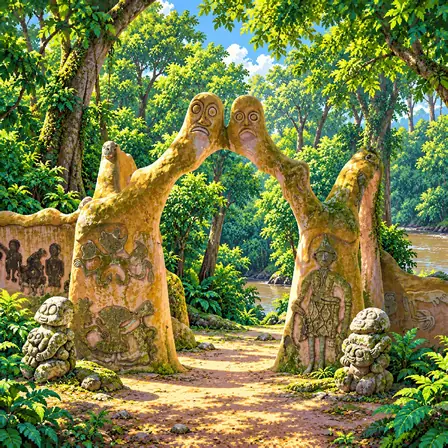
The Osun-Osogbo Sacred Grove is an old forest along a river. Large, unusual sculptures stand all through the forest. A big festival is held by the river every year.

The Osun-Osogbo Sacred Grove is a forest of about 75 ha that stretches along the Osun River at the edge of the city of Osogbo in southwestern Nigeria. The Yoruba people long kept sacred groves around their towns, and this is the last large one of those groves still remaining. In the forest are shrines and altars to Osun, the goddess of the river, and since the mid-20th century the Austrian-born artist Susanne Wenger and local artists have filled it with large, unusual sculptures made of cement, mud and iron. Every August the Osun festival is held, and many people gather by the river. It was inscribed on the UNESCO World Heritage List in 2005.

Zuma Rock
Nature

Zuma Rock

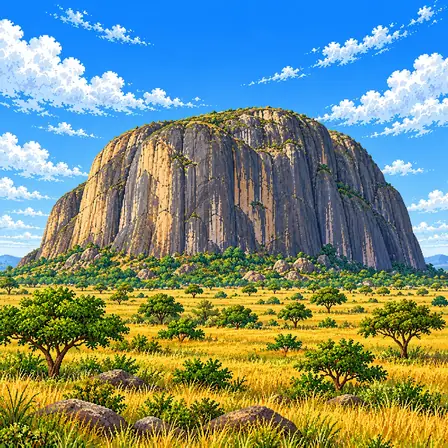
Zuma Rock is a huge rock that stands alone on flat land. The ground around it wore away, and only the hard rock was left. It is even pictured on a Nigerian banknote.

Zuma Rock is a huge rock that stands alone on flat land in Niger State, west of Abuja. Long ago, magma cooled and hardened deep underground into tough rock, gabbro and granodiorite, and over a very long time the softer ground around it wore away until it stood out like an island. A rocky hill left standing alone on a plain like this is called an inselberg, meaning "island mountain." It rises about 300 m above the land around it, and its top is about 725 m above sea level. It is even pictured on Nigeria's 100-naira banknote.

Kola Tree
Plants

Kola Tree

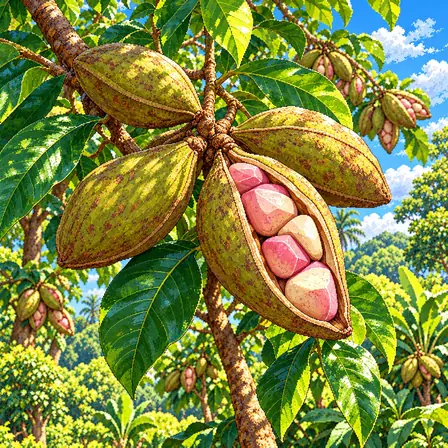
Inside the kola tree's pods are seeds called kola nuts. They taste bitter when you chew them. When guests come, people break kola nuts and share them as a welcome.

The kola tree is an evergreen tree often grown in Nigeria's forests and around its villages. Its home is the tropical forest of West Africa, and it grows up to 18 m tall. Inside its pods, which open out in a star shape, are several pink or white seeds called kola nuts. The seeds contain caffeine, so chewing them tastes bitter and eases hunger and tiredness. In Nigeria, when people welcome guests or hold an important gathering, they break kola nuts and share them to show welcome and respect.

Dùndún (Talking Drum)
Culture

Dùndún (Talking Drum)

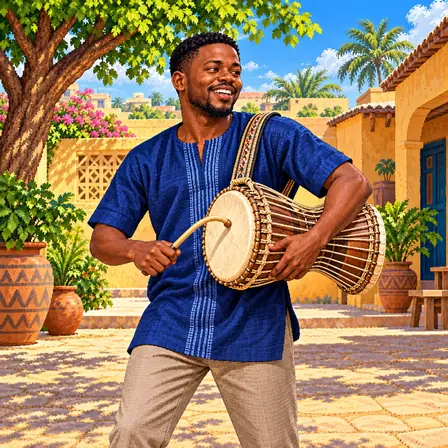
The dùndún is an hourglass-shaped "talking drum." Squeezing and loosening its cords makes the sound go up and down. That rise and fall copies the sound of speech.

The dùndún is an hourglass-shaped "talking drum" played by the Yoruba people of southwestern Nigeria. Many leather cords link its two drumheads, so when the drummer holds it under the arm and squeezes the cords, the heads tighten and the sound rises, and when the cords are loosened the sound falls. Yoruba is a tonal language in which low, middle and high tones change the meaning of words, so the rise and fall of the drum can copy the melody of speech and carry a message. The largest drum, the iya ilu, does the talking, while smaller drums support the rhythm. Even today, at parties and festivals, drummers play people's names and words of praise on the drum.
Jollof Rice
Food

Jollof Rice

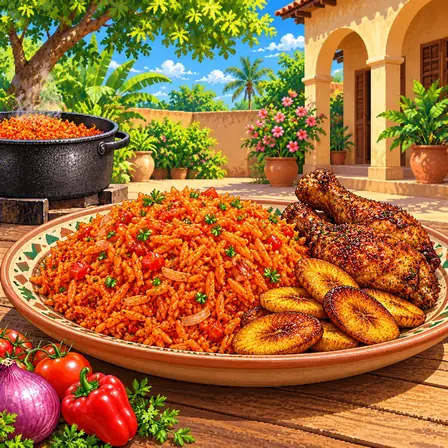
Jollof rice is red rice cooked in tomato and pepper sauce. It is cooked in big pots for parties. People eat it with fried plantains and chicken.

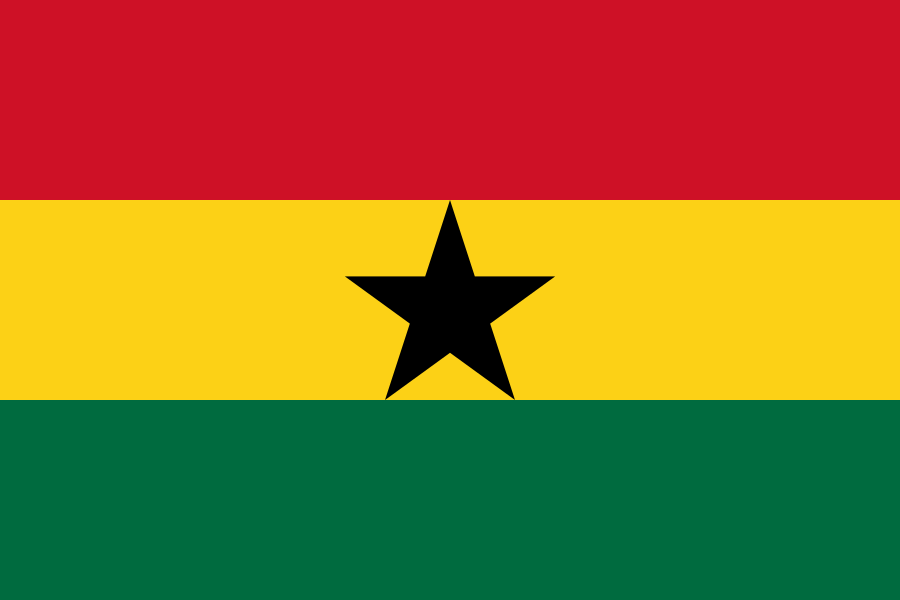
Jollof rice is a West African rice dish in which rice is cooked in a sauce of blended tomatoes, red peppers and onions. Its name is said to come from Jolof, a state of the Wolof people in what is now Senegal. In Nigeria, the sauce is fried in oil for a long time to deepen its flavor before stock and rice are added, and people love the smoky taste that comes from the bottom browning a little. "Party jollof," cooked in big pots for celebrations, is a must at birthdays and weddings. It is served with fried plantains and chicken, and Nigerians even hold friendly contests with neighboring Ghana over whose jollof tastes better.

Cross River Gorilla
Animals

Cross River Gorilla

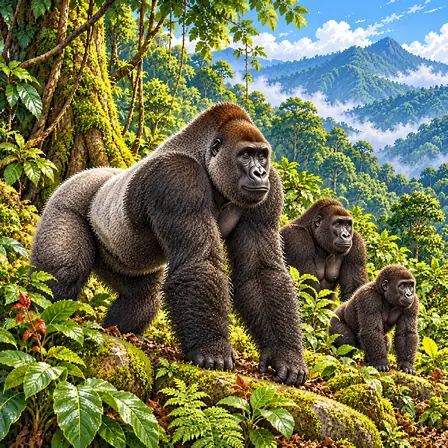
The Cross River gorilla lives in the mountain forests of Nigeria and Cameroon. It is a very rare gorilla, with fewer than 300 left. People protect it by guarding its forests.

The Cross River gorilla is a subspecies of the western gorilla that lives only in the mountain forests on the border of Nigeria and Cameroon. Its large body is covered in dark gray-brown fur, and the fur on the backs of grown males turns silver. It moves in groups through forests on steep slopes, eating fruit, leaves, stems and bark, and every night it makes a fresh bed out of branches and leaves. With only 250-300 left, it is counted as the rarest gorilla and is critically endangered. In Nigeria, people protect it by guarding forests such as the Afi Mountain Wildlife Sanctuary.

Sannu!
Greeting

Sannu!

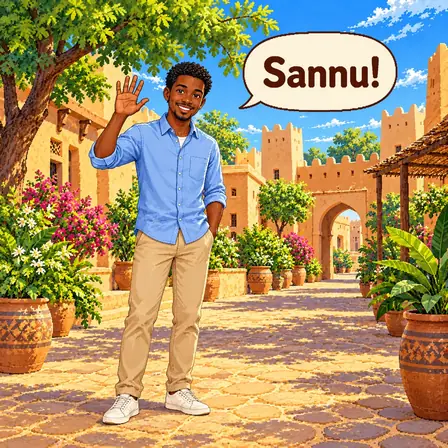
Sannu means "hello" in Hausa. It is widely used in northern Nigeria. Nigeria has more than 500 languages.

Sannu, read "sahn-noo," is a Hausa greeting used widely to mean "hello." When greeting several people, you say Sannunku. Hausa belongs to the Chadic branch of the Afroasiatic family and is a major language spoken by more than 90 million people in West Africa, including northern Nigeria and Niger. Today it is mostly written in the Latin alphabet, but since the 17th century it has also been written in Ajami, an adapted Arabic script. Nigeria has more than 500 languages, and English is the official language shared by speakers of many different languages.

Nigeria's Flag
Flag

Nigeria's Flag

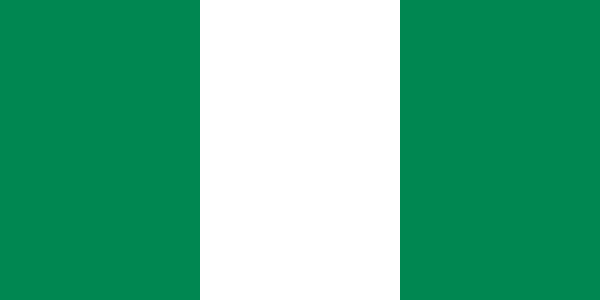
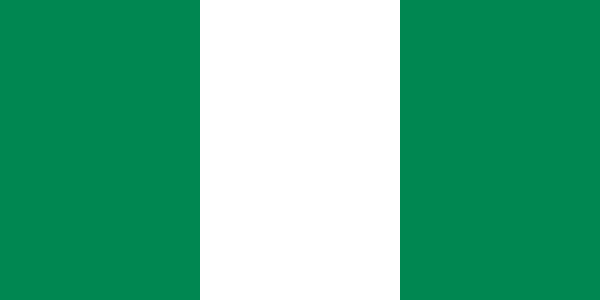
Nigeria's flag has three vertical bands: green, white and green. A student designed it for a contest. It was first raised on the day of independence in 1960.

Nigeria's flag has a simple design of three vertical bands side by side: green, white and green. In 1959 the government held a contest that drew more than 3,000 entries, and the design of Michael Taiwo Akinkunmi, a student studying in Britain, was chosen. Green is said to stand for farming, and white for peace and unity. It was first raised on October 1, 1960, the day Nigeria became independent. Its width is twice its height.

Sources