World Geography Atlas › North America › Central America

Mexico

México

The land of the Maya civilization · tacos and cactuses.

Capital Mexico CityPopulation About 130 millionArea 1,964,375 km²Language Spanish
Map

Reading the land

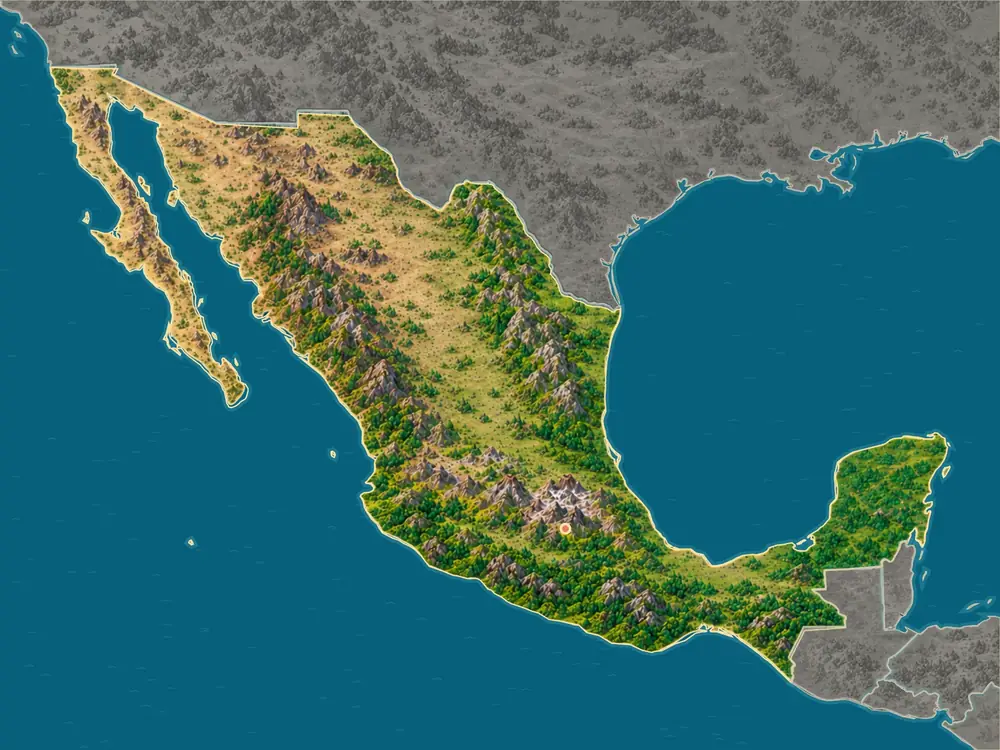
Illustrated map of Mexico
Illustrated map: yenalab. Country outlines: Natural Earth (public domain).

Mexico has a high, wide land between two long mountain ranges. In the south, snowy volcanoes stand in a row. In the west, a long peninsula stretches into the sea.

The middle of Mexico is a high plateau between the eastern and western Sierra Madre ranges. A belt of volcanoes crosses the south, with the Baja California peninsula to the west and the Yucatán peninsula to the east.

Terrain

A plateau between two ranges

The Sierra Madre Occidental in the west and the Sierra Madre Oriental in the east run north to south. The plateau between them averages 1,100 m in the north and 2,000 m in the south, rising southward.

Source: Library of Congress Country Studies, Mexico: Topography

Coasts & islands

Geology

Parícutin, born in a field

In February 1943, a cornfield in the volcanic belt split open and began to puff out smoke and ash. This volcano, Parícutin, erupted for more than nine years and grew nearly 460 m above the original ground.

Source: USGS, Paricutin, the volcano born in a Mexican cornfield

Collection

Mexico Collection

A city, a heritage site, nature, a plant, culture, food, an animal, a greeting and the flag of Mexico, each drawn as pixel art.

Mexico City
City

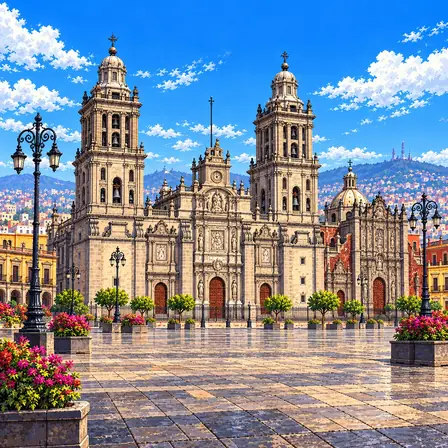
Mexico City

Mexico City is the capital of Mexico. It was built where an old city once stood on an island in a lake. Aztec ruins still lie beneath the ground.

Mexico City is the largest city in North America, with about 22 million people in its greater area. Its forerunner was Tenochtitlan, a water city the Aztecs built on an island in Lake Texcoco in 1325. After the 16th century, the lake was filled in and the present city was built on top of it. In digs, many ruins remain beneath the surface, such as the Aztec great temple (Templo Mayor). Because the ground is filled-in land, the sinking of the city is a serious problem.

Teotihuacan
Heritage

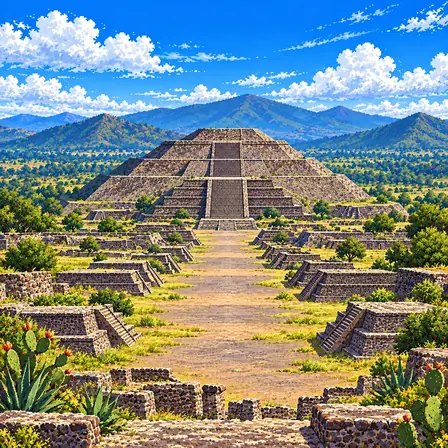
Teotihuacan

Teotihuacan is an ancient city with giant pyramids. About 1,500 years ago it was the biggest city in the Americas. Who built it is still not fully known.

Teotihuacan is the ruins of an ancient city north of Mexico City. It thrived from the 1st to the 7th century CE as one of the largest cities in the Americas, thought to have been home to 100,000 to 200,000 people at its height. Its name means "the place where the gods were created," and temples of the Sun, the Moon, and Quetzalcoatl were arranged along the axis of the Avenue of the Dead. Who built it has still not been fully figured out, so it is a mystery. It became a UNESCO World Cultural Heritage site in 1987.
Cancún & the Caribbean Sea
Nature

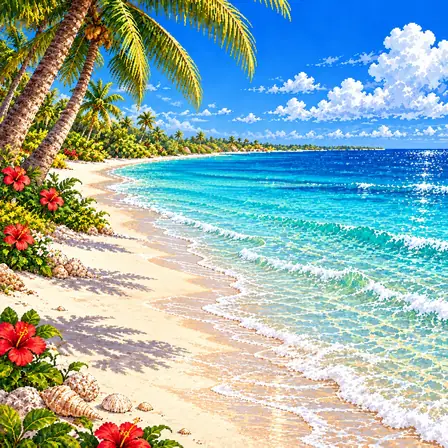
Cancún & the Caribbean Sea

Cancún is a seaside place with emerald water and white sand. A huge coral reef lies in the nearby sea. It used to be a small fishing village.

Cancún is a resort on the Caribbean coast on the east of Mexico's Yucatán Peninsula. It is famous for emerald sea and snow-white sandy beaches, and nearby is the world's second-largest coral reef area (the Mesoamerican Barrier Reef). Before the 1960s it was a small fishing village, then grew quickly through the Mexican government's planned tourism development.

Dahlia
Plants

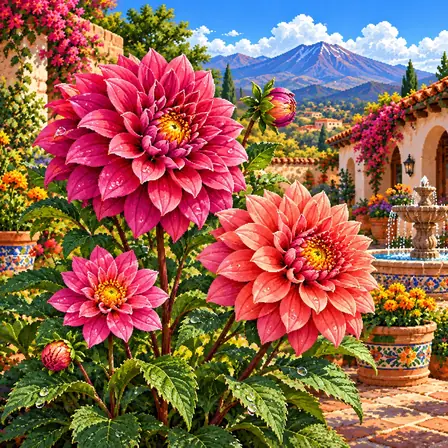
Dahlia

The dahlia first grew in Mexico. Its petals gather in round, many-layered blooms. Dahlias come in many colors and sizes.

The dahlia is native to Mexico and well known there. It has been used as medicine and food since the days of the Aztec civilization, and tens of thousands of varieties have been made today. Its many layers of petals gather in a round bloom, in a great variety of colors and sizes. Carried to Europe through Spain in the 16th century, it enriched garden culture around the world.

Sombrero & Traditional Dress
Culture

Sombrero & Traditional Dress

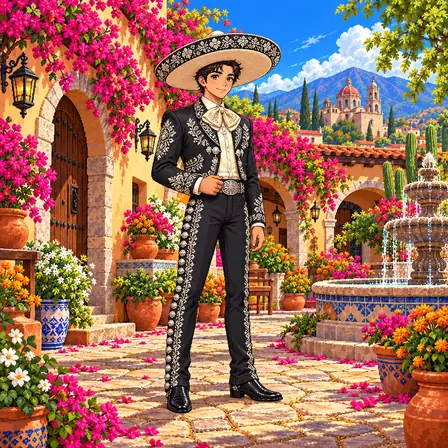
A sombrero is a hat with a very wide brim. Its name comes from the word for "shade." Dancers in flower-embroidered clothes swirl their skirts to music.

The sombrero is a Mexican traditional hat with a very wide brim. Its name comes from the Spanish word sombra, meaning shade, and some have brims more than 50 cm wide to keep off the hot sun. A flower-embroidered blouse and a wide skirt that spreads open when you spin are loved as traditional dance costumes. A dance where the dancer spreads the skirt to the playing of a mariachi band is famous. You can see this outfit on festival streets hung with papel picado, decorations cut from colored paper.

Taco
Food

Taco

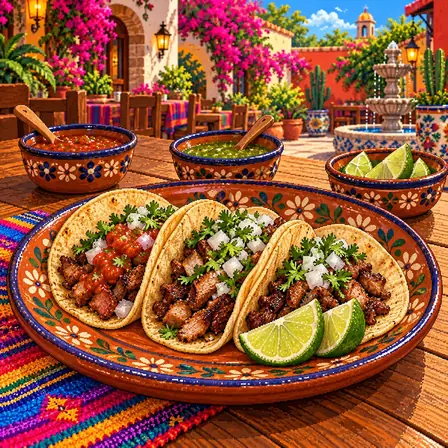
A taco is a thin corn tortilla folded around meat and vegetables. People add onion and cilantro and squeeze lime on top. You can buy tacos on streets everywhere.

The taco is Mexico's best-known food - a round, thin corn flatbread (tortilla) topped with meat and vegetables and folded to eat. The tortilla is made by a thousands-of-years-old method of grinding and baking corn soaked in limewater. Onion and coriander are sprinkled over grilled meat, a salsa of tomato and chili is added, and lime is squeezed on. In Mexico it is a handy food held in one hand and eaten in a few bites, so street taco stalls are everywhere. There are dozens of kinds depending on the filling.

Axolotl
Animals

Axolotl

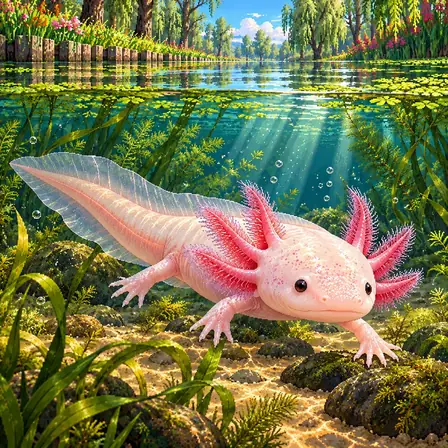
The axolotl is a salamander with pink, feathery gills on both sides of its head. It lives in the water its whole life, even as an adult. It can even regrow a lost leg.

The axolotl is a salamander with six feathery pink external gills on each side of its head. Unlike most salamanders, it keeps its young form even as an adult and lives its whole life in the water. With an amazing power to regrow not only a cut-off leg but even its heart and spinal cord, it is an animal scientists study deeply. In the wild, it lives only in Lake Xochimilco near Mexico City. As the lake shrinks, it has become a seriously endangered species, and restoration work is under way.

Hola
Greeting

Hola

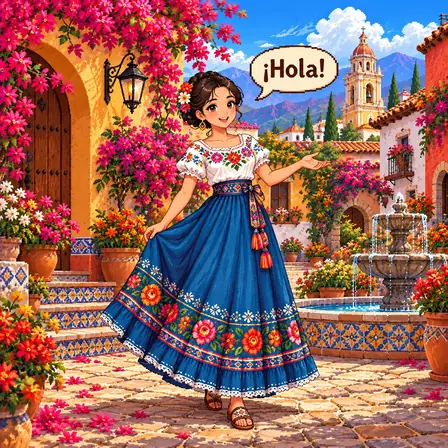
¡Hola! means "hello" in Spanish. Mexico has more Spanish speakers than any other country. The words "chocolate" and "tomato" came from an Indigenous language of Mexico.

"¡Hola!" is a Spanish greeting, read "OH-lah." With about 130 million people, Mexico is the largest of the Spanish-speaking countries. Mexican Spanish keeps many words from the Indigenous Nahuatl language, and "chocolate" and "tomato" are also words that spread to the world from Nahuatl. Among friends, people add "qué tal?" (how are you?) after "hola" to ask how someone is. In Mexico, more than 60 Indigenous languages are still used alongside Spanish.

Mexico's Flag
Flag

Mexico's Flag

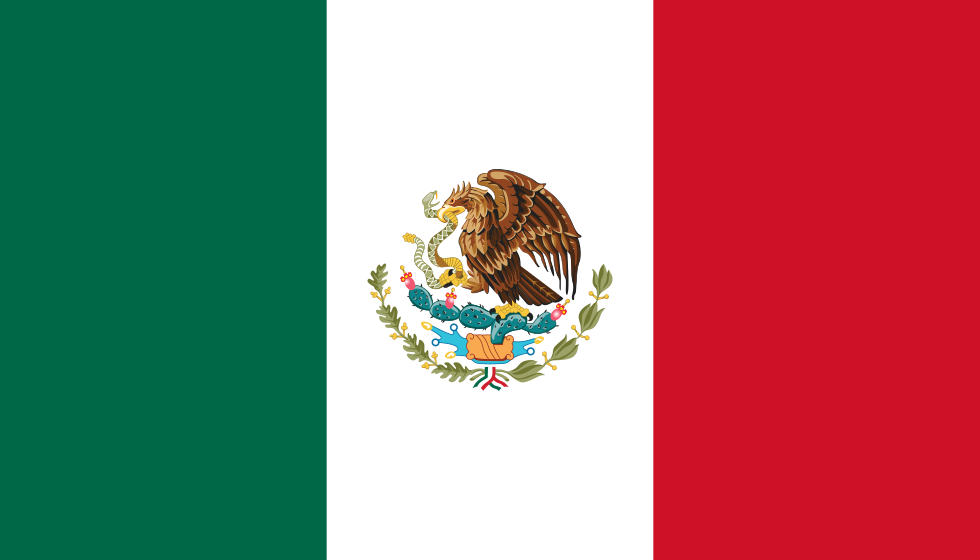
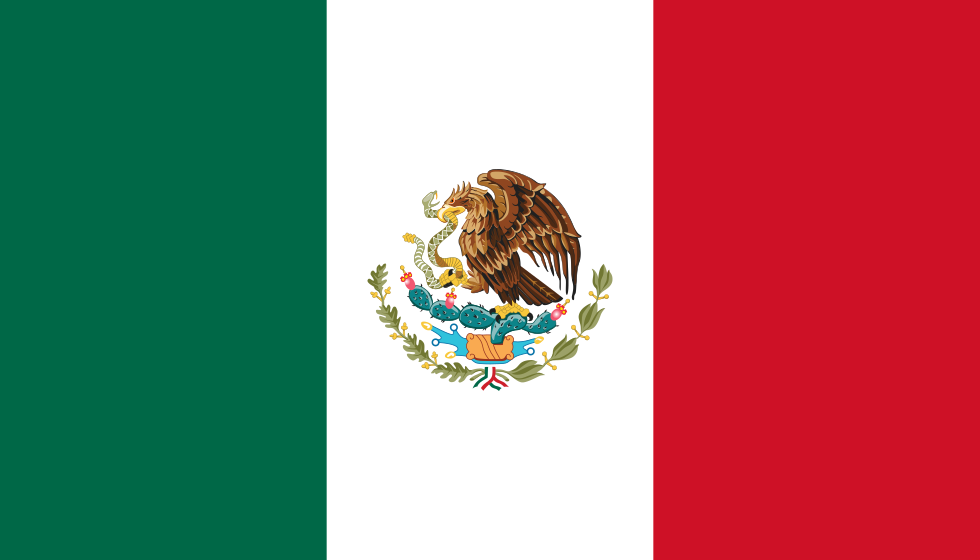
Mexico's flag has three stripes: green, white and red. In the middle, an eagle on a cactus holds a snake. The picture comes from an old Aztec story.

Mexico's flag is made of three upright stripes - green, white, and red. On the middle white stripe is a national emblem showing an eagle on a cactus holding a snake. This picture comes from the Aztec founding legend: "build your city where an eagle sits on a cactus." That very spot is today's capital, Mexico City. It has the same colors as Italy's flag, but you can tell them apart by the emblem in the middle, and the present design was set in 1968.