World Geography Atlas › Asia › East Asia

Mongolia

Монгол

A land of grasslands and nomads · life in a ger.

Capital UlaanbaatarPopulation About 3.5 millionArea 1,564,116 km²Language Mongolian
Map

Reading the land

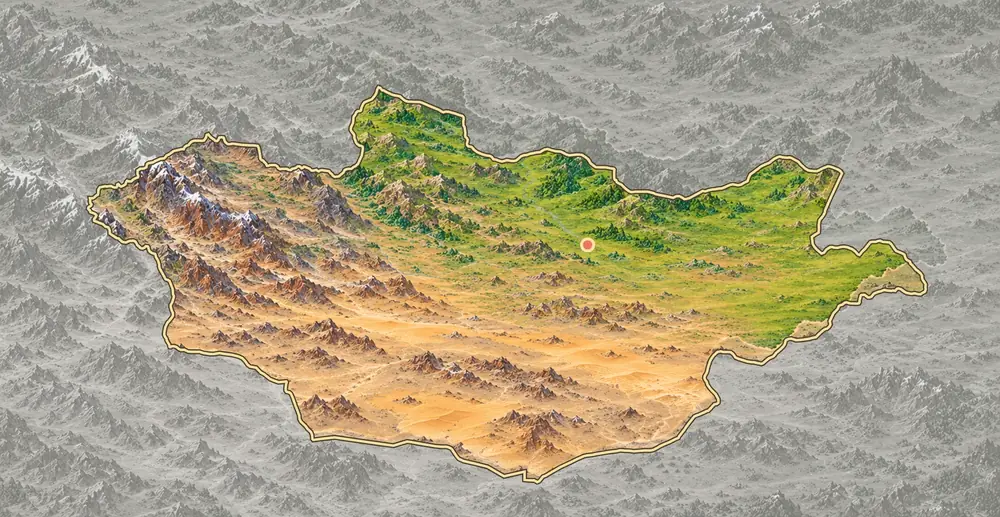
Illustrated map of Mongolia
Illustrated map: yenalab. Country outlines: Natural Earth (public domain).

Mongolia is a high country with no sea. Wide grasslands cover the north and east, and the Gobi Desert lies in the south. Winters are very cold.

Mongolia is a landlocked country between Russia and China, averaging about 1,580 m above sea level. The western Altai, central Khangai, eastern steppe and southern Gobi follow one another.

Terrain

Water & climate

Where the water goes

Northern rivers such as the Selenge flow to Lake Baikal and on to the Arctic Ocean. Other rivers never reach the sea and end in inland lakes and basins.

Source: FAO, Mongolia country report

Geology

Fan-shaped land below mountains

In southern Mongolia, occasional rain washes rock and sand down from the mountains. Where the water spreads out and slows on the plain, it drops gravel in a fan shape called an alluvial fan.

Source: NASA Earth Observatory, Alluvial Fans in Southern Mongolia

Collection

Mongolia Collection

A city, a heritage site, nature, a plant, culture, food, an animal, a greeting and the flag of Mongolia, each drawn as pixel art.

Ulaanbaatar
City

Ulaanbaatar

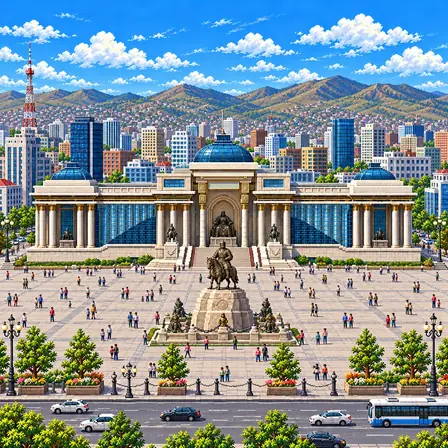
Ulaanbaatar is the capital of Mongolia. It is one of the coldest capitals in the world. Round tent homes called gers stand near tall buildings.

Ulaanbaatar is the capital of Mongolia, home to nearly half of the whole country's people. It began in 1639 as a Buddhist temple town, and because the nomads moved often, it shifted again and again before settling in its present place in 1778. Its name, which means "red hero," was given in 1924. Sitting on a plateau 1,350 m high, it is one of the coldest capitals in the world, and traditional ger neighborhoods, Soviet-style apartments, and modern high-rises mix together in an unusual way.
Karakorum
Heritage

Karakorum

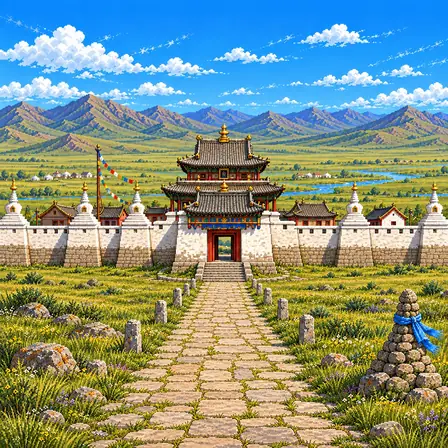
Karakorum was the capital of the Mongol Empire about 800 years ago. Today the white-walled Erdene Zuu monastery stands nearby. Small stupas line the top of its walls.

Karakorum was the capital of the Mongol Empire in the 13th century. Its remains and the later Erdene Zuu Monastery lie in the steppe of the Orkhon Valley. The area belongs to the UNESCO-listed Orkhon Valley Cultural Landscape, where nomadic traditions, settlements and trade have met for centuries.

Gobi Desert
Nature

Gobi Desert

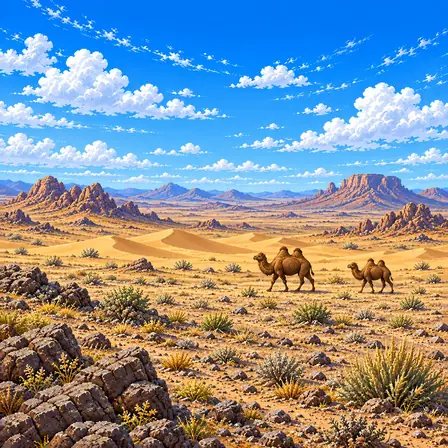
The Gobi Desert is a huge, dry land in southern Mongolia. It has gravel plains and rocky hills as well as sand dunes. Camels with two humps live there.

The Gobi is a broad dry region spanning southern Mongolia and northern China. Gravel plains, rocky ranges and dry basins occur alongside areas of sand dunes. Far inland, it has strong seasonal temperature contrasts and little rainfall. After heavy rain in the mountains, temporary streams can carry rock and sand onto flatter ground and form alluvial fans. Animals such as Bactrian camels are adapted to this dry land.

Saxaul
Plants

Saxaul

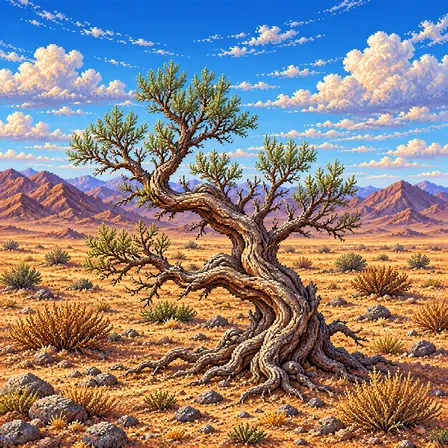
The saxaul is a tough tree that can live in the desert. Its roots reach deep underground to find water. It helps by blocking sandy winds.

The saxaul is a tree you can see in Mongolia's Gobi Desert and dry grasslands. It has almost no leaves and twisting branches, and with deep roots it can live for decades even where water is scarce. It plays an important role by blocking sand winds and helping to stop the desert from spreading. It is a tree that shows the will to survive in Mongolia's harsh natural surroundings.

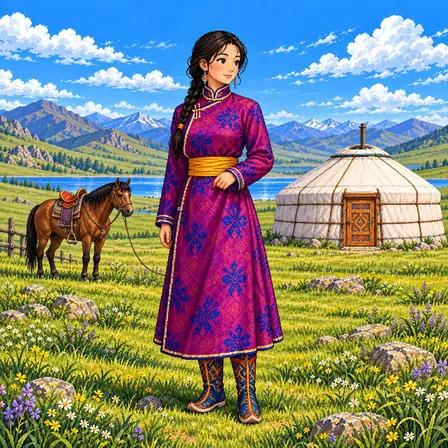
Deel
Culture

Deel

The deel is a long, thick robe that Mongolians have worn for a long time. A long sash around the waist keeps out the bitter cold. It covers the legs when riding and can even be used as a blanket at night.

The deel is a long, gown-like traditional outfit that Mongolian nomads have worn for a very long time. It fastens at the side so the wind can't slip in, and a long cloth sash is wrapped around the waist to bear the grassland cold of minus 30°C. It covers the legs while riding a horse and can be used like a blanket at night, so it fits nomadic life perfectly. It is made to match the season - thin cloth in summer and lined with sheepskin in winter. Even today the whole family dresses up in deels for the Lunar New Year, Tsagaan Sar, and the Naadam festival.

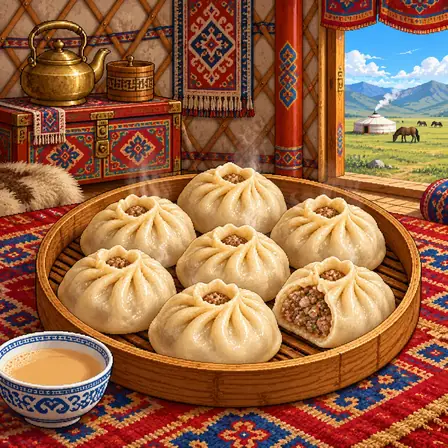
Buuz
Food

Buuz

Buuz are Mongolian steamed dumplings filled with meat. The edges are folded many times into pretty pleats. Families make them together for New Year and serve them to guests.

Buuz are steamed Mongolian dumplings filled with meat such as mutton or beef. The wrapper is folded into pleats, sometimes leaving a small opening at the top. Steaming softens the wrapper while keeping the meat filling juicy. Families prepare buuz to serve visitors during Tsagaan Sar, the Mongolian Lunar New Year. They are often enjoyed with warm milk tea.

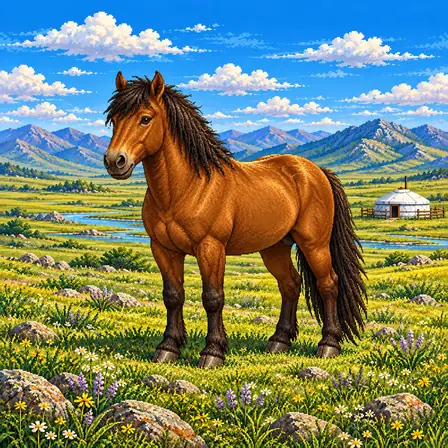
Mongolian Horse
Animals

Mongolian Horse

The Mongolian horse is small but very strong. It stays outside even in freezing winters and digs under the snow for grass. Mongolian children learn to ride when they are very young.

The Mongolian horse stands only about 130 cm tall at the shoulder but is very tough. With its rough mane and thick legs, it endures the grassland winter of minus 40°C right out in the open. Even when no one feeds it, it digs through the snow to find dry grass to eat. More than 4 million horses live on the Mongolian grasslands - more than the number of people. Nomad children ride from a young age, and at the summer Naadam festival child jockeys race for dozens of kilometers.

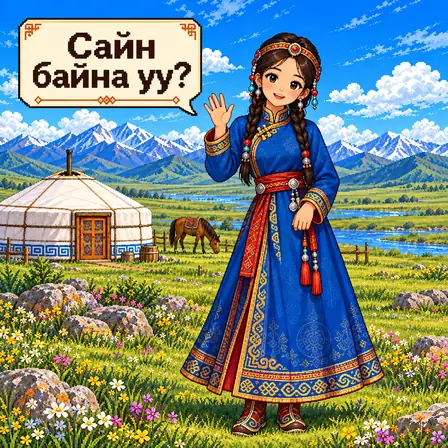
Sain baina uu?
Greeting

Sain baina uu?

Sain baina uu means "Are you well?" in Mongolian. In Mongolia people also ask about your family and animals. Mongolian is written in the Cyrillic alphabet.

"Sain baina uu?" is a Mongolian greeting, read "sain bai-na oo?" It means "Are you well?" and is a basic, polite way to say hello. About 6 million people speak Mongolian. It is written today in the Cyrillic script that came from Russia, but people are also learning the traditional Mongolian script, which is written from top to bottom. On the grassland it is polite to ask not only about the person but also about their animals and family.

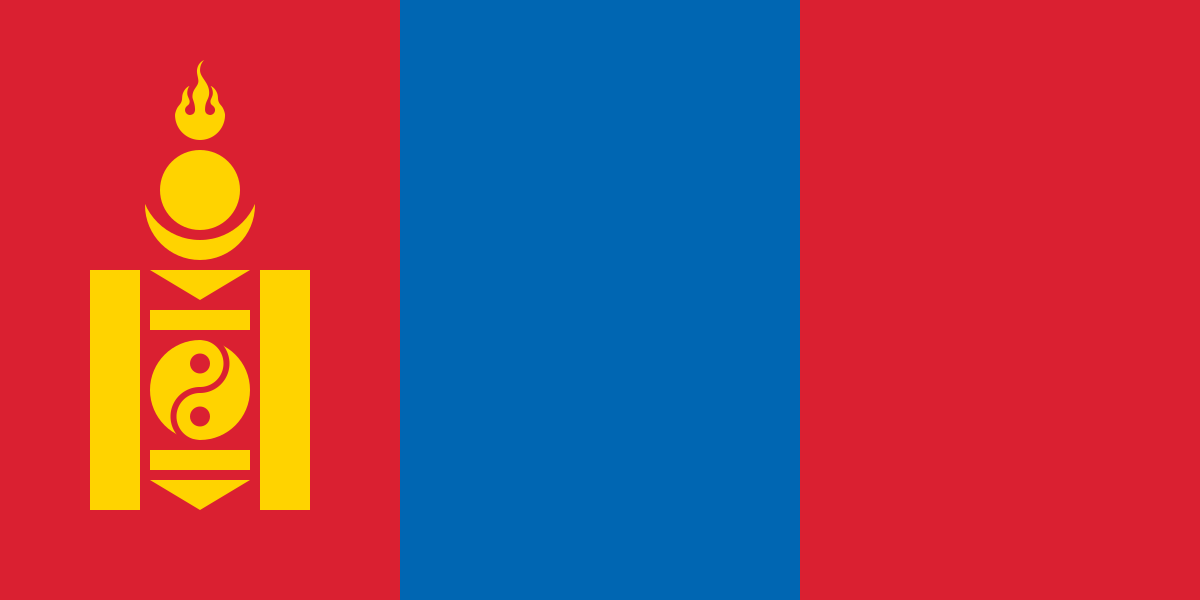
Mongolia's Flag
Flag

Mongolia's Flag

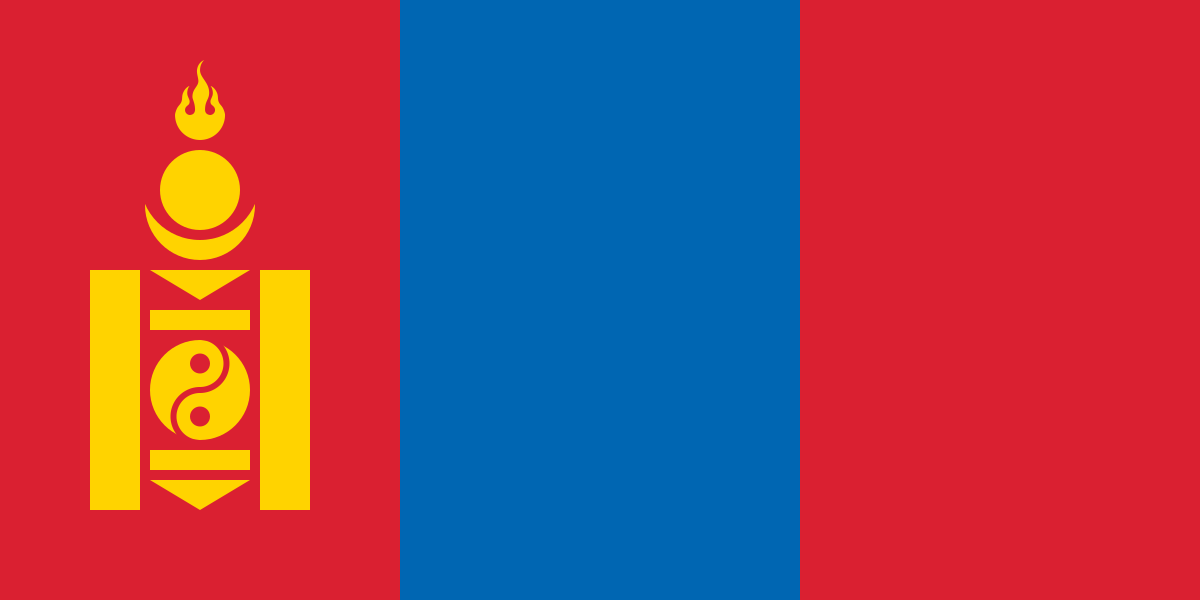
Mongolia's flag has three stripes: red, blue and red. The blue in the middle stands for the "eternal blue sky." On the left red stripe is a yellow symbol called the Soyombo.

Mongolia's flag is made of three upright stripes - red, blue, and red. The blue in the middle stands for the "eternal sky" that Mongolians have long held sacred. On the left red stripe is a yellow symbol called the Soyombo. The Soyombo is Mongolia's own emblem, with pictures like a flame, the sun, the moon, and two fish stacked from top to bottom. The three tongues of flame at the very top are said to mean prosperity in the past, present, and future.

Sources