World Geography Atlas › Asia › East Asia

South Korea

대한민국

K-pop, taekwondo, and kimchi · an East Asian peninsula country that invented its own alphabet, Hangul.

Capital SeoulPopulation About 51 millionArea 100,210 km²Language Korean
Map

Reading the land

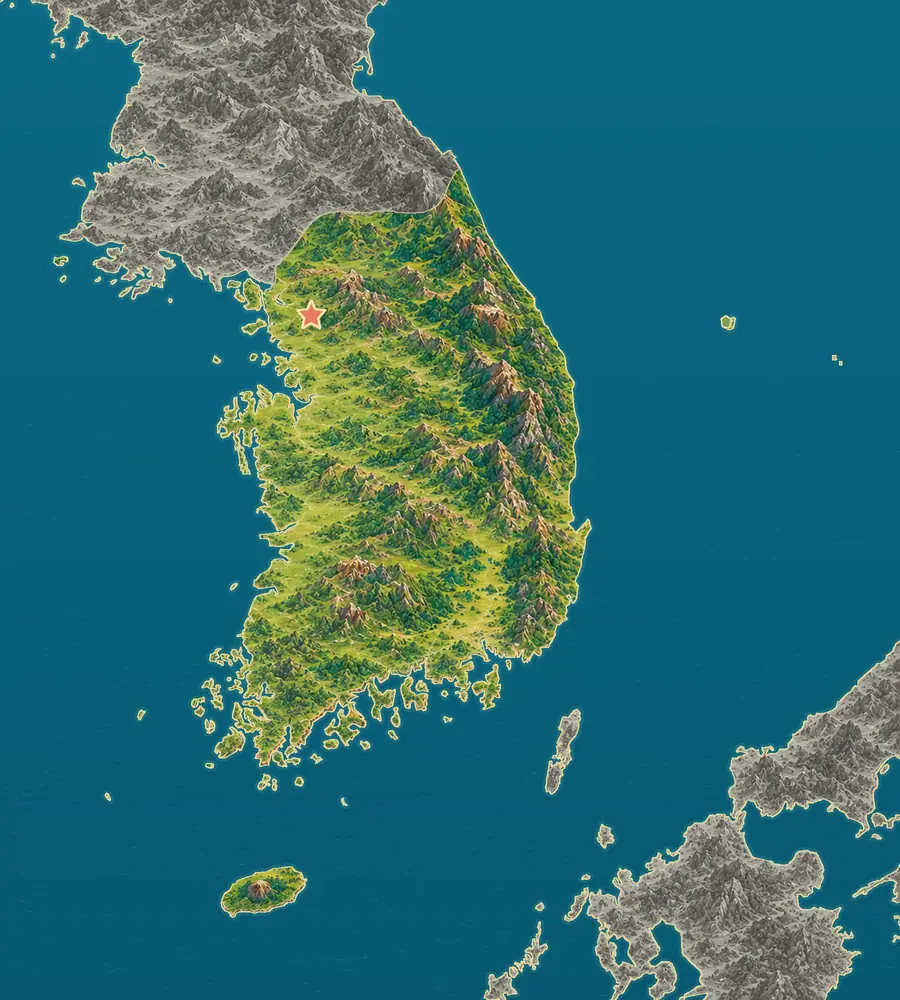
Illustrated map of South Korea
Illustrated map: yenalab. Country outlines: Natural Earth (public domain).

South Korea has tall mountains in the east and low plains in the west. There are lots of islands in the West and South Seas. Jeju Island in the south was made by a volcano.

South Korea, on the southern Korean Peninsula, is high in the east and low in the west. Its three coasts look very different, and Jeju, Ulleungdo and Dokdo are volcanic islands.

Terrain

Higher east, lower west

The Taebaek Mountains run north-south along the east, and the Sobaek range branches southwest. Most large rivers therefore flow west or south into the West and South Seas, with broad plains along their lower courses.

Source: 국토지리정보원, 대한민국 국가지도집: 지형

Coasts & islands

Geology

Collection

South Korea Collection

A city, a heritage site, nature, a plant, culture, food, an animal, a greeting and the flag of South Korea, each drawn as pixel art.

Seoul
City

Seoul

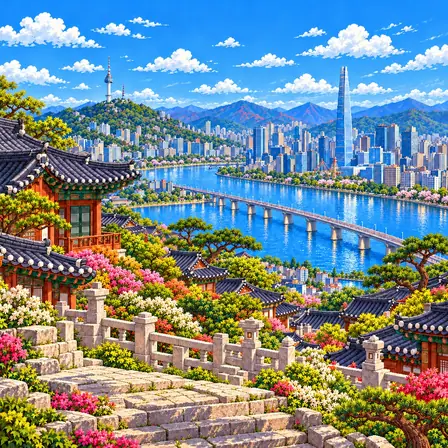
Seoul is the capital of South Korea. It has been the center of the country for more than 630 years. Old palaces and tall buildings stand together along the Han River.

Seoul is the capital of South Korea, where more than 9 million people live. It has served as the capital for over 630 years, ever since King Taejo of Joseon chose it in 1394. The city was laid out in a grid inside a basin ringed by four mountains, and about 70% of its 18.6 km-long Hanyang city wall still stands today. Much of the city was destroyed during the Korean War (1950-1953), but it was rebuilt quickly and is known for growing very quickly in a short time.

Gyeongbokgung Palace
Heritage

Gyeongbokgung Palace

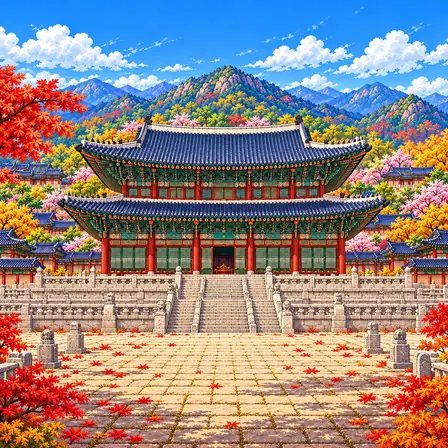
Gyeongbokgung is the largest palace where the kings of Joseon lived. It went through hard times when it was burned and torn down. Now it is slowly getting its old look back.

Gyeongbokgung Palace is the largest palace of the Joseon dynasty, built by King Taejo in 1395. Its spot was chosen by the principles of pungsu, with a mountain behind it and a stream in front, and its main gates and throne hall were placed in a straight line along a north-south axis. It burned down during the Japanese invasion of 1592 and lay in ruins for about 270 years; Heungseon Daewongun began rebuilding it in 1865, and King Gojong moved in in 1868. During the Japanese colonial period, many of its halls were torn down and a colonial government building was put up in front of it; since 1990, a long restoration project has been bringing back the palace as it looked after that rebuilding.

Seongsan Ilchulbong Peak
Nature

Seongsan Ilchulbong Peak

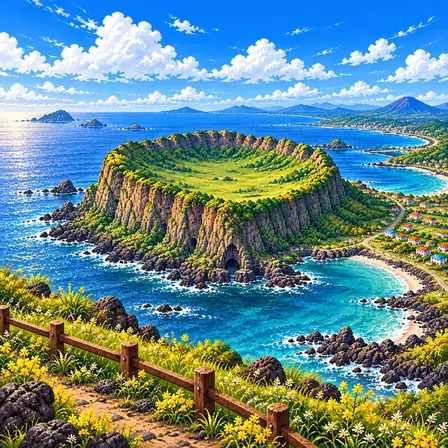
Seongsan Ilchulbong is a volcanic peak rising from the sea on Jeju Island. On top is a crater shaped like a giant bowl. Just as its name says, the sunrise there is beautiful.

Seongsan Ilchulbong Peak is a 182 m-tall hydrovolcano rising from the sea on the eastern side of Jeju Island. About 5,000 years ago, magma beneath a shallow sea met seawater and reacted explosively, building up a tuff cone. The volcanic fragments thrown out by that violent reaction piled up to form the shape we see today. A crater about 600 m wide sits at the top, and it was listed as a UNESCO World Natural Heritage site in 2007.

Rose of Sharon
Plants

Rose of Sharon

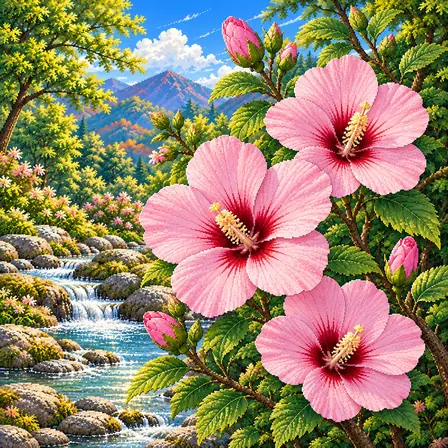
The rose of Sharon blooms for a long time, from summer to autumn. New flowers open every morning and close in the evening. That is why people see it as a flower of perseverance.

The rose of Sharon (mugunghwa) is a flower that blooms in Korea for a long stretch from summer into autumn. Because a fresh flower opens every morning without stopping, it is seen as a symbol of patience and willpower. It comes in many kinds, in colors like pink, purple, and white. It is easy to spot along roadsides and in gardens all across Korea, and it even appears in the words of the national anthem.

Hanbok
Culture

Hanbok

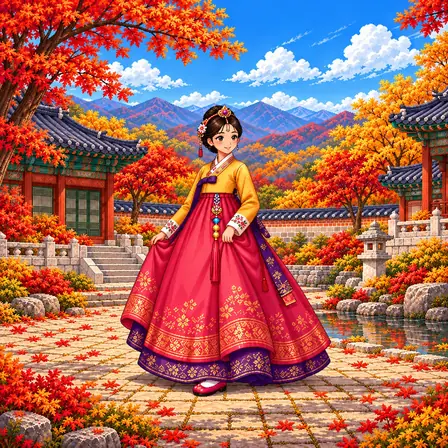
Hanbok is Korea's traditional clothing. It is a jacket called a jeogori worn with a skirt or pants. People enjoy wearing it on holidays like Seollal and Chuseok.

Hanbok is the traditional Korean outfit worn on holidays like Lunar New Year and Chuseok, and at weddings. It is made of a jacket called a jeogori with a skirt for women or trousers for men, and its basic shape already appears in tomb paintings from about 1,600 years ago. Its flowing lines, which blend straight and curved edges, and its soft, gentle colors are its trademark. It wraps the body loosely without squeezing, so it is comfortable to move in. Today people enjoy wearing it not only on holidays but also for palace outings and weddings.

Kimchi
Food

Kimchi

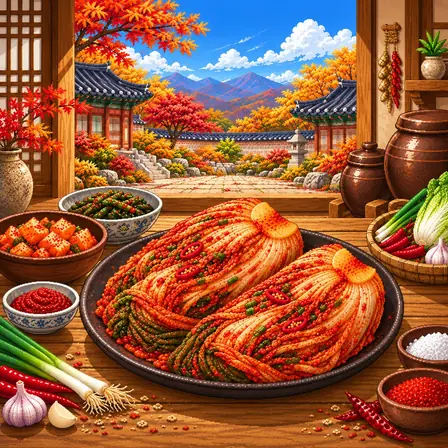
Kimchi is cabbage mixed with seasonings like chili powder and garlic. Over time it ripens and turns tasty and a little sour. There are more than 200 kinds.

Kimchi is Korea's best-known dish, made by salting napa cabbage and then mixing it with chili powder, garlic, and salted seafood to ferment. As it ripens, lactic acid bacteria grow, giving it a tangy taste and many things that are good for the body. Besides cabbage kimchi, there are many kinds, such as kkakdugi and dongchimi, that differ from region to region and home to home. Kimjang - when families and neighbors gather to make kimchi all at once before winter - was listed as a UNESCO Intangible Cultural Heritage in 2013. Even today it appears on Korean tables almost every day.

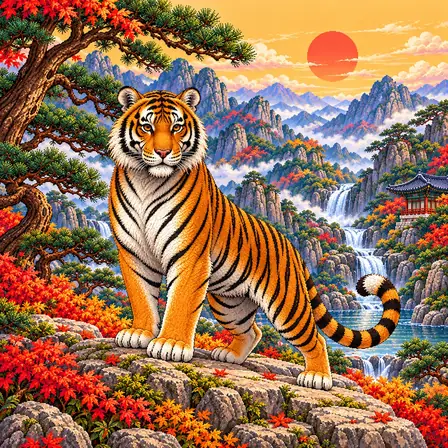
Tiger
Animals

Tiger

The tiger is the biggest animal in the cat family. Like fingerprints, every tiger's stripes are different. It often appears in old Korean stories and paintings.

The tiger is the largest member of the cat family, and the tigers that once lived on the Korean peninsula were Siberian tigers, which can reach about 3 m long including the tail. They have black stripes on an orange coat, and like a person's fingerprints, the pattern is different on every single tiger. They live alone deep in the forest and hunt deer and wild boar. In Korea they have long been honored almost like mountain spirits, and many folk paintings show a tiger together with a magpie. They are hard to find in the wild now, but the tiger is still an animal that stands for Korea.

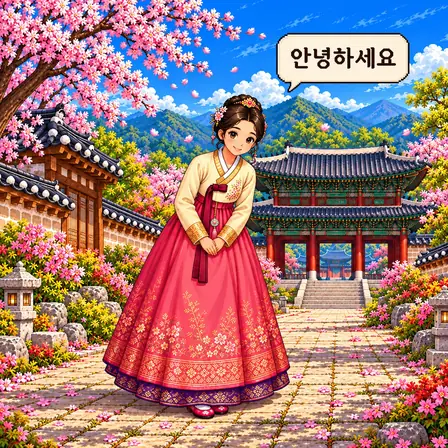
Annyeonghaseyo
Greeting

Annyeonghaseyo

Annyeonghaseyo is the basic Korean greeting. You can use it any time, morning, noon or night. Bowing your head a little makes it even more polite.

"Annyeonghaseyo" is the most basic greeting in Korean, and it comes from words that ask, "Are you at peace?" You can use it any time of day - morning, noon, or night. Giving a slight bow as you say it makes the greeting even more polite. About 80 million people around the world speak Korean. Hangul, the writing system King Sejong created in 1443, lets you read and write once you learn just 24 consonants and vowels.

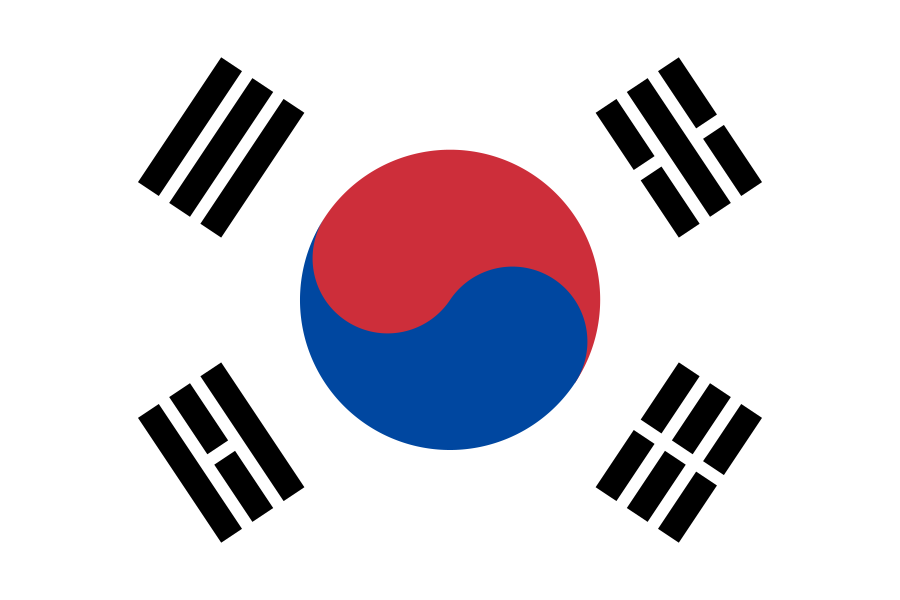
South Korea's Flag
Flag

South Korea's Flag

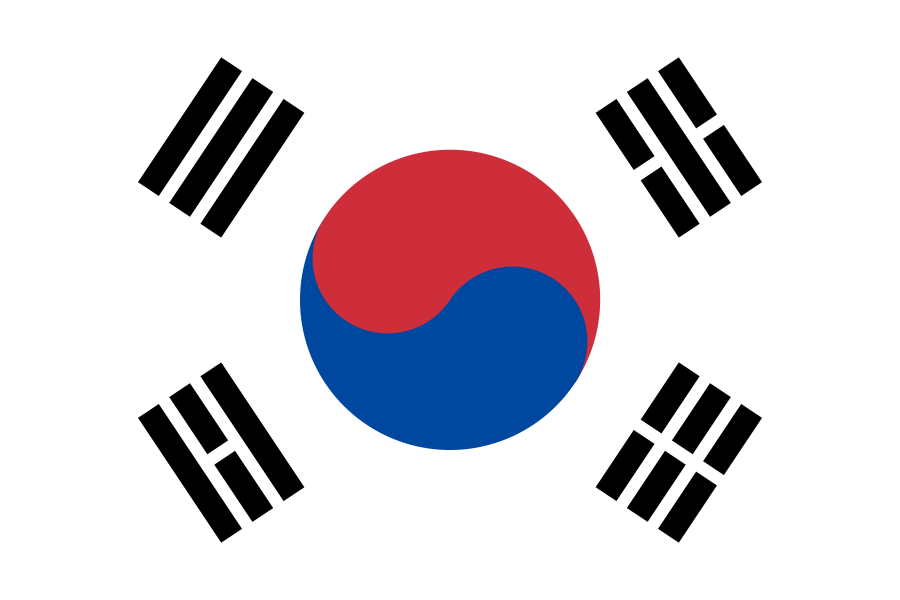
The Taegeukgi has a red and blue taegeuk circle on a white background. In its four corners are black bar patterns called the four trigrams. They stand for sky, earth, water and fire.

South Korea's flag, the Taegeukgi, has a red-and-blue taegeuk circle in the middle of a white field, with four black sets of bars in the corners. The taegeuk shows yin and yang coming together in harmony. The four sets of bars stand for heaven, earth, water, and fire. It was adopted as the national flag in 1883, during the reign of King Gojong. Among the world's flags, it is a rare design that carries a meaning drawn from philosophy.