World Geography Atlas › Africa › East Africa

Kenya

Kenya

The land of safaris · the Maasai Mara grasslands.

Capital NairobiPopulation About 55 millionArea 580,367 km²Language Swahili and English
Map

Reading the land

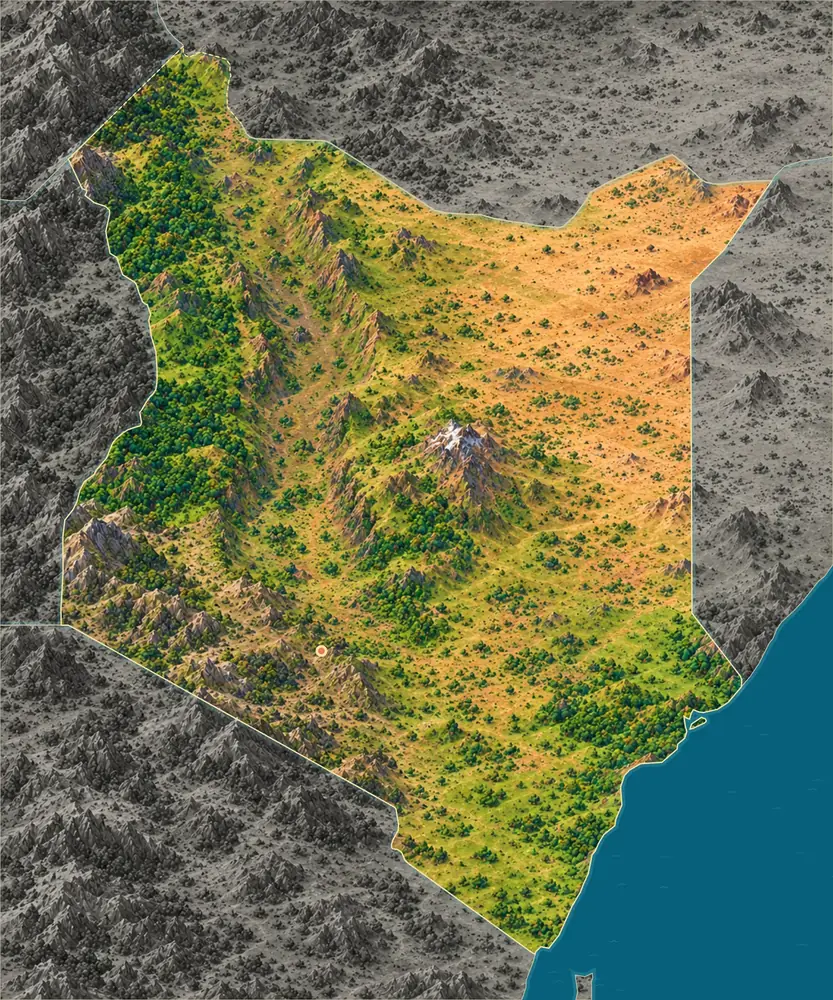
Illustrated map of Kenya
Illustrated map: yenalab. Country outlines: Natural Earth (public domain).

Most of Kenya is dry plains that get little rain. In the high land in the middle rises Mount Kenya, with ice still left at its top.

Kenya rises from low land on the Indian Ocean coast to highlands in the middle, and the highlands are split by a great valley, the Great Rift Valley. East of the rift stands Mount Kenya, an old volcano.

Terrain

Africa's second-highest mountain

Mount Kenya is 5,199 m high, the second-highest mountain in Africa. Although it lies close to the equator, small glaciers remain near its top, and the mountain and the forests around it are a UNESCO World Heritage site.

Source: UNESCO, Mount Kenya National Park/Natural Forest

Sea & lakes

Salty lakes on the valley floor

On the floor of the great valley lie shallow, salty lakes such as Bogoria, Nakuru and Elementaita. They are the most important feeding place for lesser flamingos and became a UNESCO World Heritage site in 2011.

Source: UNESCO, Kenya Lake System in the Great Rift Valley

Geology

The great valley that splits the land

The Great Rift Valley is a valley formed when the land split apart through powerful forces underground and volcanic activity. Steep cliffs stand on both sides, and the floor has hot springs and geysers, springs that shoot out water.

Source: UNESCO, Kenya Lake System in the Great Rift Valley

Mount Kenya, a volcano that went quiet long ago

Mount Kenya is a volcano that erupted about 3.1 to 2.6 million years ago. It may then have been about 6,500 m high, and long ages of wearing away have left the sharp peaks we see today.

Source: UNESCO, Mount Kenya National Park/Natural Forest

Collection

Kenya Collection

A city, a heritage site, nature, a plant, culture, food, an animal, a greeting and the flag of Kenya, each drawn as pixel art.

Nairobi
City

Nairobi

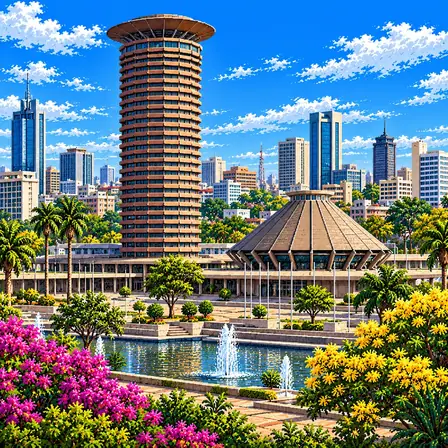
Nairobi is the capital of Kenya. Its name means "cool water." In the national park right next to the city, you can see lions and giraffes.

Nairobi is the capital of Kenya, where about 4.4 million people lived at the 2019 census. It was founded in 1899 as a base for building the railway, and "Nairobi" means "cool water" in the Maasai language. At 1,795 m above sea level, it is one of the coolest capitals in Africa. With Nairobi National Park right next to the city, it is a rare place where you can see lions with high-rise buildings behind them.

Lamu Old Town
Heritage

Lamu Old Town

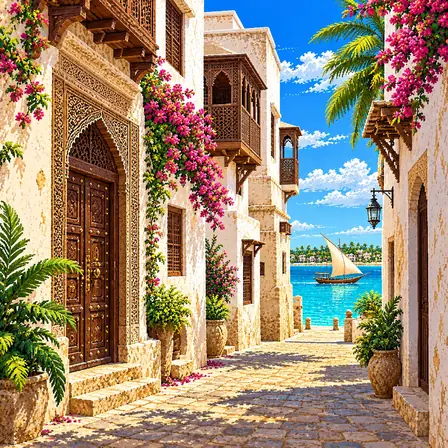
Lamu Old Town is an old town on an island. There are no cars, so people get around by donkey and boat. It is famous for its large, carefully carved wooden doors.

Lamu Old Town is an old Swahili-culture town on an island off the northern coast of Kenya. From the 14th century, Arab, Indian, and African cultures blended here for more than 700 years. It keeps an unusual way of life with no cars, where only donkeys and boats get around. It is known for traditional buildings made of coral stone and tall, finely carved doors (Swahili doors). It became a UNESCO World Cultural Heritage site in 2001.

Maasai Mara
Nature

Maasai Mara

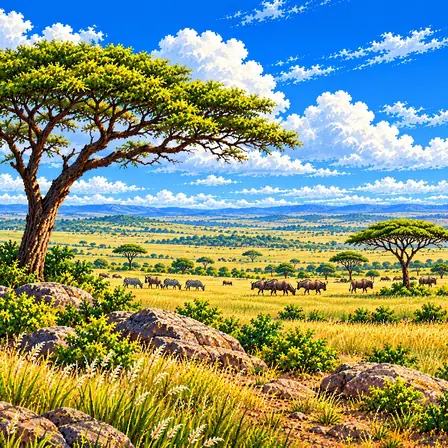
The Maasai Mara is a wide grassland where lions and elephants live. Every year, about 2 million wildebeest and zebras travel a long way together. It is one of the most amazing animal journeys in the world.

The Maasai Mara is a 1,510 km² wildlife reserve in southwestern Kenya. Its ecosystem connects with the Serengeti in Tanzania, and every July to October about 2 million wildebeest and zebra make a great migration. The area is also the homeland of the Maasai people, who have long raised cattle here. You can see all of the "Big Five" - lion, elephant, leopard, rhino, and buffalo.
Acacia
Plants

Acacia

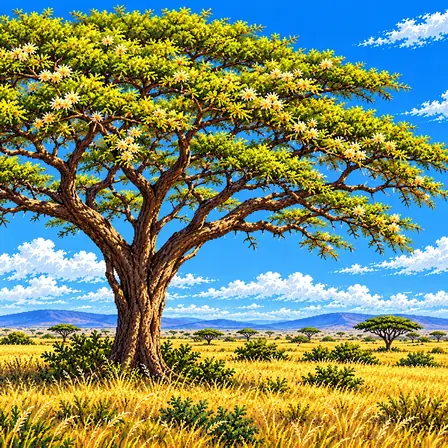
The acacia tree spreads out like an umbrella. It gives animals shade on the hot grassland. Giraffes use their long tongues to pull off its leaves.

The acacia is like a symbol of the Kenyan savanna. Known for its crown that spreads wide like an umbrella, it gives shade to animals on the hot grassland. Giraffes, zebras, and impalas live on acacia leaves and pods, and it is a tree that can't be left out of the sunset scenery of the Maasai Mara grasslands.

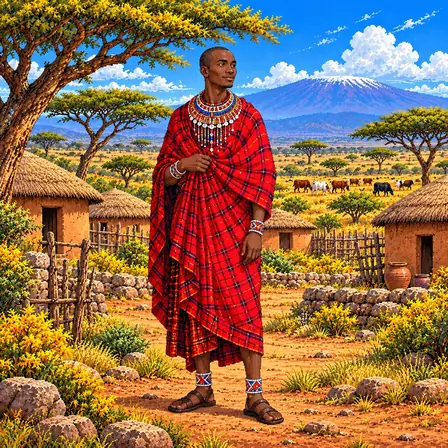
Maasai Traditional Dress
Culture

Maasai Traditional Dress

Maasai people wrap themselves in red cloth. Red is easy to see from far away on the wide grassland. They also wear wide necklaces made of beads.

Maasai traditional dress is the clothing of the Maasai people, who herd cattle on the Kenyan grasslands. They wrap a bright red cloth called a shuka around the body, and the red stands out from far away so they can recognize one another on the grassland. Wide beaded necklaces and bracelets show information like age and whether someone is married, through colors and patterns. Women make the beadwork by hand and pass the skill down through the generations. Even today the Maasai wear their traditional clothing in everyday life.

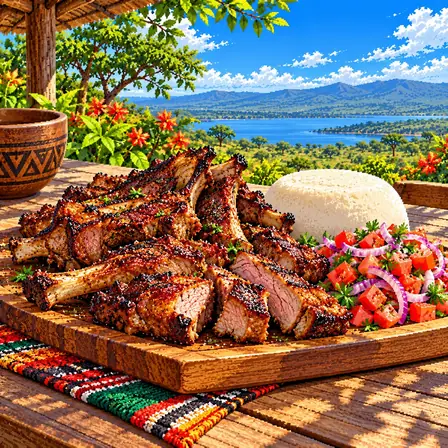
Nyama Choma
Food

Nyama Choma

Nyama choma means "grilled meat." Goat or beef is slowly roasted over charcoal. Family and friends gather to share it.

Nyama choma means "grilled meat" in Swahili and is Kenya's best-known barbecue. Goat or beef is sprinkled with just salt and grilled slowly over charcoal for nearly an hour, so the outside is deeply charred and the inside stays juicy. It is served with kachumbari, a salad of tomato and onion tossed in lime juice, to cut the richness. Eating it by hand together with ugali, made by steaming corn flour, is the Kenyan way. On weekends, families and friends gather at grill restaurants to share it - a social food.

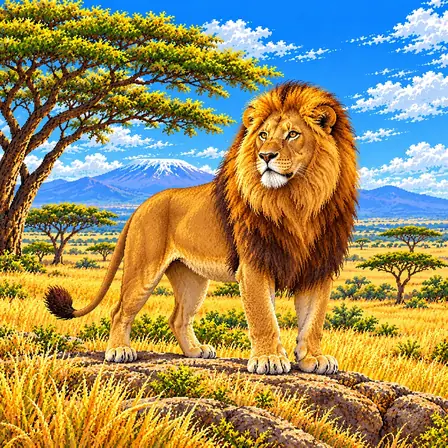
Lion
Animals

Lion

Lions are the only members of the cat family that live in groups. The females usually hunt together. A lion's roar can be heard 8 km away.

The lion is the only member of the cat family that lives in groups. On the Maasai Mara grasslands of Kenya, a pride of 10 to 20 - females and their cubs - lives together. The male's full mane grows darker with age. Hunting is mostly done by the females working together, and a roar can be heard 8 km away, so they signal to family far off. As grasslands shrink, their numbers have dropped, so Kenya protects lions in national reserves.

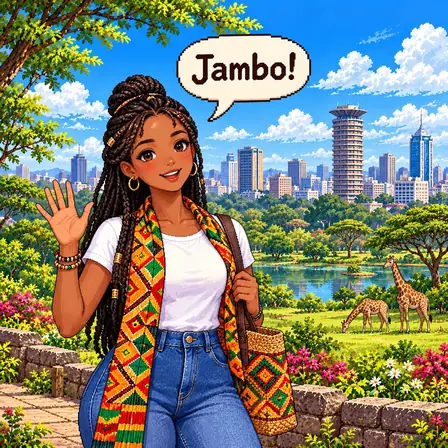
Jambo
Greeting

Jambo

Jambo means "hello" in Swahili. People often say it to welcome travelers. "Hakuna matata" (no worries) is Swahili too.

"Jambo" is read "jam-bo," a Swahili greeting. It is short for "hujambo?" (is everything all right?) and is used especially to welcome travelers. Swahili is a language that grew out of trade on Africa's east coast, mixing native African words with many Arabic words. About 200 million people in East Africa, including Kenya and Tanzania, use it. "Hakuna matata" (no worries) is also Swahili, and a song made it known around the world.

Kenya's Flag
Flag

Kenya's Flag

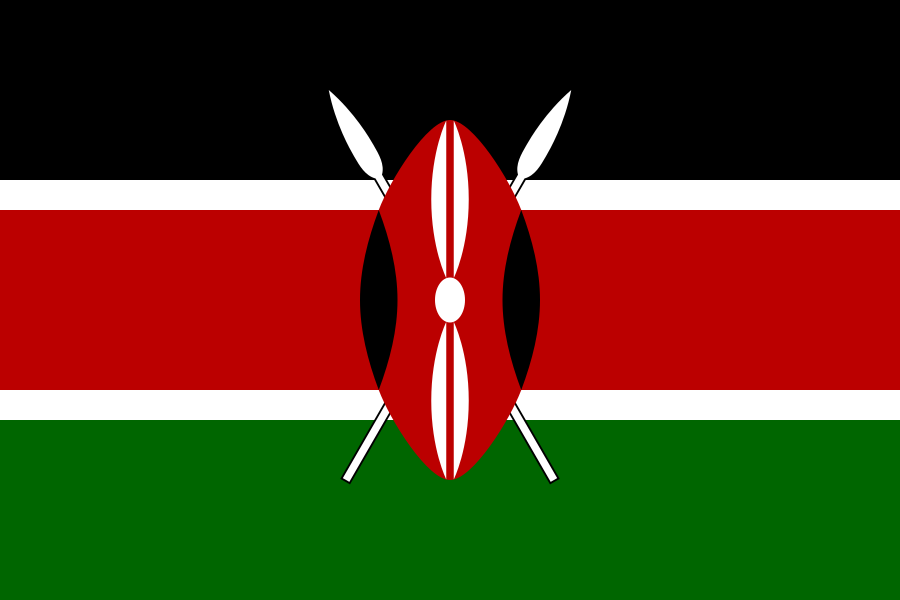
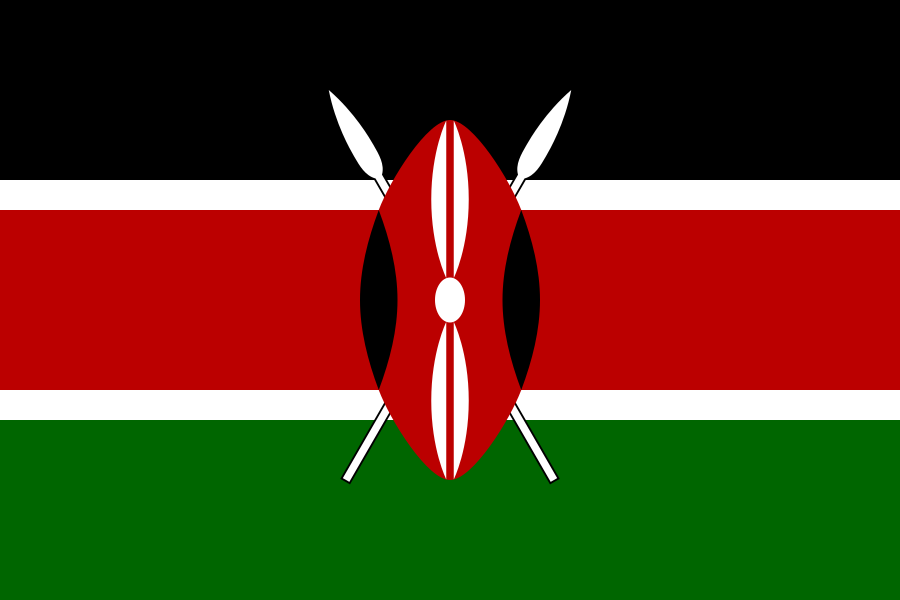
Kenya's flag has three stripes: black, red and green. In the middle are a Maasai shield and spears. They stand for protecting the country and its freedom.

Kenya's flag is made of three level stripes - black, red, and green - with thin white lines between them. In the very middle are a Maasai shield and two spears. The shield and spears carry the meaning of guarding the country and its freedom. It is explained that black stands for the Kenyan people, green for the rich land, and white for peace. It was adopted in 1963 as the country made a fresh start.