World Geography Atlas › Europe › Southern Europe

Italy

Italia

A boot-shaped country · pizza and pasta.

Capital RomePopulation About 59 millionArea 301,340 km²Language Italian
Map

Reading the land

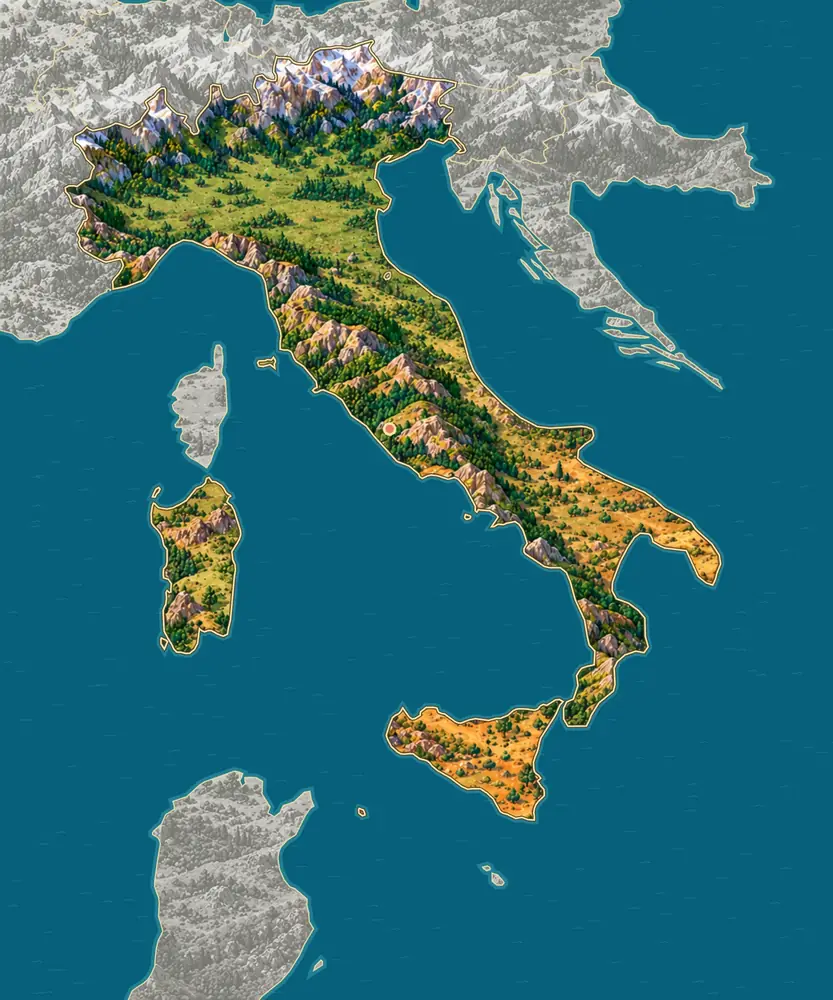
Illustrated map of Italy
Illustrated map: yenalab. Country outlines: Natural Earth (public domain).

Italy is a boot-shaped country stretching far into the sea. The snowy Alps are in the north, and a long mountain chain runs down the middle. On the southern island of Sicily, the volcano Etna still erupts.

Italy is made up of the Alps and the Po Valley in the north, the Apennines running down the peninsula, and islands such as Sicily and Sardinia. The land is still moving, so there are many volcanoes.

Terrain

Coasts & islands

Three seas and two big islands

The peninsula is surrounded by the Tyrrhenian Sea to the west, the Adriatic to the east and the Ionian Sea to the south. Two large islands, Sicily and Sardinia, lie in the seas to the southwest.

Source: Natural Earth, Land, 1:50m

The volcanic Aeolian Islands

The Aeolian Islands north of Sicily were built, and partly destroyed, by volcanoes. Eruptions seen on Stromboli and Vulcano gave their names to two types of eruption, Strombolian and Vulcanian.

Source: UNESCO, Isole Eolie (Aeolian Islands)

Geology

Erupting Etna

Mount Etna on eastern Sicily is about 3,300 m high, the tallest mountain on any Mediterranean island. It is one of the world's most active stratovolcanoes, cone-shaped volcanoes built from layers of lava and ash.

Source: UNESCO, Mount Etna

Rock towers of the Dolomites

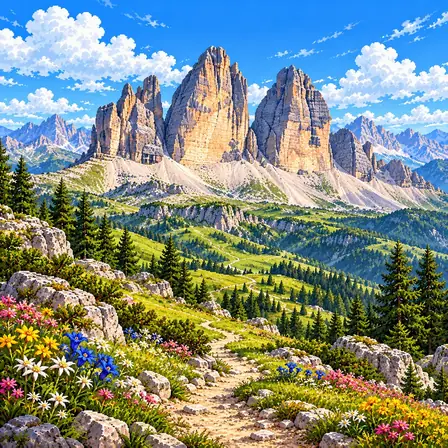
The Dolomites in the eastern Alps have 18 peaks over 3,000 m. Limy rock that formed long ago under the sea was pushed up and worn away into towers, pinnacles and sheer rock walls.

Source: UNESCO, The Dolomites

Collection

Italy Collection

A city, a heritage site, nature, a plant, culture, food, an animal, a greeting and the flag of Italy, each drawn as pixel art.

Rome
City

Rome

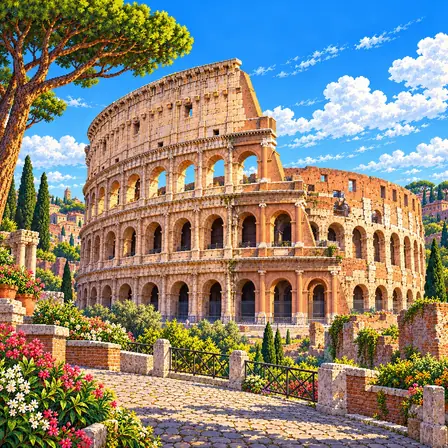
Rome is the capital of Italy. It is a very old city, more than 2,700 years old. The ancient Colosseum arena still stands there.

Rome is the capital of Italy, where about 2.75 million people live. It is said to have been founded in 753 BCE, and in the days of imperial Rome it was the largest city of the ancient world, thought to have been home to close to a million people. Today, ruins from the republic and empire still lie in layers in many places beneath the city. Ancient sites like the Colosseum, the Roman Forum, and the Pantheon live side by side with modern life, and inside the city is the independent state of Vatican City.

Pompeii
Heritage

Pompeii

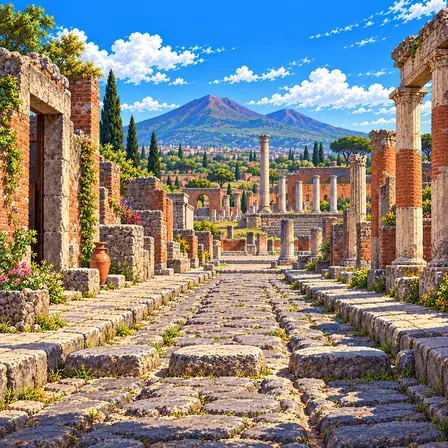
Pompeii is an ancient Roman city that was buried in volcanic ash. About 2,000 years ago, a volcano erupted and covered the whole town. Bakeries, baths and even wall graffiti remain, showing how people lived.

Pompeii is an ancient Roman city buried under 4 to 6 m of volcanic ash by the eruption of Mount Vesuvius in 79 CE. The ash kept out oxygen, so it was almost perfectly preserved for 2,000 years. Even bakeries, baths, and election-promise graffiti remain, and it is a UNESCO World Cultural Heritage site.

Dolomites
Nature

Dolomites

The Dolomites are mountains with rows of sharp rocky peaks. They are made of rock that formed from coral in an ancient sea. At sunset the rocks glow pink.

The Dolomites are a grand rocky mountain range in the northern Italian Alps. About 250 million years ago, coral reefs and the remains of creatures piled up in a shallow tropical sea and hardened into dolomite (calcium magnesium carbonate) rock. After being pushed up when the earth's plates crashed, the sharp rock peaks of today were shaped by glacier erosion. It is a UNESCO World Natural Heritage site.

Cypress
Plants

Cypress

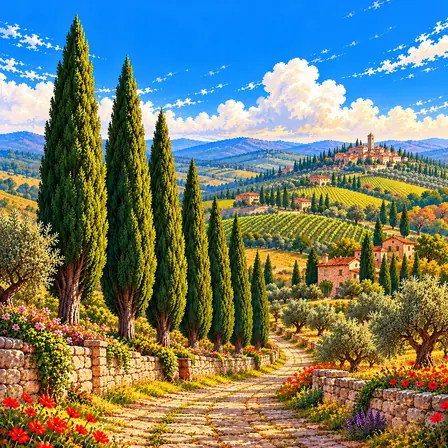
The cypress is a slim tree that grows straight up. Rows of them line country roads on Italian hills. It often appears in old paintings too.

The cypress is a tree that feels like a symbol of the rolling Tuscan scenery in Italy. Its slim cone shape, stretching straight up, is unusual, and roads lined with cypresses hundreds of years old spread around Siena and San Quirico. It even appears in the backgrounds of Leonardo da Vinci's paintings, and it is the tree that completes the poetic scenery of the Italian countryside.

Venetian Gondola
Culture

Venetian Gondola

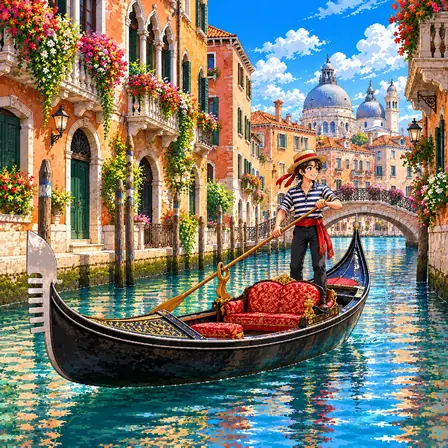
A gondola is a long, narrow boat that travels Venice's canals. The gondolier steers it with just one oar. The boat is slightly curved to one side, which helps it go straight.

The Venetian gondola is a long, sleek traditional wooden boat that travels the narrow canals. Even though it is about 11 m long, a boatman called a gondoliere skillfully steers it with a single oar. Because the boat is slightly bent to one side in an uneven shape, it moves straight even when rowed from only one side. By tradition the hull is painted black and is carefully made from eight kinds of wood. Hundreds of years ago it was a main means of transport, and today it has become a tourist experience that stands for Venice.

Pizza
Food

Pizza

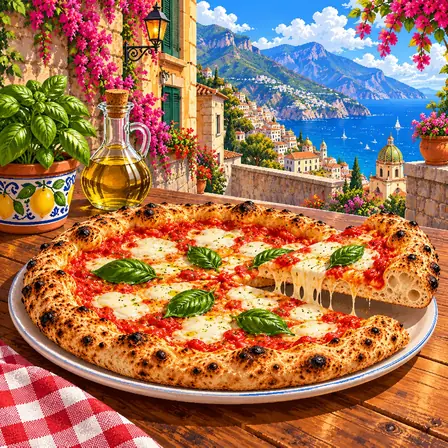
Pizza is round bread topped with tomato sauce and cheese and then baked. It began in Naples, Italy. It bakes in a very hot oven in just 90 seconds.

Pizza is a food from Naples, Italy, made by spreading wheat dough into a round shape, topping it with tomato sauce and mozzarella cheese, and baking it in a wood-fired oven. The most famous is the Margherita, where the red of tomato, the white of cheese, and the green of basil come together. A true Neapolitan pizza bakes in about 90 seconds in a wood-fired oven over 450°C. Its trademark is a puffy, fluffy edge and a thin, moist center. The craft of Neapolitan pizza makers was listed as a UNESCO Intangible Cultural Heritage in 2017.

Italian Wolf
Animals

Italian Wolf

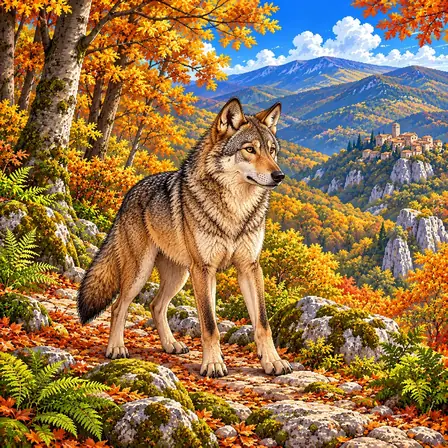
The Italian wolf lives in family packs in mountain forests. Its numbers once fell to about 100, but with protection there are now more than 3,000. An old story says a wolf raised the twins who founded Rome.

The Italian wolf is a gray-brown wolf that lives in the forests of Italy's Apennine Mountains. It lives in family packs and hunts deer and wild boar together. In the 1970s it dropped to about 100, but thanks to legal protection from 1971 it has now recovered to more than 3,000. It has such good stamina that it can travel dozens of kilometers in one night looking for food. Thanks to the founding story that a wolf raised the twin brothers who built Rome, it became a symbol animal of Italy.

Ciao
Greeting

Ciao

Ciao means "hi" or "bye" in Italian. You can use it when you meet and when you leave. People in many other countries use it too.

"Ciao" is read "chow," an Italian greeting. It is said that a polite greeting in the Venetian dialect changed into today's friendly hello. Because it is a handy word you can use both when meeting and parting, it spread all over the world. Italian is a Romance language that grew from the Latin of ancient Rome and is spoken by about 65 million people. It is a language that left many words used worldwide in music and cooking, like the music terms "forte" and "piano."

Italy's Flag
Flag

Italy's Flag

Italy's flag has three stripes: green, white and red. The stripes stand side by side from top to bottom. Its nickname is "the tricolor."

Italy's flag is a tricolor made of three upright stripes - green, white, and red. It has the nickname "il Tricolore" (the tricolor). Influenced by the design of the French tricolor, it began to be used in Italian regions around 1797. It is said that green stands for the country's fields, white for the snow of the Alps, and red for a warm heart. It was settled as the present flag in 1946, when the country became a republic.