High mountains and wide plains
The Himalayas run across the north, and south of them lie broad plains built from sediment carried by rivers such as the Ganges. The dry Thar Desert is in the northwest, and New Delhi stands on the northern plain.
World Geography Atlas › Asia › South Asia
भारत
The land of the Taj Mahal and curry.
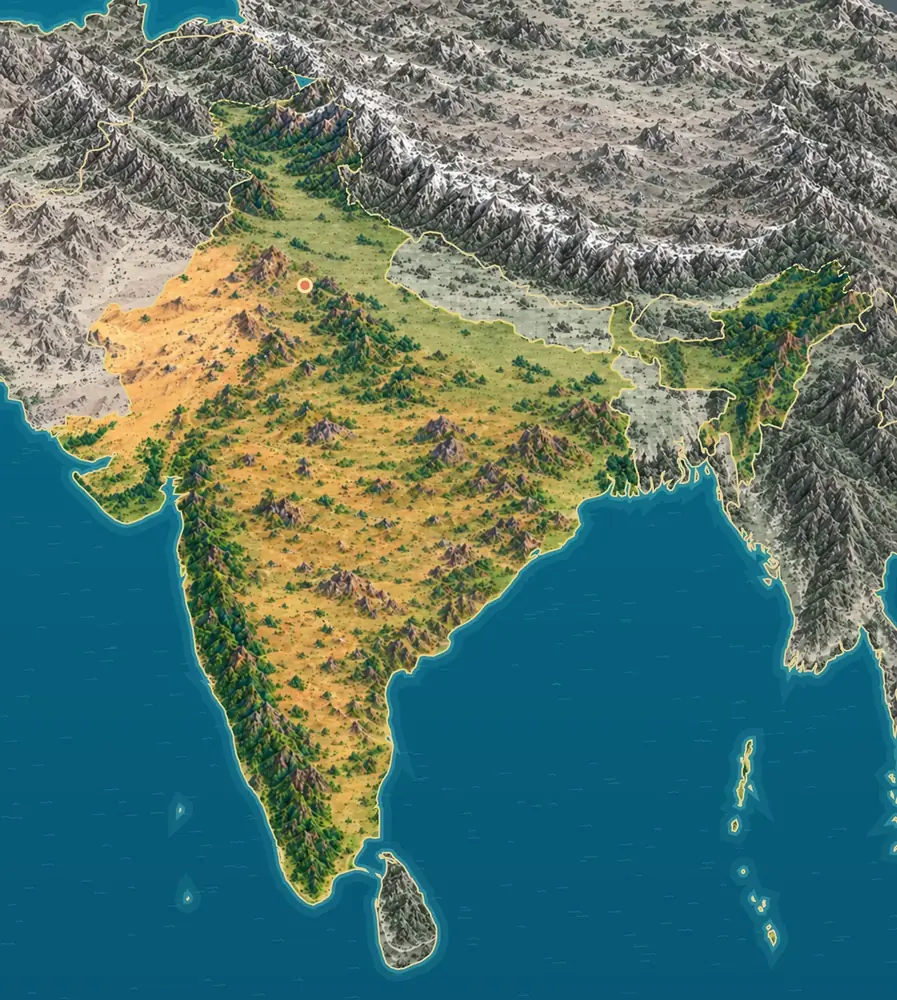
India has the Himalayas, the world’s highest mountains, in the north. Wide plains lie in the middle, and a huge peninsula reaches into the sea in the south.
India divides into the Himalayas in the north, the river-built northern plains, the Thar Desert in the northwest and the Deccan Plateau within the peninsula, flanked by the Arabian Sea and the Bay of Bengal.
The Himalayas run across the north, and south of them lie broad plains built from sediment carried by rivers such as the Ganges. The dry Thar Desert is in the northwest, and New Delhi stands on the northern plain.
The Deccan Plateau fills the peninsula. The Western Ghats rise along the west coast, leaving a narrow coastal plain, while the lower Eastern Ghats border a wider plain to the east.
The Arabian Sea lies to the west and the Bay of Bengal to the east. Along Kerala’s southwest coast, the “backwaters” form a network of channels and lagoons where river and sea water meet.
Source: National Portal of India, Physical features · Kerala Tourism, Backwaters
The coral Lakshadweep Islands lie in the Arabian Sea, and the Andaman and Nicobar Islands in the Bay of Bengal.
As the Indian plate pushes north into the Eurasian plate, the Himalayas have been raised. The movement continues, so earthquakes are common around the range.
Source: USGS, Seismicity of the Earth 1900-2010: Himalaya and vicinity
The Deccan Traps in the northwest of the plateau formed from vast lava flows about 65 million years ago. They still cover about 500,000 km², with lava layers stacked like steps.
Source: IUGS, Deccan Traps
A city, a heritage site, nature, a plant, culture, food, an animal, a greeting and the flag of India, each drawn as pixel art.
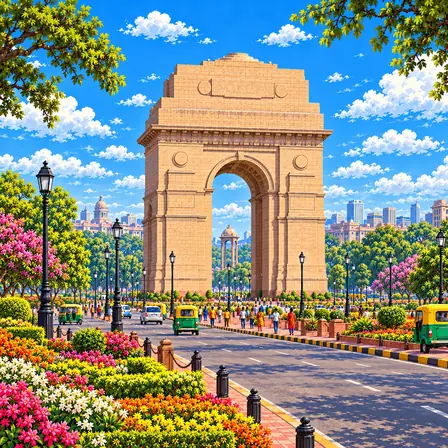
New Delhi is the capital of India. A huge stone arch called India Gate stands at the end of a wide road. You can also see small three-wheeled taxis on the streets.
New Delhi is India’s capital, combining planned avenues, gardens and public buildings. The surrounding Delhi region also retains monuments and neighbourhoods from different periods. India Gate is a sandstone memorial to Indian soldiers who died in the First World War and other conflicts. Designed by Edwin Lutyens, it was completed in 1931. Trees and small auto-rickshaws add clues to present-day city life.
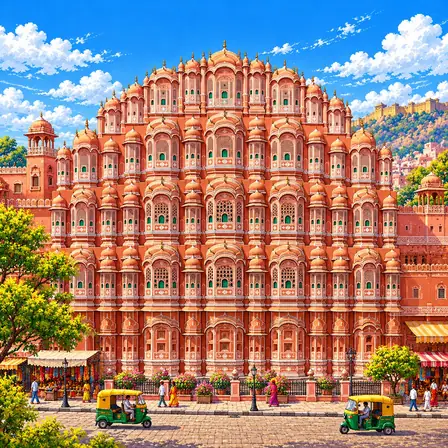
Hawa Mahal means "Palace of the Winds." Its pink wall is packed with more than 900 small windows. Cool breezes flow in through them.
Hawa Mahal is a palace in Jaipur whose name means Palace of Winds. Built in 1799 by Sawai Pratap Singh, its five-storey facade combines closely spaced projecting jharokha windows and lattice screens. These openings allow air through and let royal women observe the street without being seen from outside. Pink sandstone, white edging and repeated small canopies create its distinctive frontage. Although the facade looks thin and screen-like, the interior contains spaces and passages across several floors.
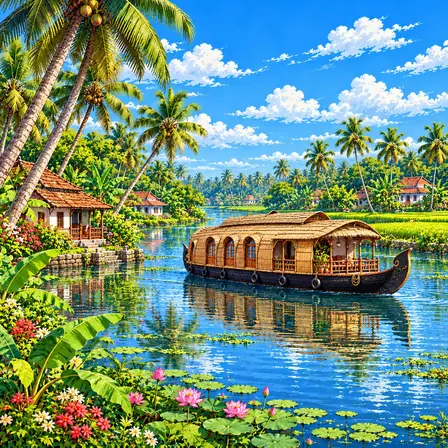
The Kerala backwaters are lakes and rivers linked like a spider web along the coast. Palm trees, rice fields and villages line the water. You can drift slowly through them on a boat with a roof.
Kerala’s backwaters link lakes, lagoons, rivers and canals along India’s southwestern coastal region. Palms, rice fields and villages stand beside the waterways. Traditional kettuvallam boats have long wooden hulls and curved roofs, and are also used as houseboats. The water network connects everyday travel and settlement while providing habitat for plants, birds and fish.
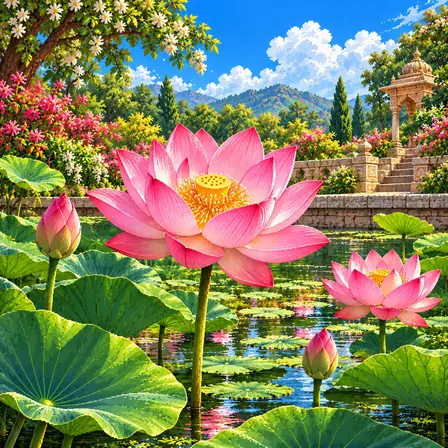
The lotus grows from the mud and opens pretty flowers above the water. Its big round leaves make water drops roll right off. In India it appears often in paintings and decorations.
The sacred lotus is known botanically as Nelumbo nucifera. Leaf stalks and flower stems grow from rhizomes rooted in mud, rising above the water. Its large round leaves have radiating veins and a strongly water-repellent surface. Yellow stamens surround the receptacle in which seeds develop. Lotus imagery has long been important in Indian religion and art.
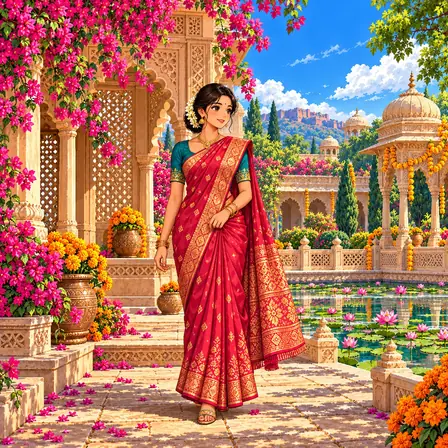
A sari is a single long cloth wrapped around the body. The cloth can be more than 5 m long. Each region has its own way of wrapping it.
A sari is a long cloth draped around the body in several ways across India and neighbouring regions. Materials, weave, colour and draping vary with region and occasion. A common style wraps the waist, adds front pleats and carries the end, called the pallu, over one shoulder. A fitted blouse and underskirt are often worn beneath the sari. Silk and gold-coloured woven borders add texture to the fabric.
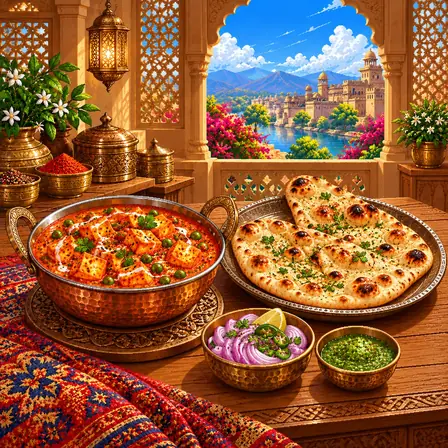
Curry is a thick dish made with many spices. Naan is a flat bread baked in a clay oven. You tear off a piece of naan and dip it in the curry.
Indian food varies widely between regions and households. Dishes grouped under the word curry may use vegetables, pulses, meat or cheese with different seasonings. Paneer cheese with vegetables in a sauce is one of them. Naan is a wheat-based flatbread whose tandoor-baked surface develops puffed blisters and browned spots. Curry and naan are one combination found in northern Indian meals.
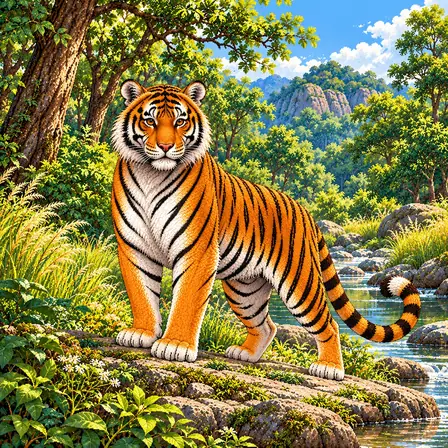
The Bengal tiger lives in India and nearby countries. Its orange fur with black stripes helps it hide in the forest. It also likes to swim.
Bengal tigers live in India and neighbouring parts of South Asia. They use forests, grasslands and mangrove habitats, with orange fur and black stripes helping conceal them among vegetation. They are largely solitary and range over broad territories while hunting prey such as deer. Tigers can swim and may enter water to cool down. Conserving prey, forest and connected habitat supports their survival.
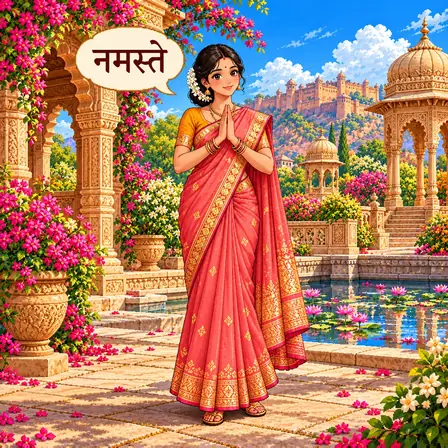
Namaste is a greeting used in India. You press your palms together in front of your chest and bow your head a little. You can say it when you meet and when you leave.
Namaste (नमस्ते) is a greeting that conveys respect. It may accompany palms brought together at the chest and a slight bow. India has many languages and greeting traditions, so expressions vary by region and situation. It is written in Devanagari, a script used for Hindi, Sanskrit and other languages. Its letters hang from a joining headline, and consonants and vowels combine into single forms.
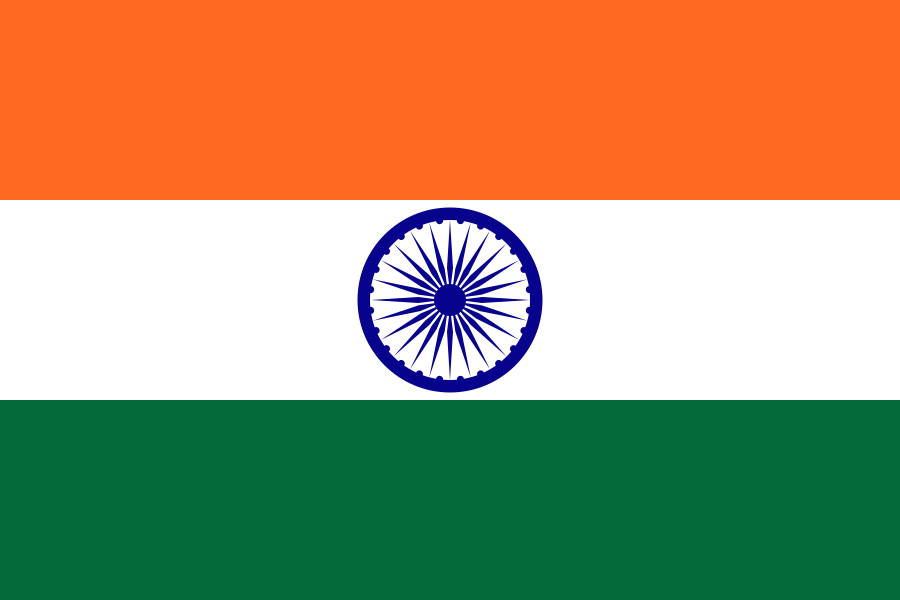
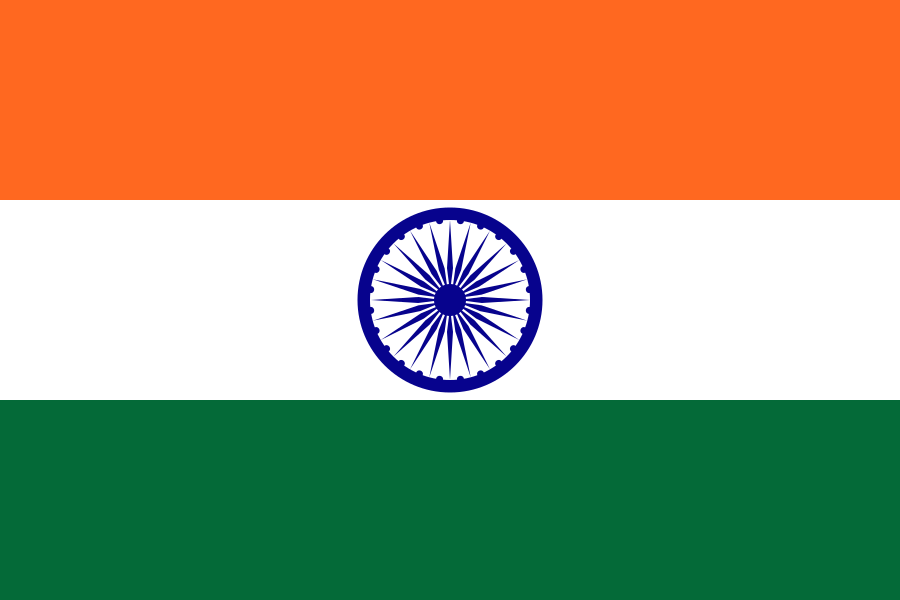
India's flag has three stripes: orange, white and green. In the middle is a blue wheel with 24 spokes. The wheel stands for moving forward without stopping.
India's flag is made of three level stripes - saffron (orange) on top, white, and green. On the middle white stripe is a blue wheel with 24 spokes, the Ashoka Chakra. This wheel was taken from a pattern carved on King Ashoka's stone pillar about 2,300 years ago, and it stands for progress that never stops. It is said that saffron means courage, white means peace and truth, and green means the richness of the land. It was set as the present flag in 1947.
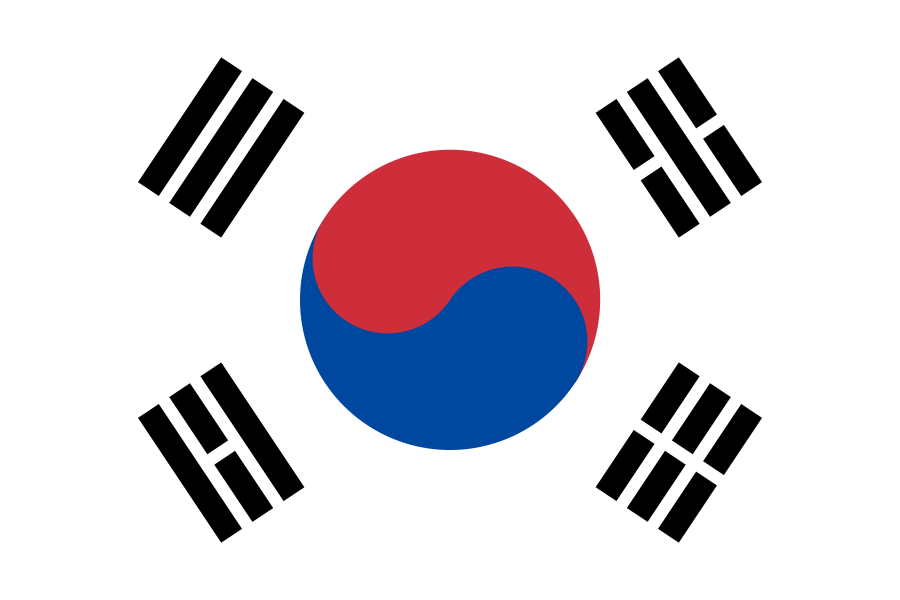 South Korea
K-pop, taekwondo, and kimchi · an East Asian peninsula country that invented its own alphabet, Hangul.
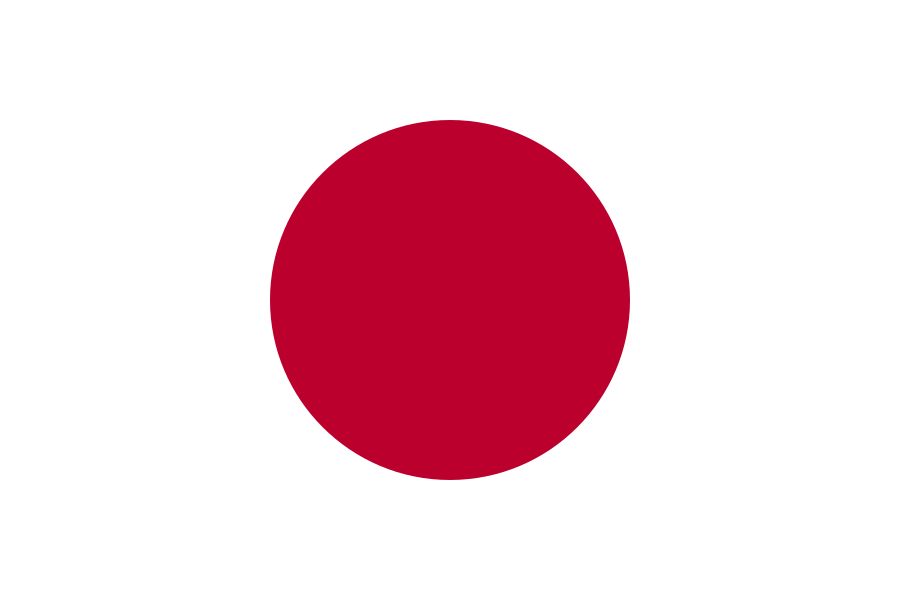 Japan
An island country · sushi and Mount Fuji.
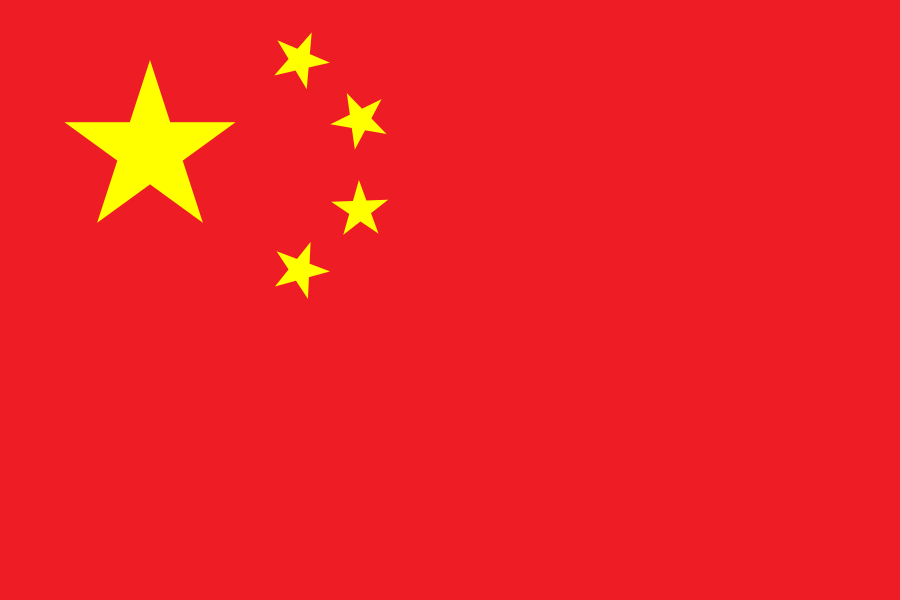 China
One of the most populous countries in the world · the Great Wall.
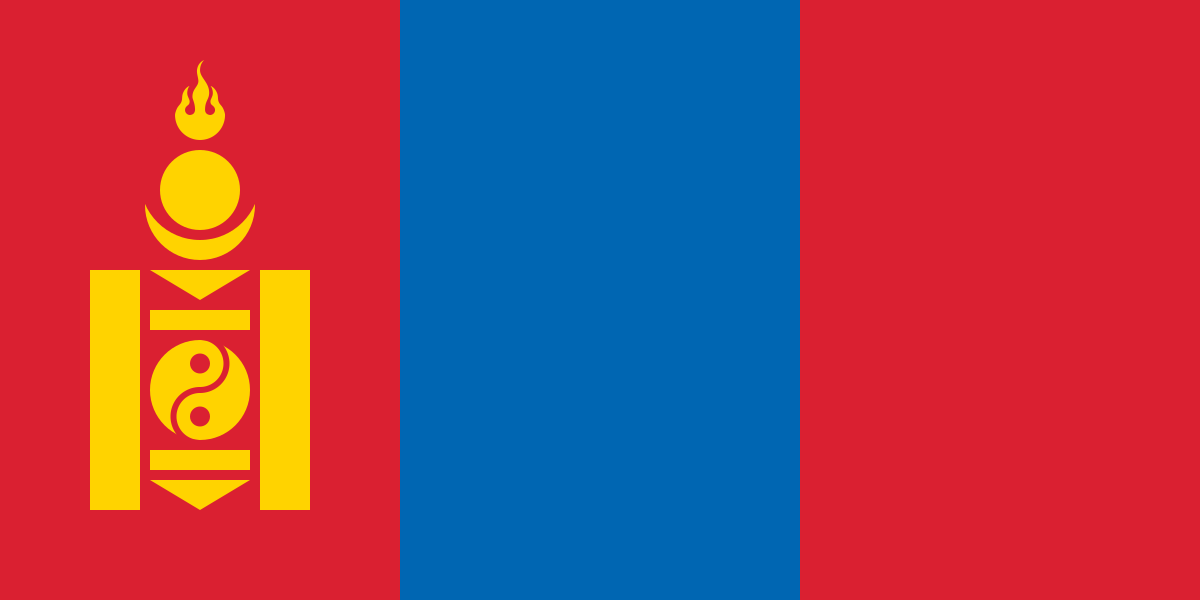 Mongolia
A land of grasslands and nomads · life in a ger.
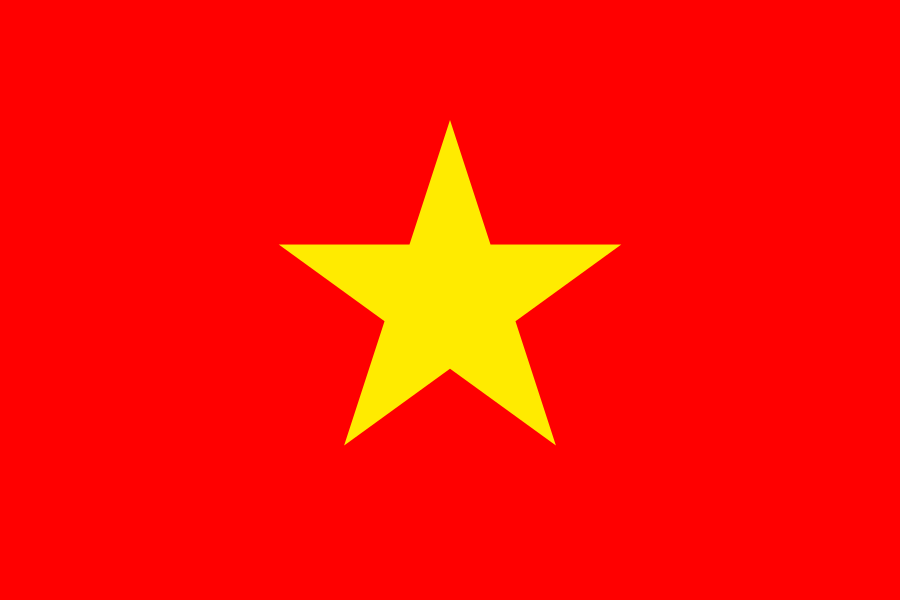 Vietnam
An S-shaped country · pho noodles and the ao dai.
 Thailand
The land of smiles · elephants and temples.
 Indonesia
One of the countries with the most islands in the world · Bali.
 Uzbekistan
The heart of the Silk Road · Samarkand and the Registan.
 Saudi Arabia
A country of wide deserts and oases · camels.