World Geography Atlas › Europe › Western Europe

United Kingdom

United Kingdom

An island country · Buckingham Palace and red buses.

Capital LondonPopulation About 68 millionArea 243,610 km²Language English
Map

Reading the land

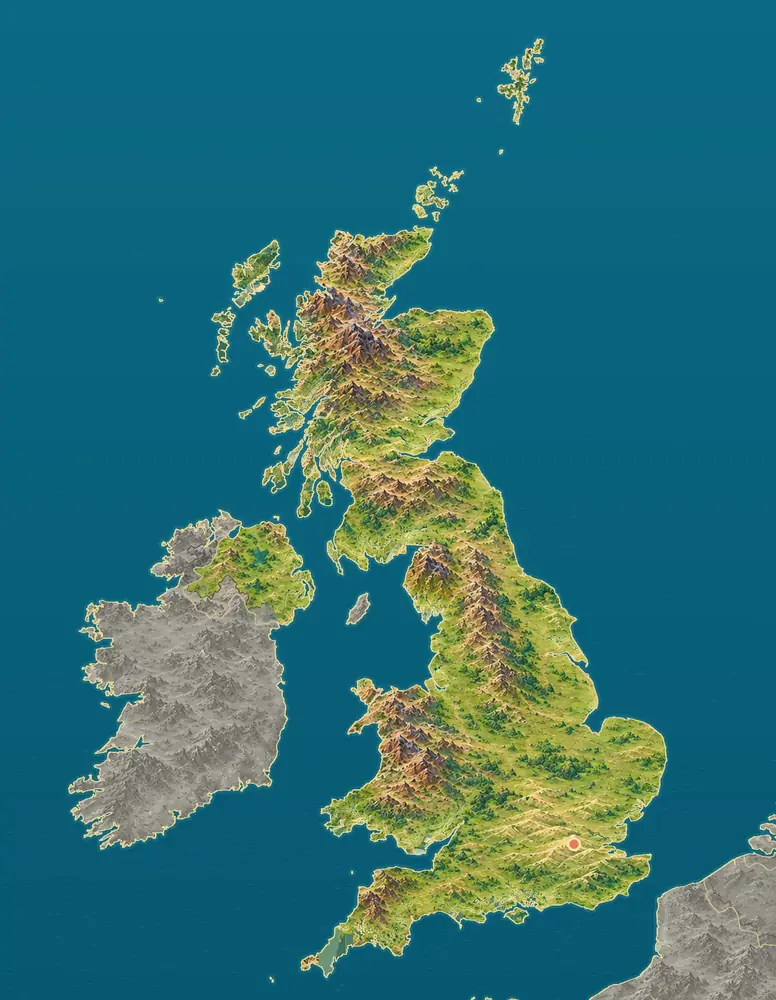
Illustrated map of United Kingdom
Illustrated map: yenalab. Country outlines: Natural Earth (public domain).

The United Kingdom is an island country next to mainland Europe. Scotland in the north has high, rugged mountains, while England in the south has wide, low fields.

The United Kingdom is made up of Great Britain, the northeast of the island of Ireland (Northern Ireland) and surrounding islands. The north and west are high and rugged; the south and east are low plains.

Terrain

Coasts & islands

Islands of the far north

The Orkney and Shetland Islands lie off northern Scotland, and the Hebrides to the west. The coastline is deeply indented with sea inlets and cliffs.

Source: Natural Earth, Land, 1:50m

Geology

The Giant’s Causeway

The Giant’s Causeway on the coast of Northern Ireland has about 40,000 basalt columns, many of them roughly six-sided. They formed when ancient lava cooled slowly and cracked into columns.

Source: UNESCO, Giant’s Causeway and Causeway Coast

A coast of 185 million years

The Jurassic Coast of southern England exposes rock layers covering about 185 million years along some 155 km of cliffs. Many fossils from the age of dinosaurs are found there.

Source: UNESCO, Dorset and East Devon Coast

Collection

United Kingdom Collection

A city, a heritage site, nature, a plant, culture, food, an animal, a greeting and the flag of United Kingdom, each drawn as pixel art.

London
City

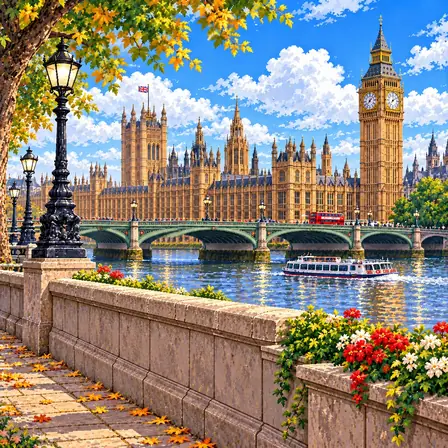
London

London is the capital of the United Kingdom. It is an old city founded beside a river about 2,000 years ago. It was the first city in the world to have an underground railway.

London is the capital of the United Kingdom, where about 9 million people live. It began as "Londinium," built by the Romans on the north bank of the Thames around 47 to 50 CE, a few years after their army arrived in 43 CE. Part of the Roman-era city wall still remains in the City of London today. The city was rebuilt after the Great Fire of London in 1666, the world's first underground railway began running here in 1863, and a modern public sewer system was built in the 19th century.

Stonehenge
Heritage

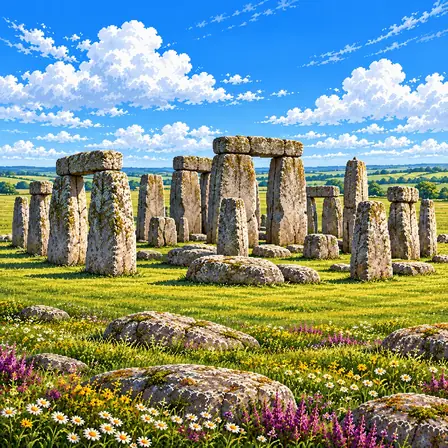
Stonehenge

Stonehenge is a ring of huge standing stones. It was built about 4,500 years ago. Why it was made is still a mystery.

Stonehenge is a huge ring of standing stones on Salisbury Plain in England. It is thought to have been raised around 3,000 to 2,500 BCE. The big sarsen stones weigh about 25 tons on average and came from about 25 km to the north, while the smaller bluestones were brought more than 200 km from the Preseli Hills in Wales. The stones were set to line up with the sunrise on the summer solstice and the sunset on the winter solstice. Its exact purpose is still a mystery, and it is a UNESCO World Cultural Heritage site.

Lake District
Nature

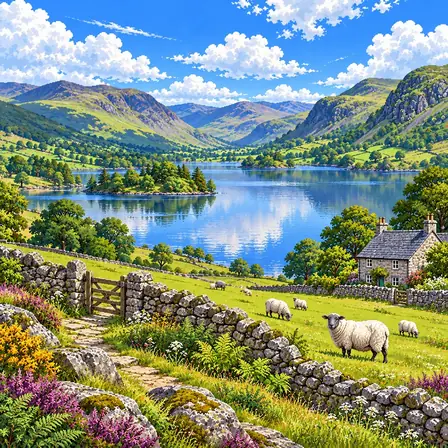
Lake District

The Lake District is a land of lakes and mountains. Long ago, glaciers carved the land and made 16 lakes. It became a national park in 1951.

The Lake District is a beautiful area of lakes in northwestern England. Mountain land formed about 400 million years ago when the earth's plates crashed together, then smoothed by glaciers in the ice age, making 16 lakes. It inspired poets and painters like Wordsworth and John Ruskin. It became a national park in 1951 and a UNESCO World Heritage Site in 2017.

Bluebell
Plants

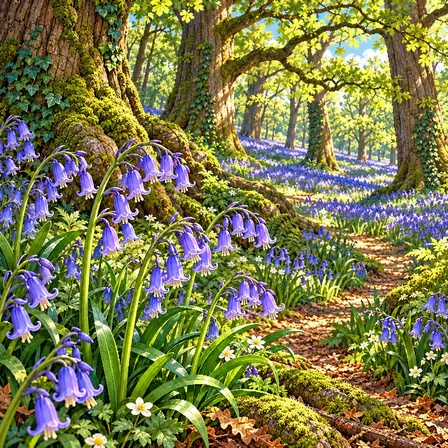
Bluebell

The bluebell is a blue, bell-shaped flower of spring woods. When they bloom together, the forest floor looks like a blue wave. About half of the world's bluebells grow in Britain.

The bluebell is a flower you can see in Britain's spring woods. In April and May, when small, bell-shaped blue flowers gather in groups, the forest floor looks like a blue wave. It is a marker plant of ancient woodland, and about half of the world's bluebells grow in Britain. It is one of the wildflowers Britons love most.

Kilt & Traditional Dress
Culture

Kilt & Traditional Dress

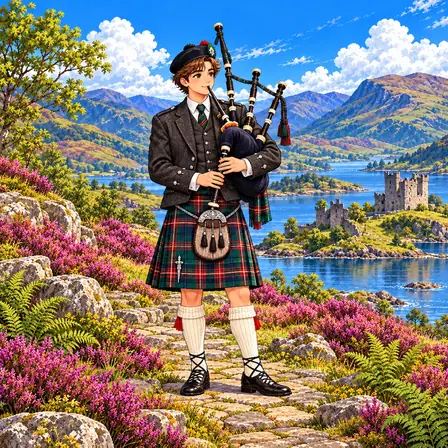
The kilt is a checked skirt worn by men in Scotland. Each family had its own check pattern, so you could tell someone's family from it. Pipers dress up in kilts when they play the bagpipes.

The kilt is a checked, skirt-like traditional outfit worn by men in Scotland. The checked pattern, called tartan, today has its own pattern for each family (clan). More than 10,000 tartans are recorded in the Scottish Register of Tartans. A small leather pouch called a sporran is worn at the waist, and it is worn as formal dress when playing the bagpipes. Even today people proudly wear it at weddings and Highland Games festivals.

Fish and Chips
Food

Fish and Chips

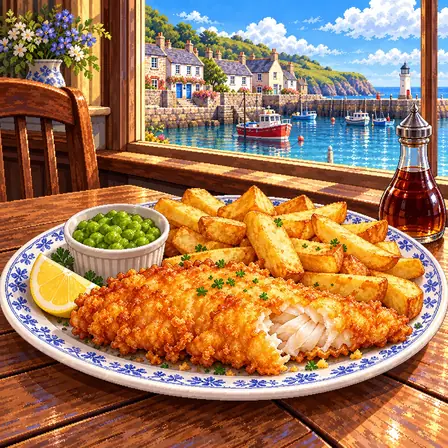
Fish and chips is fried fish with thick-cut fries. It is crispy outside and soft inside. People sprinkle it with lemon and vinegar.

Fish and chips is a famous British dish - white fish coated in batter and fried, served with thick potato chips. After the first shop opened in the 1860s, it became a filling meal for workers. Fish like cod or haddock is used, and the batter is whipped with bubbles before frying so the outside turns crisp. It is eaten with mushy peas, lemon, and vinegar. It used to be wrapped in newspaper, and even now there are more than 10,000 fish-and-chip shops across Britain.

Bulldog
Animals

Bulldog

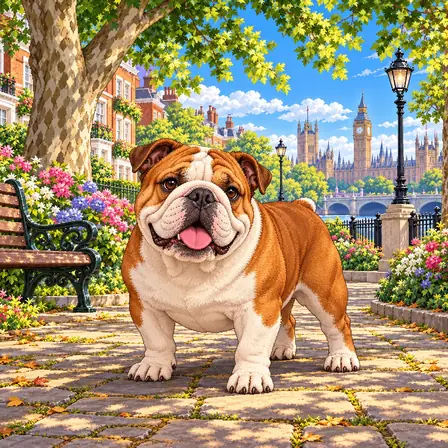
The bulldog is a dog with a flat nose and a wrinkly face. It looks grumpy, but it is gentle and patient. Its short nose makes it struggle in the heat.

The bulldog is a dog from Britain with a flat nose, a wrinkled face, and a sturdy, low body. With broad shoulders and short legs, it has an unusual build with a low center of gravity. Because its nose is short, it is weak in the heat and likes to rest in cool places. Unlike its grumpy-looking face, it is gentle and very patient, so it is loved as a family dog. It has been bred into its present shape since the 19th century and often appears as an animal that stands for Britain.
Hello
Greeting

Hello

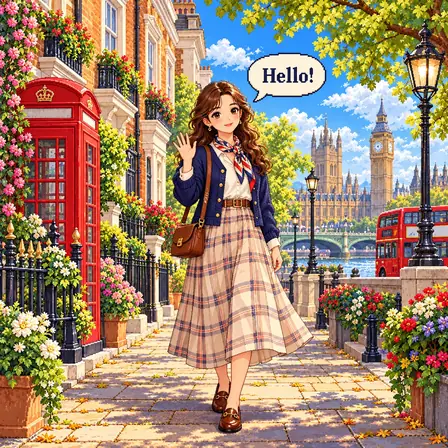
Hello is the basic greeting in English. You can say it to anyone at any time. About 1.5 billion people around the world use English.

"Hello" is read "heh-LOH," the basic greeting in English. English is a member of the Germanic language family that began in Britain and grew rich by taking in many Latin and French words. In Britain the accent differs by region, so you can often guess where someone is from just by how they speak. Counting learners, about 1.5 billion people use English around the world. It is the easiest, all-purpose greeting you can use any time of day.

United Kingdom's Flag
Flag

United Kingdom's Flag

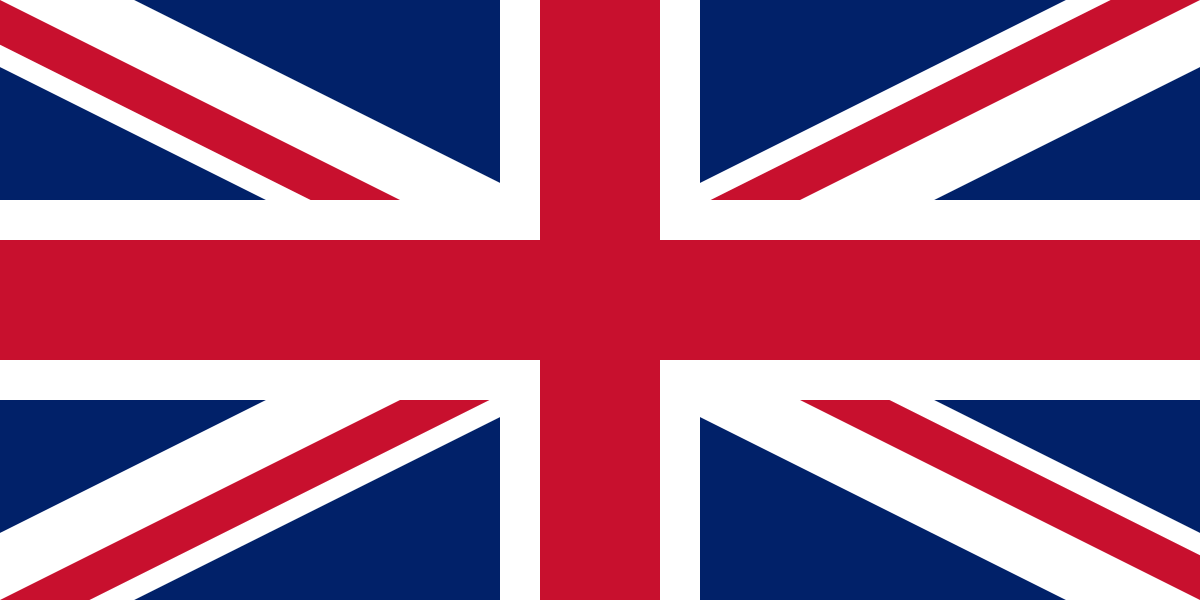
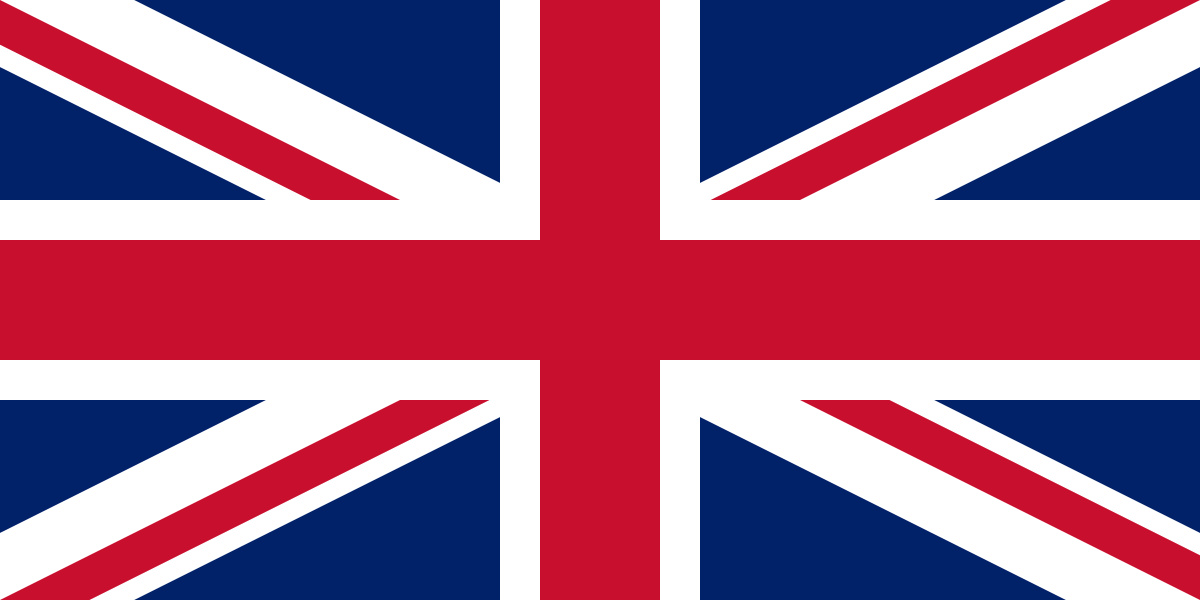
The United Kingdom's flag is called the Union Jack. It combines the crosses of England, Scotland and Ireland. Its top and bottom are different, so it must not be flown upside down.

The United Kingdom's flag is called the "Union Jack" and has three crosses laid over one another. It joins the red cross of England, the white diagonal cross of Scotland, and the red diagonal cross of Ireland into one. The history of several regions forming one country is held right inside the flag. Its present shape was finished in 1801. It is famous as a tricky flag, because the top and bottom are not the same, so flying it upside down is wrong.