World Geography Atlas › Europe › Western Europe

France

France

The country of the Eiffel Tower · baguettes and wine.

Capital ParisPopulation About 68 millionArea 551,695 km²Language French
Map

Reading the land

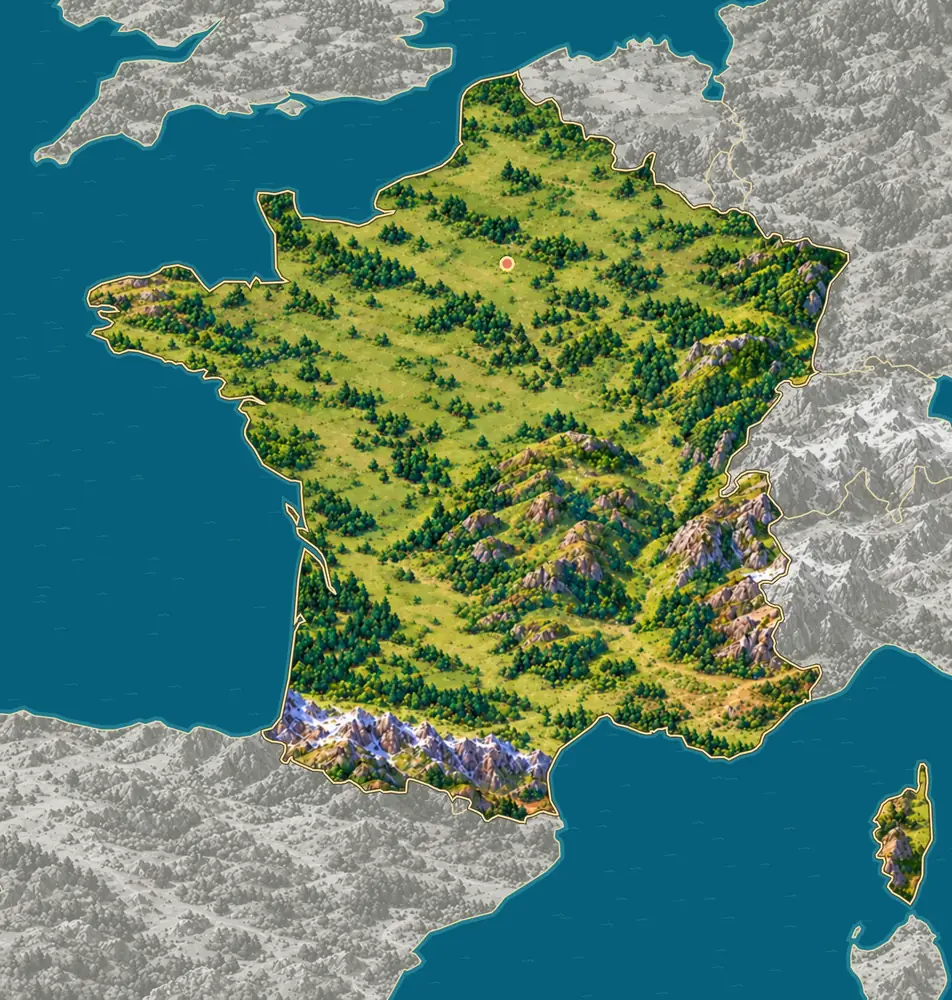
Illustrated map of France
Illustrated map: yenalab. Country outlines: Natural Earth (public domain).

France has wide plains in the north and west, and high mountains in the south and east. In the Mediterranean is Corsica, a mountainous island.

Mainland France divides into the Paris Basin and western lowlands, the Massif Central in the middle, the Pyrenees in the south and the Alps in the southeast. Corsica lies in the Mediterranean.

Terrain

Plains of the north and west

The Paris Basin, centred on Paris, is a broad, gently sloping bowl of low land. The north and west, crossed by the Seine and the Loire, are covered with farmland such as wheat fields and vineyards.

Source: IGN, Carte de France physique

Coasts & islands

Geology

Volcanoes of the Massif Central

The Massif Central in the middle of France is an old upland. To its north, the Chaîne des Puys lines up about 80 rounded volcanoes, formed by magma rising where the crust was pulled apart.

Source: UNESCO, Chaîne des Puys - Limagne fault tectonic arena

Limestone canyons of the Pyrenees

The Monte Perdido area of the Pyrenees, shared by France and Spain, is a limestone massif whose summit reaches 3,352 m. Glaciers and water carved it into great half-circle cliffs called cirques and deep canyons.

Source: UNESCO, Pyrénées - Mont Perdu

Collection

France Collection

A city, a heritage site, nature, a plant, culture, food, an animal, a greeting and the flag of France, each drawn as pixel art.

Paris
City

Paris

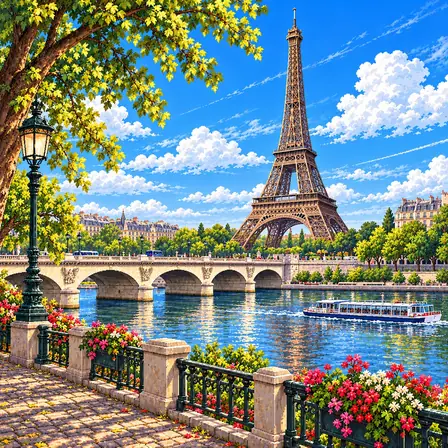
Paris is the capital of France. It is an old city that began on a small island in the Seine River. Wide avenues spread out from it like the points of a star.

Paris is the capital of France, where about 12 million people live in its greater area. It began when Celts settled on Île de la Cité in the Seine River in the 3rd century BCE, and the Romans later developed it as Lutetia. In the 19th century, Baron Haussmann's huge rebuilding added wide radial avenues and rules matching building heights to street widths, and this city plan became a classic example of modern city design.

Palace of Versailles
Heritage

Palace of Versailles

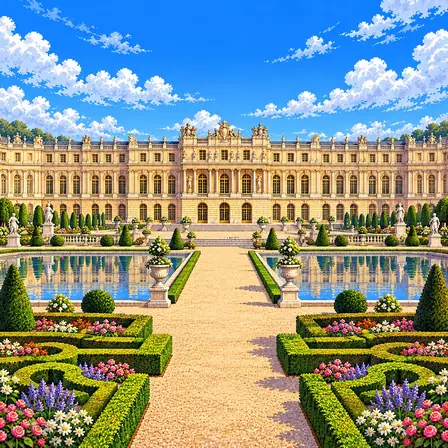
The Palace of Versailles is a grand palace where French kings once lived. It is famous for its Hall of Mirrors, decorated with hundreds of mirrors. Its huge gardens are beautiful too.

The Palace of Versailles is a grand Baroque royal palace near Paris. In 1682 Louis XIV (the Sun King) moved his court and government here, and it became a symbol of his power. Its "Hall of Mirrors" (73 m), decorated with 357 mirrors, and its wide French-style gardens are famous. For about 100 years it was the center of French power. It is a UNESCO World Cultural Heritage site.

Palace of Versailles
Heritage

Palace of Versailles

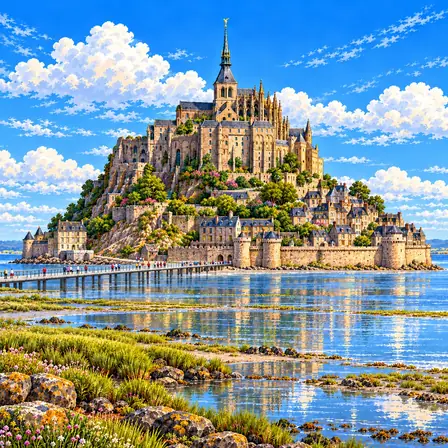
Mont-Saint-Michel is an abbey built on a small island by the sea. At high tide the sea surrounds the island, and at low tide it joins the land. It was first built about 1,300 years ago.

The Palace of Versailles is a grand Baroque royal palace near Paris. It was completed in 1682 by Louis XIV (the Sun King) as a symbol of his power. Its "Hall of Mirrors" (73 m), decorated with 578 mirrors, and its wide French-style gardens are famous. For about 100 years it was the center of French power. It is a UNESCO World Cultural Heritage site.

Verdon Gorge
Nature

Verdon Gorge

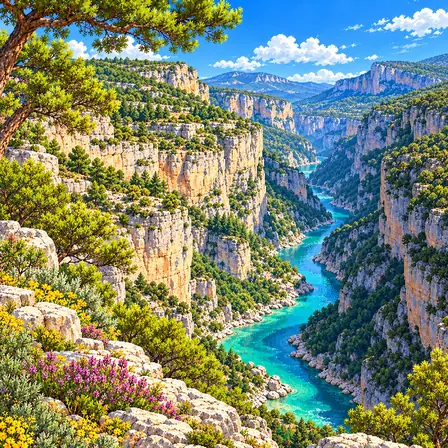
The Verdon Gorge is a valley that a river cut deep into the rock. In places it is 700 m deep. Its river water shines emerald green.

The Verdon Gorge, in Provence in southeastern France, is one of the deepest canyons in Europe. The Verdon River wore down limestone layers that piled up in a Jurassic sea (about 200 to 145 million years ago), carving a narrow, steep valley about 25 km long and up to 700 m deep over millions of years. Tiny mineral grains dissolved from the limestone make the river water look emerald green. Large vultures nest on the cliffs, and after passing through the gorge the river flows into Lake Sainte-Croix.

Lavender
Plants

Lavender

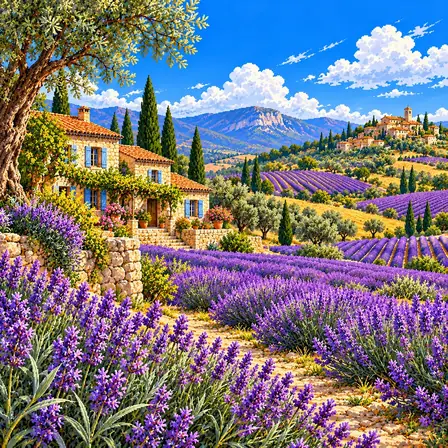
Lavender is a plant with purple flowers and a lovely smell. In summer, purple lavender fields stretch endlessly across southern France. It is used to make perfume and soap.

Lavender is the herb that stands for the Provence region of southern France. In July, endless purple lavender fields make a grand sight and fill the air with a sweet scent. It is the raw material for many everyday products such as perfume, soap, and oil, and the lavender fields of Provence are a world-famous tourist spot. The town of Grasse is called the capital of the world's perfume industry.

Beret & Breton Stripes
Culture

Beret & Breton Stripes

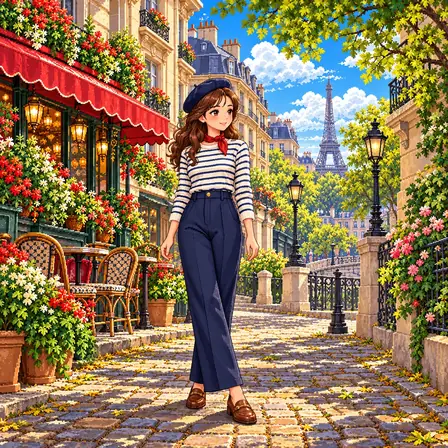
A beret is a flat, round cap. The blue-striped shirt was once worn by French sailors. Together they have become a stylish look that reminds people of France.

The beret is a flat, round hat that came from the hats worn by shepherds in the mountains of southwestern France. The blue-striped shirt, the marinière, was set as the uniform of the French navy in 1858. The stripes were said to make it easy to spot a sailor who fell into the sea from far away. In the 20th century, Paris designers lifted them into fashion and they became popular around the world. Today both have become a look that stands for French style.

Croissant
Food

Croissant

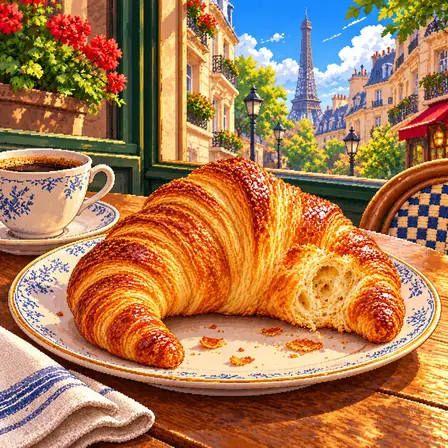
A croissant is a buttery roll curved like a crescent moon. It is made of many thin, flaky layers. People in France love fresh croissants for breakfast.

The croissant is a famous French bread, made by rolling buttery dough into a crescent-moon shape and baking it. Its name even means "crescent" in French. Butter is folded into the dough again and again to make dozens of thin layers, and when baked the butter melts and the layers puff up. Its charm is the texture - crisp and flaky outside, pulling apart in soft layers inside. In France it is everyday life to buy a freshly baked croissant from the bakery in the morning and eat it with coffee.

Rooster
Animals

Rooster

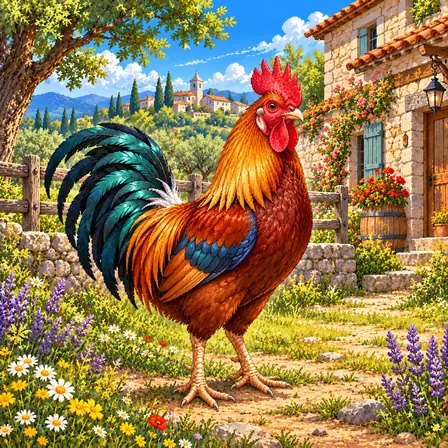
The rooster is a male chicken with a red comb and shiny tail feathers. It crows loudly every morning. A rooster even appears on the French national soccer team's shirts.

The rooster is the male of the chicken, with a red comb and tail feathers that shine like a rainbow. Every dawn it crows loudly to mark its territory and guard its flock. It became a symbol of France because in old Latin the words for "rooster" and "a person of Gaul" (the old land of France) were the same. Called the Gallic rooster, it stands for courage and pride. Even now it appears here and there - on the French national soccer team's uniform, on coins, and on weathervanes.

Bonjour
Greeting

Bonjour

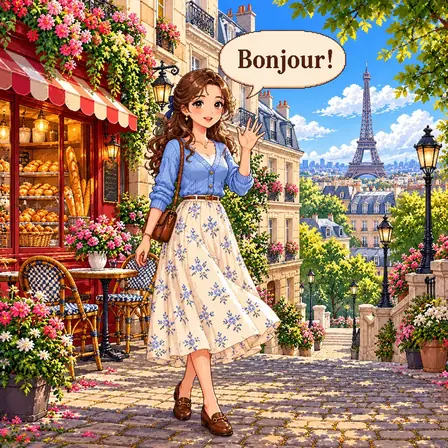
Bonjour means "good day" in French. It is polite to say bonjour when you walk into a shop. In the evening, people say "bonsoir."

"Bonjour" is a French greeting, read "bon-zhoor," meaning "good day." In France it is important manners to say bonjour first when you enter a shop. In the evening you switch to "bonsoir." French is a Romance language that grew from Latin and is an official language in 29 countries around the world. It often does not pronounce the final consonant, which is why it sounds soft.

France's Flag
Flag

France's Flag

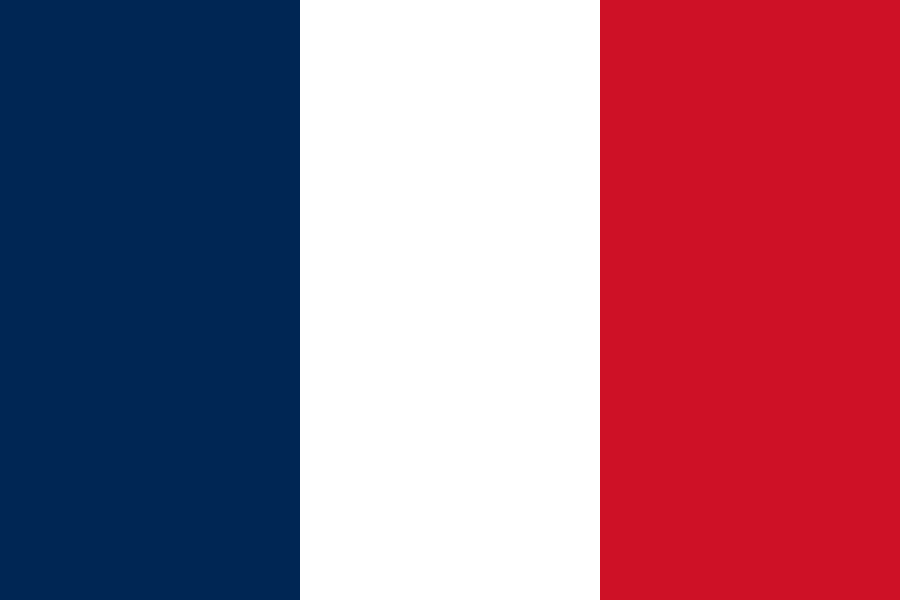
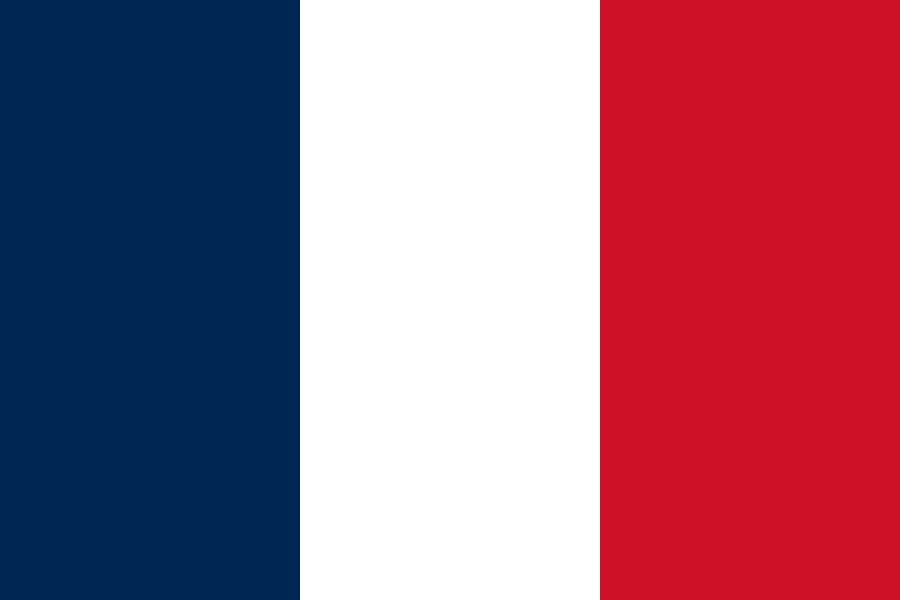
France's flag is a tricolor with blue, white and red stripes. The stripes stand side by side from top to bottom. It became a model for many other countries' three-color flags.

France's flag is a tricolor made of three upright stripes - blue, white, and red. It is called the "Tricolore." It is said to have started by placing white, the royal color, between the blue and red that stood for the city of Paris. It was set in its present order and shape in 1794. The three colors are spoken of together with the spirit of liberty, equality, and fellowship that France treasures, and they became a model for the tricolor flags of many countries.