World Geography Atlas › Africa › North Africa

Egypt

مصر

Pyramids and the Sphinx · the Nile River.

Capital CairoPopulation About 110 millionArea 1,001,450 km²Language Arabic
Map

Reading the land

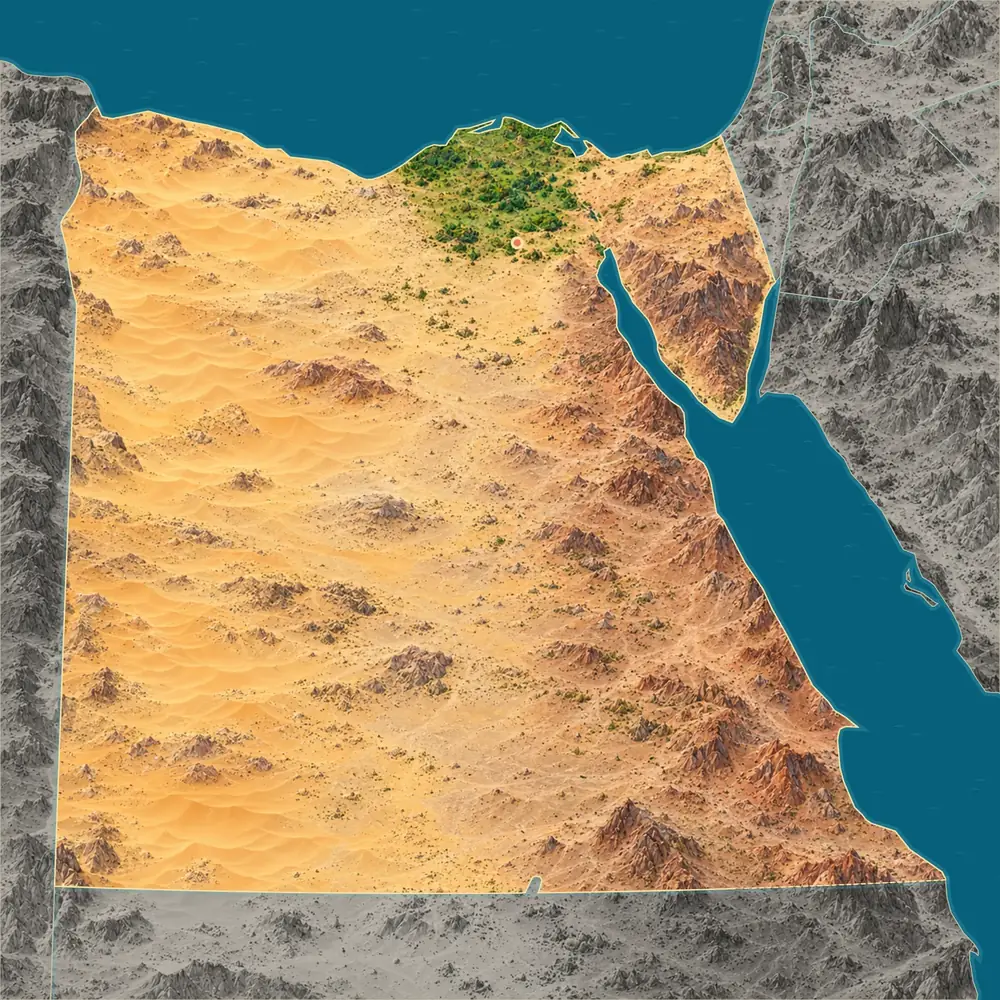
Illustrated map of Egypt
Illustrated map: yenalab. Country outlines: Natural Earth (public domain).

Most of Egypt is desert. Most people live along the Nile, and a wide green land lies in the north where the river meets the sea.

In Egypt the Nile flows from south to north between the sandy desert in the west and dry mountains in the east, building a wide delta by the Mediterranean. In the east, the mountainous Sinai Peninsula sits between two arms of the Red Sea.

Terrain

A green ribbon in the desert

The Nile valley and delta make up less than 5% of Egypt's land, yet about 97% of Egyptians live there. Thanks to the river's water, people could farm and build cities even in the middle of the desert.

Source: NASA Earth Observatory, City Lights Illuminate the Nile

River & seas

The delta built by the Nile

The Nile flows north and, where it meets the Mediterranean, splits into many channels and lays down soil, building a wide delta. The capital, Cairo, sits near where the delta begins.

Source: NASA Earth Observatory, City Lights Illuminate the Nile

Geology

Collection

Egypt Collection

A city, a heritage site, nature, a plant, culture, food, an animal, a greeting and the flag of Egypt, each drawn as pixel art.

Cairo
City

Cairo

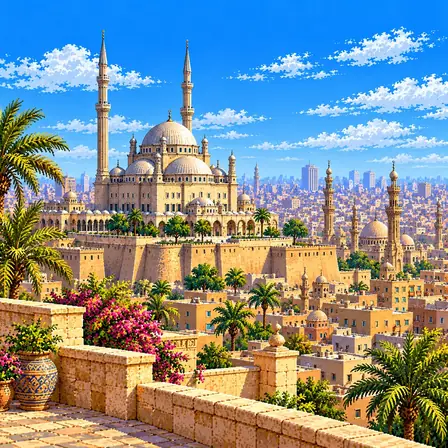
Cairo is the capital of Egypt. It is the biggest city in Africa. Pyramids about 4,500 years old stand near the city.

Cairo is the capital of Egypt and one of the largest cities in Africa, with more than 20 million people in its greater area. It was built by the Fatimid dynasty in 969 as "al-Qahira" (the victorious), and its city plan and maze-like alleys are kept in the old town, a UNESCO World Cultural Heritage site. The city's edge is squeezed between the desert and the Nile River, and on its outskirts stand the Pyramids of Giza from the 2600s BCE.

Luxor Temple
Heritage

Luxor Temple

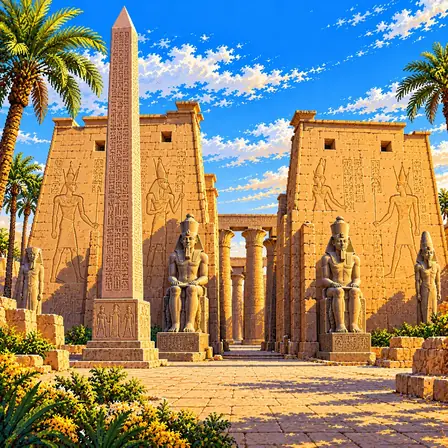
Luxor Temple is a very old temple beside the Nile River. It was built more than 3,000 years ago. Huge stone columns and a tall, pointed stone obelisk still stand there.

Luxor Temple is an ancient Egyptian temple on the east bank of the Nile. It was built by Amenhotep III around 1400 BCE and greatly enlarged by Ramses II. One of its two original obelisks was given by Egypt to France and has stood in the Place de la Concorde in Paris since 1836. It is a key site of Luxor, the "world's largest open-air museum," and inside the temple stands the Abu Haggag Mosque, built on top of it much later.

Nile River
Nature

Nile River

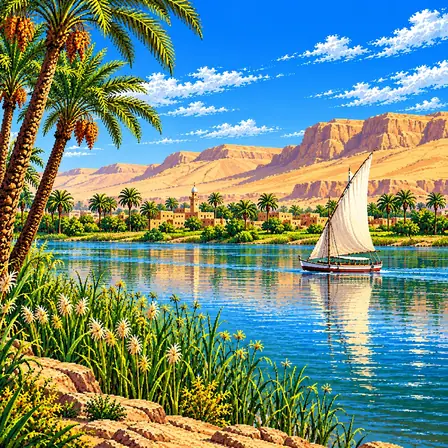
The Nile is the longest river in the world. It flows through the middle of the desert to the sea. Long ago, Egyptians farmed the rich land along its banks.

The Nile River, about 6,650 km long, is the longest river in the world. It starts at Lake Victoria in East Africa and flows across the desert to the Mediterranean Sea. The rich silt left by its flooding every July to October became the foundation of 5,000 years of Egyptian civilization. The ancient Egyptians predicted this flooding cycle by watching the stars, and this led to the growth of the calendar and mathematics.

Papyrus
Plants

Papyrus

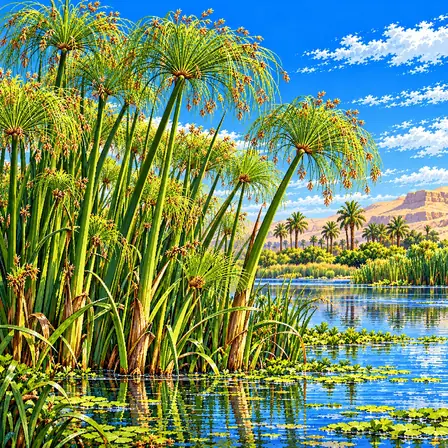
Papyrus is a tall plant that grows at the water's edge. Ancient Egyptians made a kind of paper from its stems to write on. The English word "paper" comes from papyrus.

Papyrus is a water plant that grows in the wetlands along the Nile River. In ancient Egypt, papyrus stems were cut thin, woven, and pressed dry to make a material for writing. The English word "paper" even comes from papyrus. It is a plant that was essential to Egyptian hieroglyphs and the growth of its civilization.

Galabeya & Traditional Dress
Culture

Galabeya & Traditional Dress

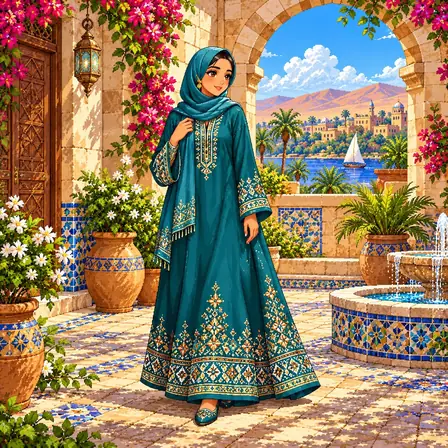
The galabeya is a loose robe that reaches the ankles. Air flows through it, so it stays cool on hot days. People still wear it in markets and villages.

The galabeya is a loose, ankle-length robe worn by Egyptians. It carries on from clothing worn by people along the Nile for thousands of years. Wide and airy, it keeps you cool even in heat over 40°C. It is made of cotton or linen and decorated with embroidery around the neck. Even today it is everyday wear, often seen in markets and the countryside.

Koshari
Food

Koshari

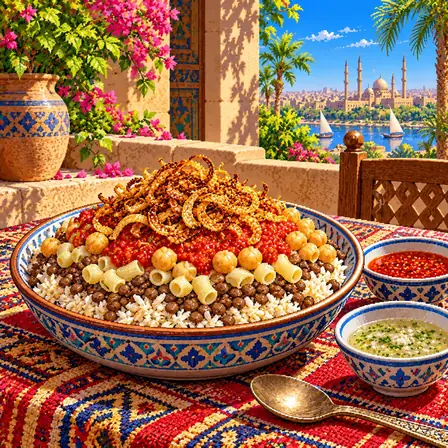
Koshari is rice, macaroni and lentils served in one bowl. It is topped with spicy tomato sauce and crispy fried onions. It is cheap and filling, so it is sold on streets everywhere.

Koshari is Egypt's national dish, with rice, macaroni, and lentils in one bowl, topped with spicy tomato sauce and crispy fried onions. It was born in the 19th century when food ingredients from many countries were combined into one bowl in Egypt. With grains and beans together, it is filling even without meat. People pour on a vinegar-and-garlic sauce or a spicy sauce to taste. Cheap and large in portion, it can be found at any street eatery in Cairo.
Egyptian Cat
Animals

Egyptian Cat

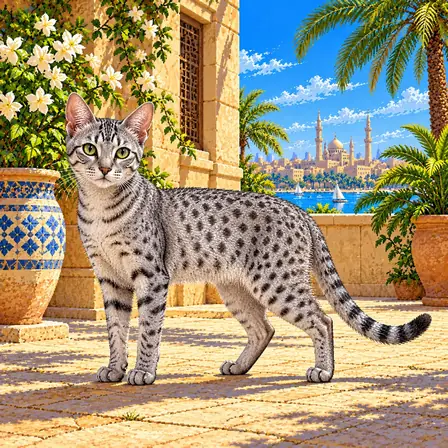
The Egyptian cat is a slim cat with a spotted coat. It is said to be the fastest runner among house cats. Ancient Egyptians treasured cats.

The Egyptian cat is a slim cat with natural spots on its body, carried on through the breed called the Egyptian Mau. With long hind legs, it is known as one of the fastest-running house cats. In ancient Egypt it grew close to people as a mouse hunter guarding grain stores. It was held so sacred that there was a cat-shaped goddess, Bastet, and it remains in many wall paintings and statues. Research has shown that the ancestor of today's house cats was a wild cat from this region.

Marhaba
Greeting

Marhaba

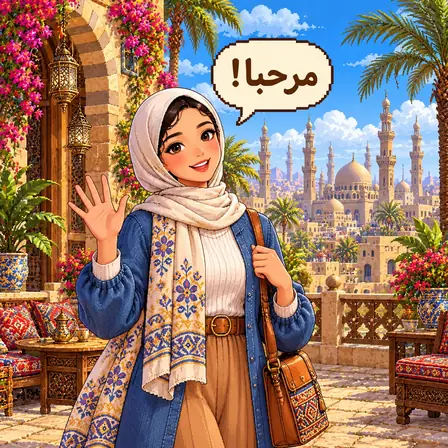
Marhaba means "welcome" in Arabic. Arabic is written from right to left. Books open from the opposite side to Korean books.

"Marhaba" is read "mar-ha-ba," an Arabic greeting meaning "welcome." Arabic is a big language used by more than 400 million people in some 20 countries, including Egypt. Each country has its own dialect, and the Egyptian dialect has spread far through movies and songs, so it is understood well across the Arab world. Writing goes from right to left, and the same letter changes shape depending on where it is in a word. Books, too, open from what looks to us like the back cover.

Egypt's Flag
Flag

Egypt's Flag

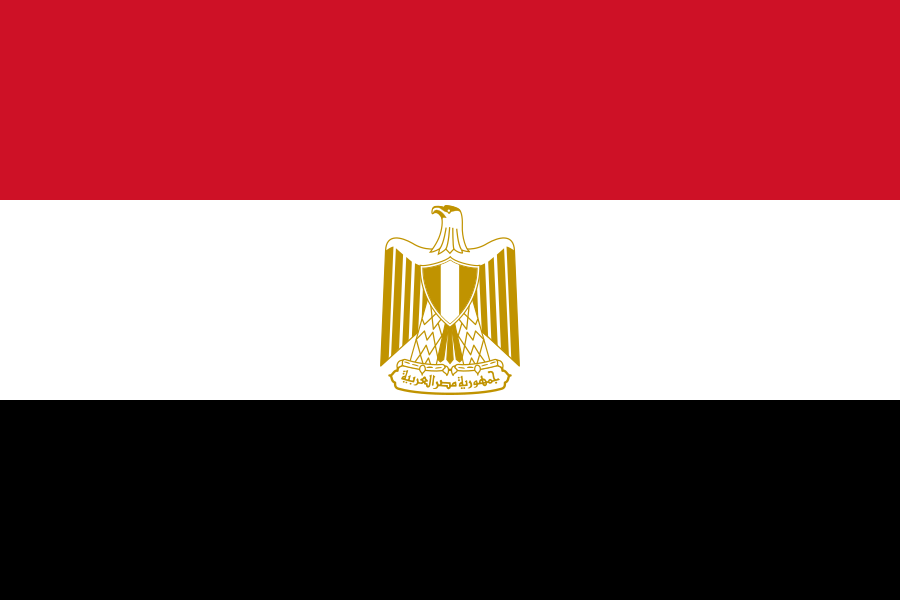
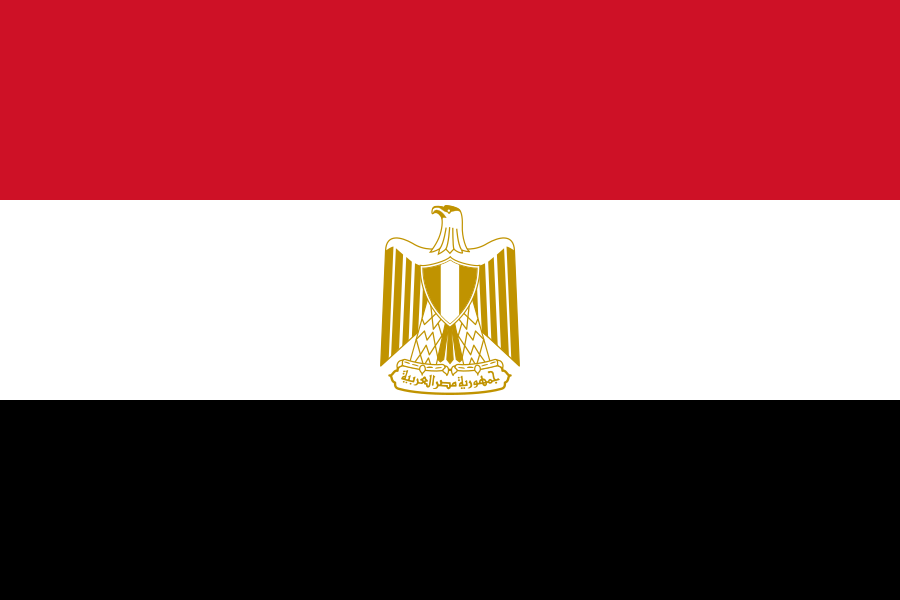
Egypt's flag has three stripes: red, white and black. A golden eagle sits on the white stripe in the middle. It is called the Eagle of Saladin.

Egypt's flag is made of three level stripes - red, white, and black from the top. These three colors are a traditional combination shared by several Arab countries. On the middle white stripe is a golden eagle emblem. Called the "Eagle of Saladin," it carries a shield on its chest and holds a band with the country's name in its claws. The present flag was set in 1984.