World Geography Atlas › Europe › Western Europe

Germany

Deutschland

The country of sausages and beer · Neuschwanstein Castle.

Capital BerlinPopulation About 84 millionArea 357,022 km²Language German
Map

Reading the land

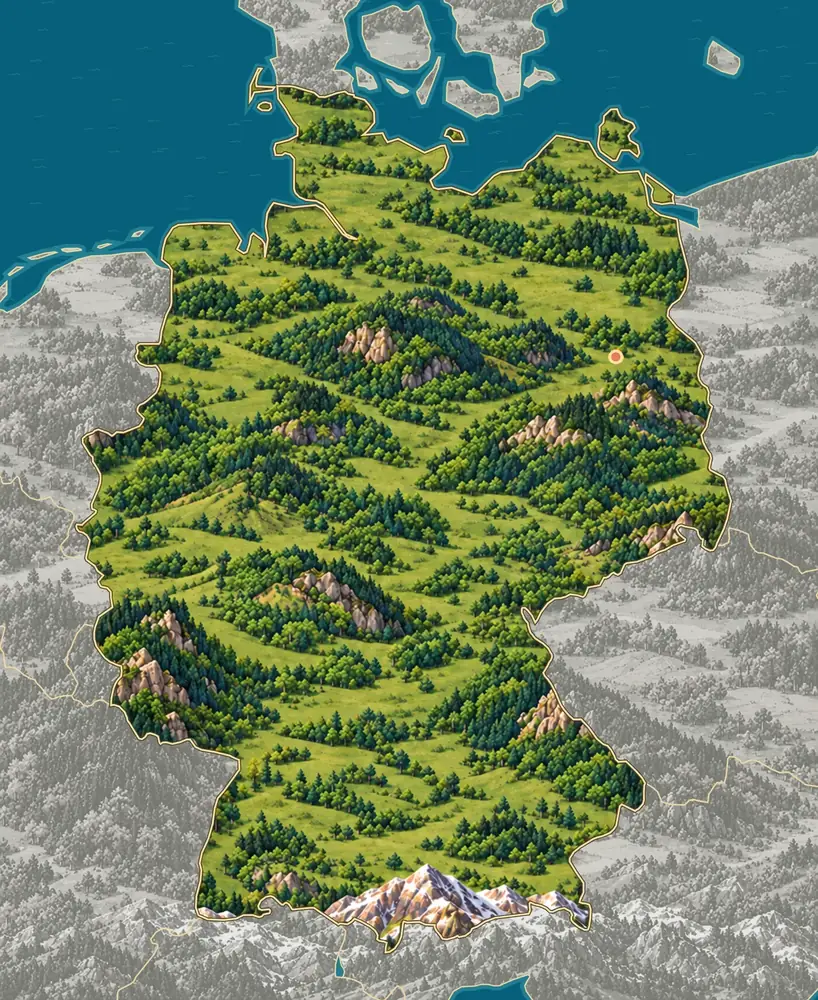
Illustrated map of Germany
Illustrated map: yenalab. Country outlines: Natural Earth (public domain).

Germany is low and flat in the north and rises toward the south. Its middle has many low, forested hills. At the southern edge are the snowy Alps.

Germany divides into the North German Plain, the forested central uplands and the Alps in the south. The north touches the North Sea and the Baltic Sea.

Terrain

Seas & rivers

The Rhine cuts through hills

The Rhine flows from south to north through western Germany. For about 65 km between Bingen and Koblenz, the river has cut a deep gorge through the uplands, its slopes lined with vineyards and castles.

Source: UNESCO, Upper Middle Rhine Valley

Geology

Messel Pit fossils

Near Frankfurt, the Messel Pit holds fossils from mud laid down on a lake bed about 47 million years ago. Complete skeletons, and even stomach contents, show the age when mammals were spreading.

Source: UNESCO, Messel Pit Fossil Site

Collection

Germany Collection

A city, a heritage site, nature, a plant, culture, food, an animal, a greeting and the flag of Germany, each drawn as pixel art.

Berlin
City

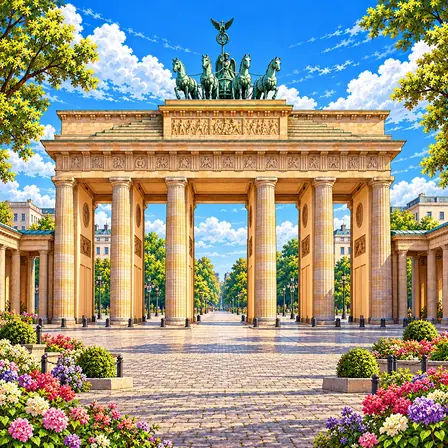
Berlin

Berlin is the capital of Germany. A wall once split the city into east and west, but now only traces of it remain. Old and new buildings stand side by side.

Berlin is the capital of Germany, where about 3.9 million people live. It began in the 13th century on an island in the Spree River and grew into the capital of the Kingdom of Prussia in 1701 and the German Empire in 1871. From 1961 to 1989 a wall divided the city, and after it came down, Berlin became the capital again when the country reunited in 1990. Buildings from many different periods of history stand together across the city, and the way it was rebuilt is studied as a case in modern city planning.

Cologne Cathedral
Heritage

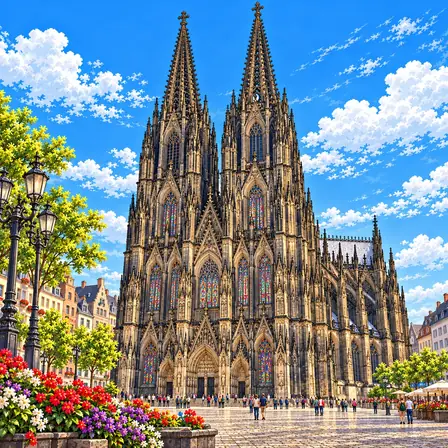
Cologne Cathedral

Cologne Cathedral is a church with two pointed towers reaching high into the sky. It took more than 600 years to finish. Its colorful glass windows are beautiful.

Cologne Cathedral is a Gothic cathedral begun in 1248 and finished in 1880. That means it took 632 years to build. Its two spires, 157 m tall, and its medieval stained glass made in the 13th century are famous. It is a symbol of the city that came through hard times over its long history. It is Germany's most-visited sight and a UNESCO World Cultural Heritage site.

Neuschwanstein Castle
Heritage

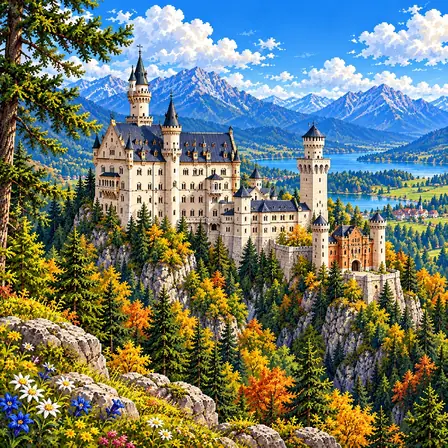
Neuschwanstein Castle

Neuschwanstein Castle is a white castle on a rocky hill at the foot of the Alps. King Ludwig II, who loved stories of medieval knights, built it. It was a model for the Disney castle.

Neuschwanstein Castle is a Romantic castle built on a steep rocky hill at the foot of the Bavarian Alps. King Ludwig II of Bavaria began building it in 1869, and it brings to life the dreams of a king who loved the knightly world of the Middle Ages and the operas of Wagner more than everyday politics. It mixes Byzantine, Romanesque and Gothic styles and is a leading example of historicist architecture, and it inspired the Disney castle. The king died in 1886, 17 years after work began, so the castle was left unfinished.

Saxon Switzerland
Nature

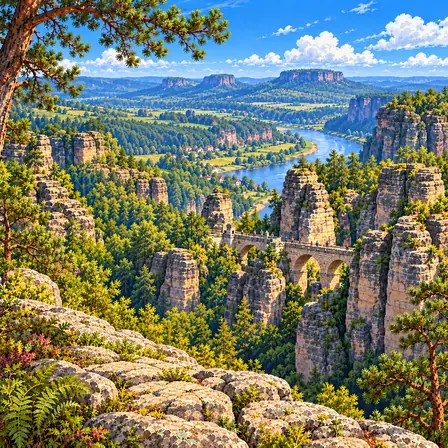
Saxon Switzerland

Saxon Switzerland has more than 1,000 rock peaks that stand up like pillars. A river, rain and wind carved them over a very long time. The view from a stone bridge between the rocks is amazing.

Saxon Switzerland is a sandstone mountain area spread along the Elbe River in eastern Germany. Sand piled up in a shallow Cretaceous sea about 100 million years ago and hardened into sandstone, which the Elbe River and the weather wore down over ages by erosion, making more than 1,000 pillar-shaped rock peaks and deep valleys. The view from the Bastei Bridge, which links the rocks, is especially famous. Romantic painters loved to paint it in the 19th century, and it is known as one of the places where free rock climbing began.

Cornflower
Plants

Cornflower

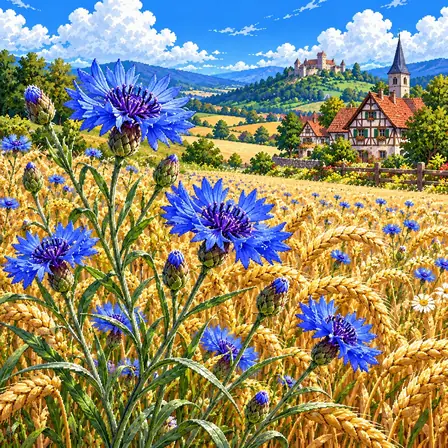
The cornflower is a blue flower that blooms in wheat fields and meadows in summer. Its blue color stands out among the golden wheat. People in Germany have loved it for a long time.

The cornflower is a flower that blooms in summer in Germany's wheat fields and meadows. Its bright blue petals are its trademark, and blue cornflowers among golden wheat are a symbol of the German countryside. It has long been loved for its simple, hardy beauty, and it is a flower with a deep tie to the old Prussian royal family.

Dirndl & Lederhosen
Culture

Dirndl & Lederhosen

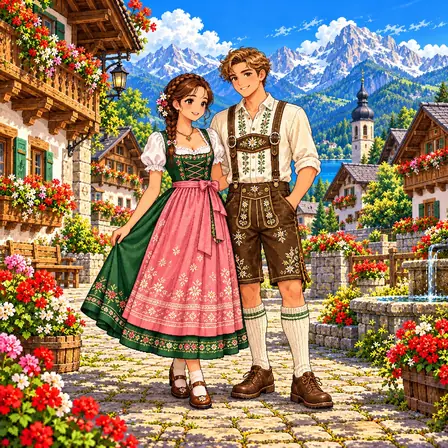
The dirndl is a traditional dress with an apron worn by women in southern Germany. Lederhosen are leather shorts worn by men. Many people dress up in them for autumn festivals.

The dirndl is a traditional outfit worn by women in Bavaria, in southern Germany, made of a blouse, a vest, a wide skirt, and an apron. Lederhosen are men's leather shorts, known for their suspenders and embroidery. They were originally sturdy clothes for working in the Alpine countryside. Every autumn the Oktoberfest in Munich draws more than 6 million people, and many of them come dressed in this traditional clothing. It is still enjoyed at festivals in Alpine villages.

Bratwurst
Food

Bratwurst

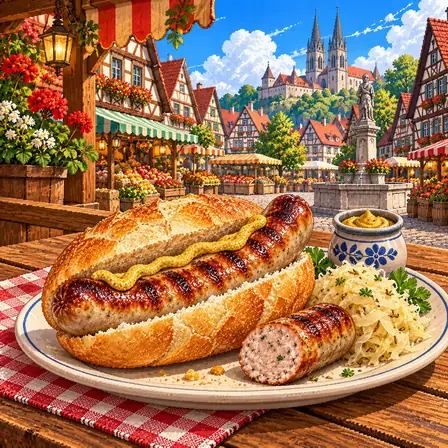
Bratwurst is a German sausage grilled over charcoal. Its size and taste differ by region, so there are more than 40 kinds. People eat it in a bun with mustard.

Bratwurst is a German grilling sausage made by mixing minced pork with spices. It has a long history - records go back 700 years - and there are many kinds, with recipes that differ by region. Nuremberg sausages are as small as a finger, while Thuringian ones are long and thick. The basic way to eat it is grilled over charcoal, served with mustard, and tucked into bread. It is a German street food that is never missing from markets, festivals, and the front of soccer stadiums.

Eurasian Red Squirrel
Animals

Eurasian Red Squirrel

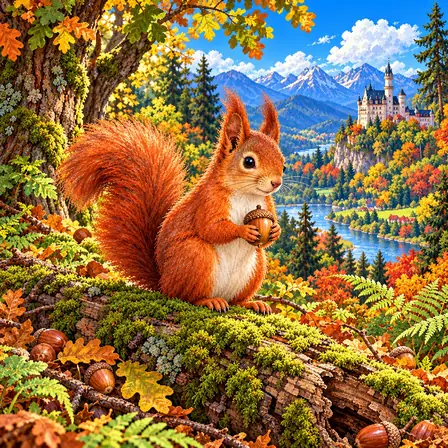
The red squirrel has red fur and a bushy tail. In autumn it buries acorns, and the ones it forgets grow into new trees. In winter, long tufts of fur grow on its ear tips.

The Eurasian red squirrel is a squirrel known for its red fur, the long ear tufts that grow in winter, and its bushy tail. It lives in Germany's forests and parks, eating acorns, pine nuts, and mushrooms. In autumn it buries acorns here and there as winter food, and the ones it forgets grow into new trees in those very spots. Its long tail helps it balance as it leaps between trees and becomes a blanket when it sleeps. It builds a round, ball-shaped nest up on the branches.
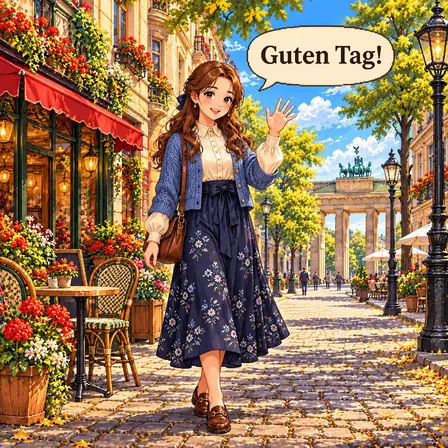
Guten Tag
Greeting

Guten Tag

Guten Tag means "good day" in German and is used during the daytime. In the morning people say "Guten Morgen." Friends just say "Hallo."

"Guten Tag" is read "goo-ten tahk" and means "good day" in German. It is a polite daytime greeting; in the morning you say "guten Morgen" and in the evening "guten Abend." Among friends, people say a short "hallo." German has the most native speakers in the European Union, about 100 million. It is famous for making new words by linking words together in a long line, like a train.

Germany's Flag
Flag

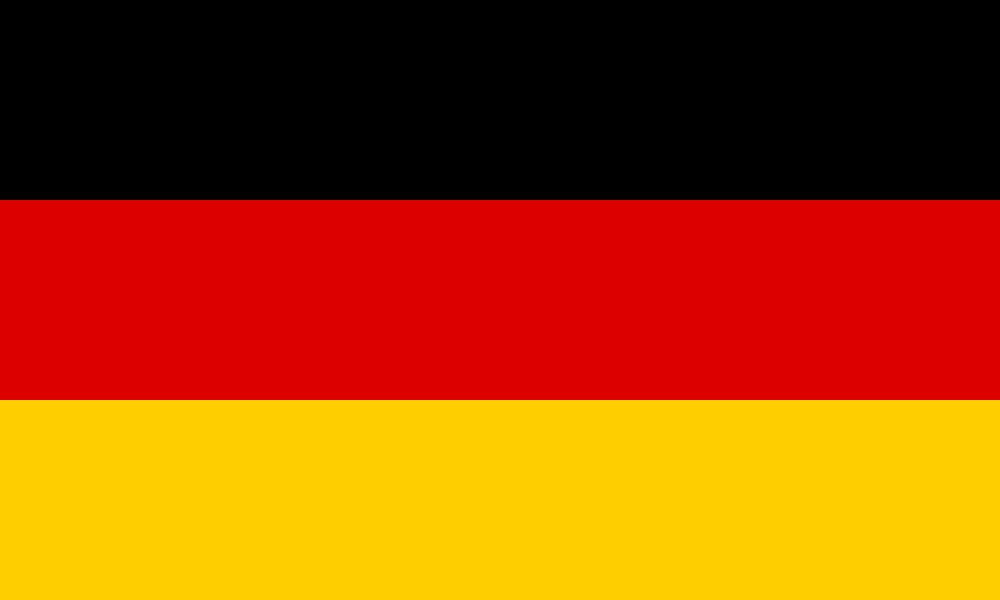
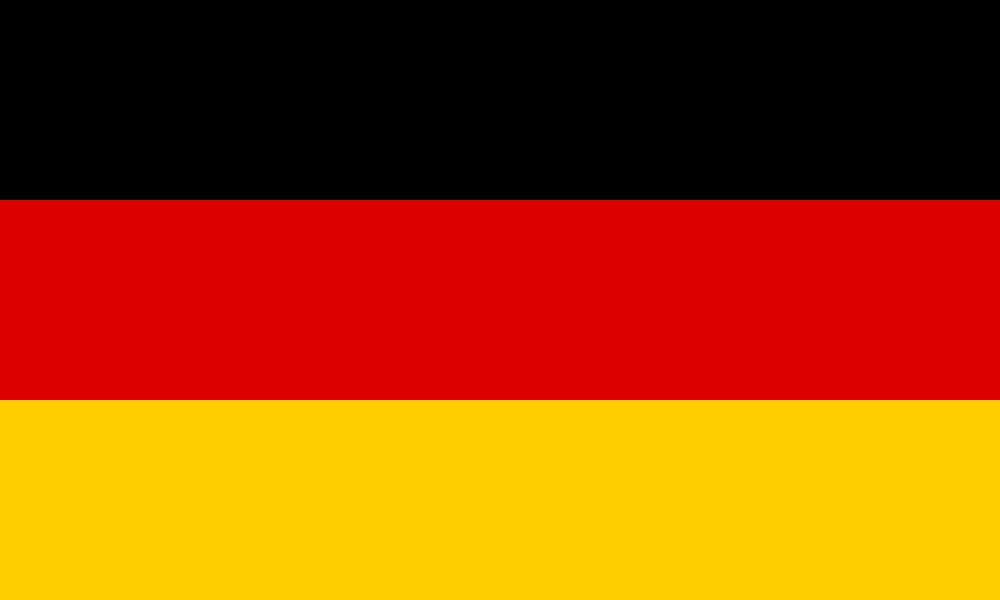
Germany's Flag

Germany's flag has three stripes: black, red and gold. The bottom color is called gold, not yellow. If the order of the colors changes, it becomes a different flag.

Germany's flag is made of three level stripes - black, red, and gold from the top. These three colors were used in the 19th century by people who hoped the many regions of Germany would come together as one country. It was set as the present flag in 1949. The official name for the bottom color is "gold," not yellow. The order of black, red, and gold matters, because changing it would make a different flag.