World Geography Atlas › Asia › East Asia

China

中国

One of the most populous countries in the world · the Great Wall.

Capital BeijingPopulation About 1.4 billionArea 9,596,961 km²Language Chinese
Map

Reading the land

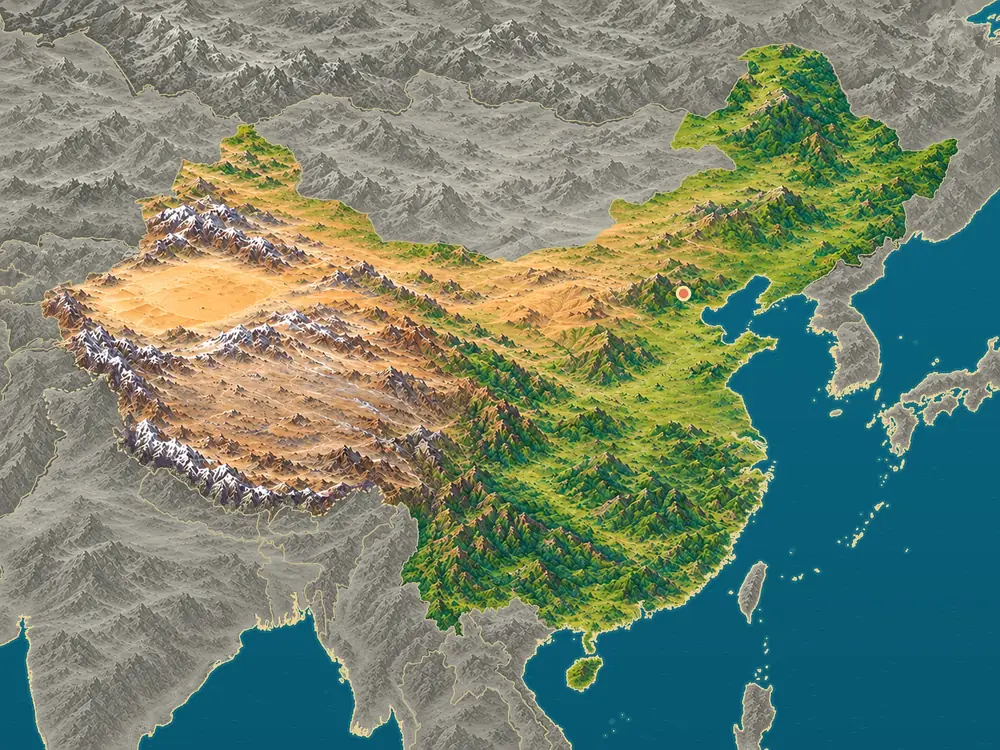
Illustrated map of China
Illustrated map: yenalab. Country outlines: Natural Earth (public domain).

China has the world’s highest plateau in the west, and the land gets lower toward the east. The Yangtze, Asia’s longest river, flows to the eastern sea.

China steps down like a staircase from the Tibetan Plateau and high ranges in the west to plains and coasts in the east. Dry basins lie between mountains in the northwest, and Hainan Island sits off the south coast.

Terrain

Coasts & islands

Hainan in the south

Hainan is a large island just off the southern tip of mainland China, surrounded by warm, near-tropical seas.

Source: Natural Earth, Land, 1:50m

Geology

Collection

China Collection

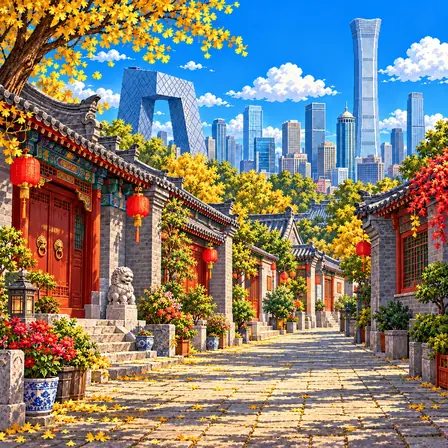
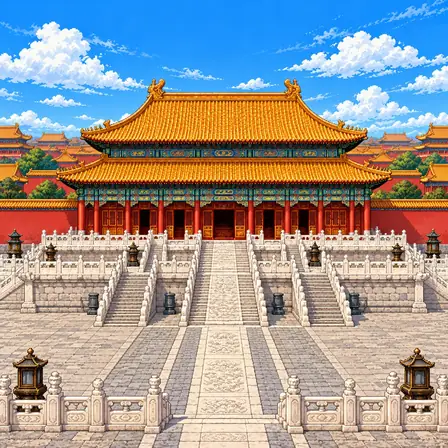
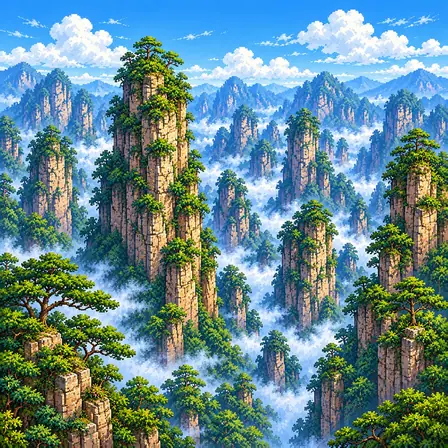
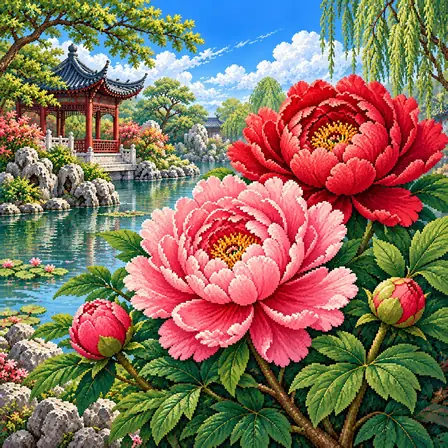
A city, a heritage site, nature, a plant, culture, food, an animal, a greeting and the flag of China, each drawn as pixel art.

Beijing
City

Beijing

Beijing is the capital of China. It is a very old city, more than 3,000 years old. You can see old palaces and tall buildings side by side.

Beijing is the capital of China, where about 21.8 million people live (end of 2024). It is a city more than 3,000 years old that first formed in the 11th century BCE. In the 13th century the Yuan dynasty built a neatly laid out capital like a grid, and in 1421 the Yongle Emperor of the Ming dynasty moved the capital here and rebuilt the city around the Forbidden City, shaping the heart of today's city. The Beijing Central Axis, which runs 7.8 km through the middle of the city from Yongdingmen Gate in the south to the Drum and Bell Towers in the north, became a UNESCO World Heritage Site in 2024.

Forbidden City
Heritage

Forbidden City

The Forbidden City is the palace where China's emperors once lived. It is so big that it has more than 8,000 rooms. Its yellow roofs and red pillars look grand together.

The Forbidden City is the palace of the emperors of the Ming and Qing dynasties, in the center of Beijing. It was completed in 1420, and 24 emperors lived there over 492 years until 1912. It was built by fitting wooden parts together, with bracket sets called dougong holding up the heavy roofs, and across an area of 720,000 m² it has about 9,000 bays (rooms counted the traditional way, as the space between four pillars). It is a UNESCO World Cultural Heritage site.

Zhangjiajie
Nature

Zhangjiajie

Zhangjiajie has more than 3,000 rock pillars reaching up to the sky. Rain and wind carved them over a very long time. When it is foggy, the rocks look as if they are floating.

Zhangjiajie is a national park in Hunan Province, China. It is an unusual landscape where layers of quartz sandstone, laid down in the sea about 300 to 380 million years ago, were worn away over millions of years by erosion, leaving more than 3,100 pillars standing 200 to 500 m tall. The up-and-down cracks in the sandstone created these pillar shapes. Several unique plant species have been found in the cut-off worlds on top of the pillars. It was listed as a UNESCO World Natural Heritage site in 1992.

Peony
Plants

Peony

The peony has big, showy flowers, so it is called the "king of flowers." People in China have painted it on pictures and bowls for a long time. It carries a wish for a happy, plentiful life.

The peony has long been called the king of flowers in China. Its big, full blossoms and bright colors are its trademark, and it stands for prosperity and good fortune. It has been grown and loved in the royal palace since the Tang dynasty, and it is the flower seen most often in traditional paintings, pottery, and embroidery. Luoyang, in Henan Province, is a world-famous spot for peonies.

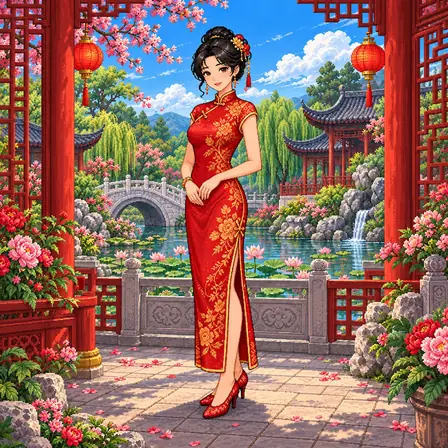
Qipao
Culture

Qipao

The qipao is a traditional Chinese dress that fits the body closely. It has a standing collar and knotted cloth buttons. People wear it on special days like weddings and holidays.

The qipao is a traditional Chinese outfit that flows along the curves of the body. It grew from the long robe worn by the Manchu people and took on its fitted shape in 1920s Shanghai. Its trademarks are a stiff stand-up collar, side slits, and knotted buttons made by twisting cloth. It is decorated richly, with patterns like peonies or dragons embroidered on silk. People still enjoy wearing it today on special days such as weddings and holidays.

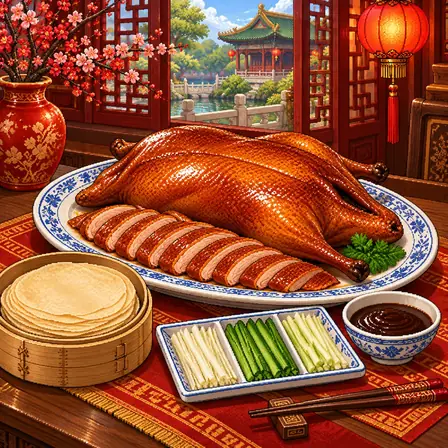
Peking Duck
Food

Peking Duck

Peking duck is a whole duck roasted hanging in an oven. Its skin is as crispy as a cracker. People wrap the duck with green onion and cucumber in a thin pancake.

Peking duck is the signature dish of Beijing, China, made by hanging a whole duck in a clay oven to roast. It grew out of royal court cooking about 600 years ago, in the Ming dynasty. Before roasting, air is blown between the skin and the meat and a sweet syrup is brushed on and dried, so the skin turns thin and crisp like glass. A cook slices it thinly right at the table, and the slices are placed on thin pancakes with spring onion and cucumber, brushed with a sweet sauce, and wrapped up. Slicing one duck into about 100 pieces is a cook's proud skill.

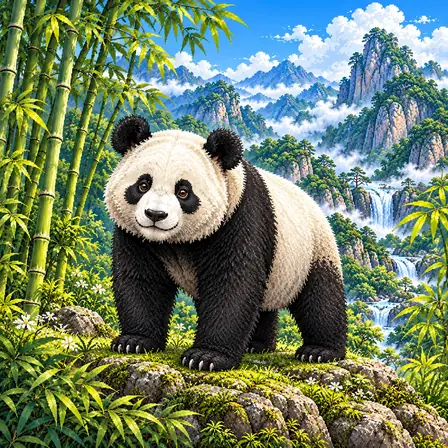
Panda
Animals

Panda

The panda is a bear with a white body and black ears and eye patches. It lives in bamboo forests in China's mountains and eats bamboo for more than 10 hours a day. A thumb-like bone in its wrist helps it hold bamboo.

The giant panda is a bear with a white body, black ears and eye patches, and black shoulders and legs. It lives in mountain forests in Sichuan, Shaanxi and Gansu, where bamboo grows densely. It feeds mainly on bamboo, using strong jaws and broad molars to crush tough stems. An enlarged wrist bone acts like a thumb and helps it grip bamboo. Protecting and connecting forest habitats helps pandas move between areas and find mates.

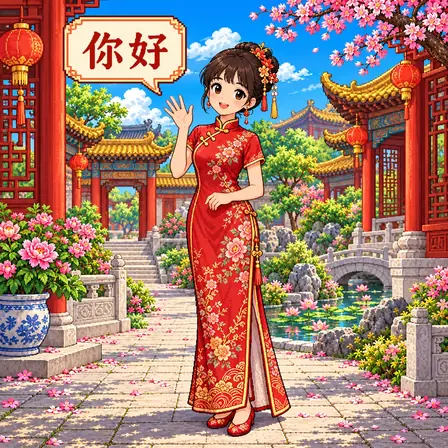
Ni hao
Greeting

Ni hao

Nǐ hǎo (你好) means "hello" in Chinese. It joins the characters for "you" and "good." In Chinese, the meaning changes when the pitch of a sound goes up or down.

"Nǐ hǎo" is a Chinese greeting that joins "you" (你) and "good" (好) to mean "hello." You can use it easily, even with someone you are meeting for the first time. Chinese is a language where the same sound can mean different things depending on its tone, and standard Chinese has four tones. About 940 million people speak Standard Chinese (Mandarin) as their mother tongue - the most in the world. Its writing uses characters that stand for meanings, and the commonly used ones alone number in the thousands.

China's Flag
Flag

China's Flag

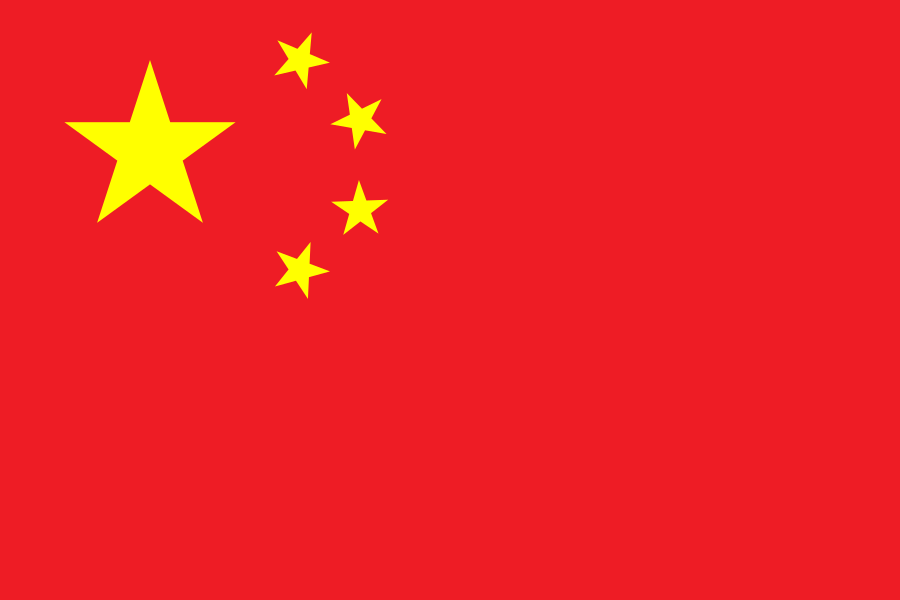
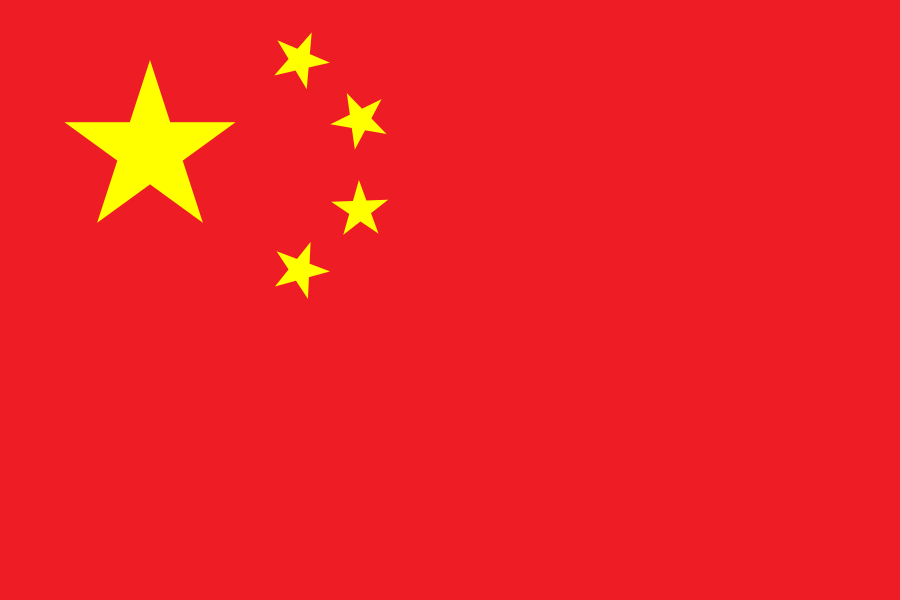
China's flag has five yellow stars on a red background. Four small stars sit around one big star. That is why it is called the "five-star red flag."

China's flag has one large yellow star with four smaller stars beside it, in the upper-left corner of a red field. Because it has five stars, it is called the "Five-Star Red Flag." The four small stars all tilt toward the center of the big star, which is said to show the people coming together in unity. Red and yellow are colors that have long been favored in China. The design was chosen through a contest and adopted in 1949.