World Geography Atlas › North America › Northern America

Canada

Canada

A maple-leaf flag · Niagara Falls.

Capital OttawaPopulation About 40 millionArea 9,984,670 km²Language English and French
Map

Reading the land

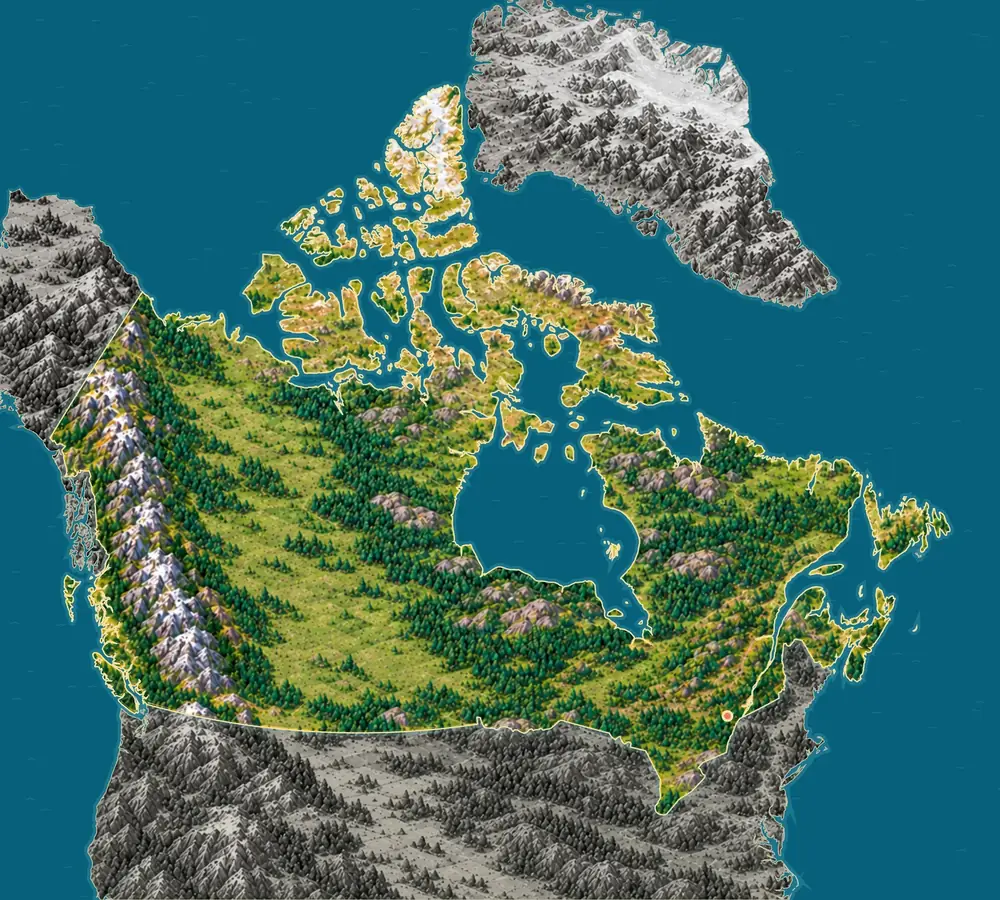
Illustrated map of Canada
Illustrated map: yenalab. Country outlines: Natural Earth (public domain).

Canada has the high Rocky Mountains in the west and wide plains in the middle. Its northern seas are full of islands, big and small. Long ago, glaciers scraped the land and left countless lakes.

Canada is made up of high western mountains, central plains, the very old rock of the Canadian Shield around Hudson Bay, and the Arctic islands in the north. It touches three oceans and has the longest coastline in the world.

Terrain

Coasts & islands

The longest coastline

Canada touches the Pacific to the west, the Arctic Ocean to the north and the Atlantic to the east. Counting the Arctic islands, its coastline is 243,042 km, the longest in the world.

Source: Statistics Canada, Canada Year Book 2008: Geography

Hudson Bay freezes and thaws

Hudson Bay, in the middle, is a huge sea that reaches deep into the land. In winter its surface is covered with ice, and in spring the ice breaks up and melts.

Source: NASA Earth Observatory, Thawing Ice on Hudson Bay

Geology

Collection

Canada Collection

A city, a heritage site, nature, a plant, culture, food, an animal, a greeting and the flag of Canada, each drawn as pixel art.

Ottawa
City

Ottawa

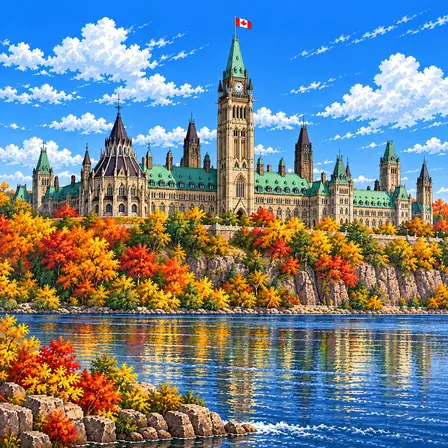
Ottawa is the capital of Canada. A long canal runs through the city. In winter the frozen canal becomes a huge skating rink.

Ottawa is the capital of Canada, where about 1 million people live. It began in 1826 as a base for building the Rideau Canal (202 km). In 1857, Queen Victoria chose it as the capital for balance between the two provinces of Ontario and Quebec. In winter the frozen Rideau Canal becomes a long skating rink, and the Rideau Canal became a UNESCO World Cultural Heritage site in 2007.

Old Quebec
Heritage

Old Quebec

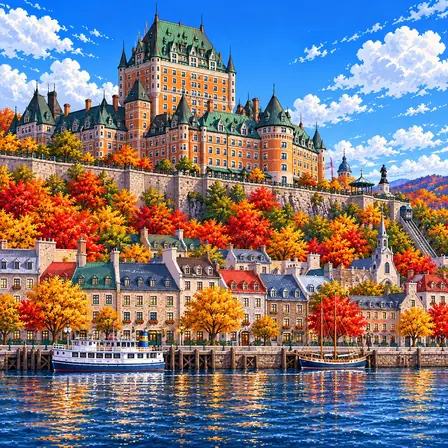
Old Quebec is an old city surrounded by walls. French settlers founded it about 400 years ago. Its stone houses and narrow lanes are well preserved.

Old Quebec is the only walled city in North America north of Mexico. It was built in 1608 by the French explorer Champlain and was a strategic key point on a cliff above the St. Lawrence River. Its French-style stone buildings and narrow alleys from the 17th to 19th centuries are well preserved. Nearby are the Plains of Abraham, a famous historic field. It became a UNESCO World Cultural Heritage site in 1985.

Niagara Falls
Nature

Niagara Falls

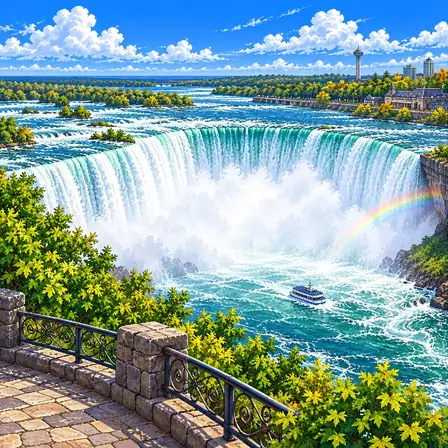
Niagara Falls is a huge waterfall between Canada and the United States. Every second, more water than 10,000 bathtubs pours over it. You can ride a boat right up to the falls.

Niagara Falls is one of the world's three great waterfalls, straddling the border of Canada and the United States. It is a grand sight, with about 2.8 million liters of water pouring down 57 m every second. It formed about 12,000 years ago when meltwater flowed after the last ice age ended. Large power stations here use the force of the falling water to make electricity.

Maple Tree
Plants

Maple Tree

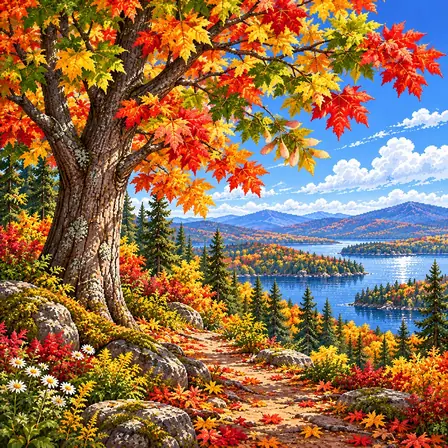
The maple tree's leaves turn red and yellow in autumn. Its leaves are shaped like an open hand. Sweet maple syrup is made from its sap.

The maple tree is a tree that stands for Canada's autumn scenery and its national identity. Its palm-shaped split leaves turn red and yellow in autumn, and a maple leaf is even drawn in the center of Canada's flag. Maple syrup, made from the sap of the sugar maple, is a specialty product that stands for Canada. Autumn maple-leaf tourism in Quebec and Ontario is famous around the world.

Mountie Uniform
Culture

Mountie Uniform

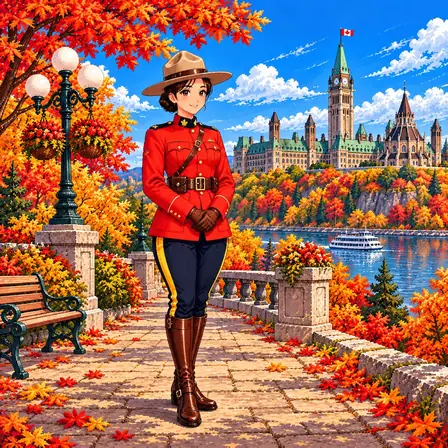
The Mountie uniform is the red coat worn by Canada's mounted police. It comes with a wide-brimmed hat and tall leather boots. Their horse show, with riders moving in patterns to music, is famous.

The Mountie uniform is the red dress uniform worn by the Royal Canadian Mounted Police (RCMP). It carries on from the tradition of the mounted police founded in 1873, and the bright red jacket can be recognized at a glance from far away. It is worn with a wide-brimmed brown hat, black riding trousers with a yellow stripe, and tall leather boots. Today it is formal dress for national events and parades. The Musical Ride, where 32 horses form patterns to music, is especially famous.
Poutine
Food

Poutine

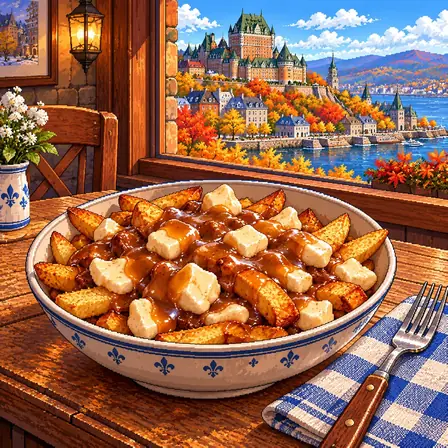
Poutine is fries topped with cheese curds and hot gravy. The cheese squeaks when you chew it. People enjoy it as a snack all over Canada.

Poutine is a Canadian food with cheese curds scattered over french fries and hot gravy poured on top. It is said to have started in country diners in Quebec in the 1950s. Cheese curds are soft, springy lumps from the stage before they become cheese, and the squeaky sound when you chew is proof they are fresh. The hot sauce melts the cheese a little so it blends with the fries. It is now a national snack sold at restaurants across Canada, beyond Quebec.

Beaver
Animals

Beaver

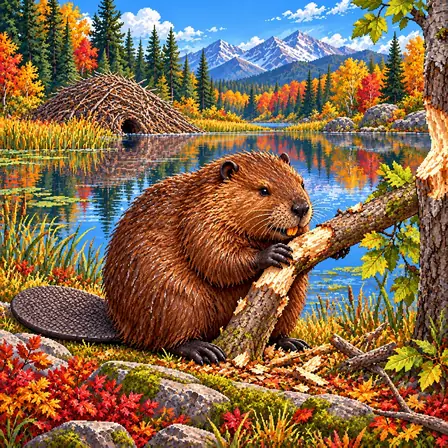
The beaver gnaws trees with its big front teeth to build dams in rivers. It builds a stick house in the middle of the pond the dam makes. It slaps the water with its flat tail to warn of danger.

The beaver is the largest rodent in North America, sometimes weighing up to 30 kg. With its orange front teeth that grow for life, it gnaws down trees and builds dams across rivers. In the middle of the pond made by its dam, it builds a house of branches, with the entrance underwater to keep out predators. It slaps the water with its broad tail to warn of danger and can hold its breath underwater for more than 10 minutes. A pond made by a beaver becomes a home for fish and birds, so it is called the "architect of the ecosystem."

Hello / Bonjour
Greeting

Hello / Bonjour

Canada uses both English and French. So "Hello" and "Bonjour" are both greetings. Both languages appear side by side even on cereal boxes and road signs.

"Hello!" and "Bonjour!" are greetings in English and French, Canada's two official languages. In 1969 Canada made both the official languages of the country by law. So everything from cereal boxes to road signs is written in both languages side by side. In Quebec most people speak French, and "bonjour" is the everyday greeting. In shops, people sometimes welcome customers with the two greetings joined together - "bonjour-hi!"

Canada's Flag
Flag

Canada's Flag

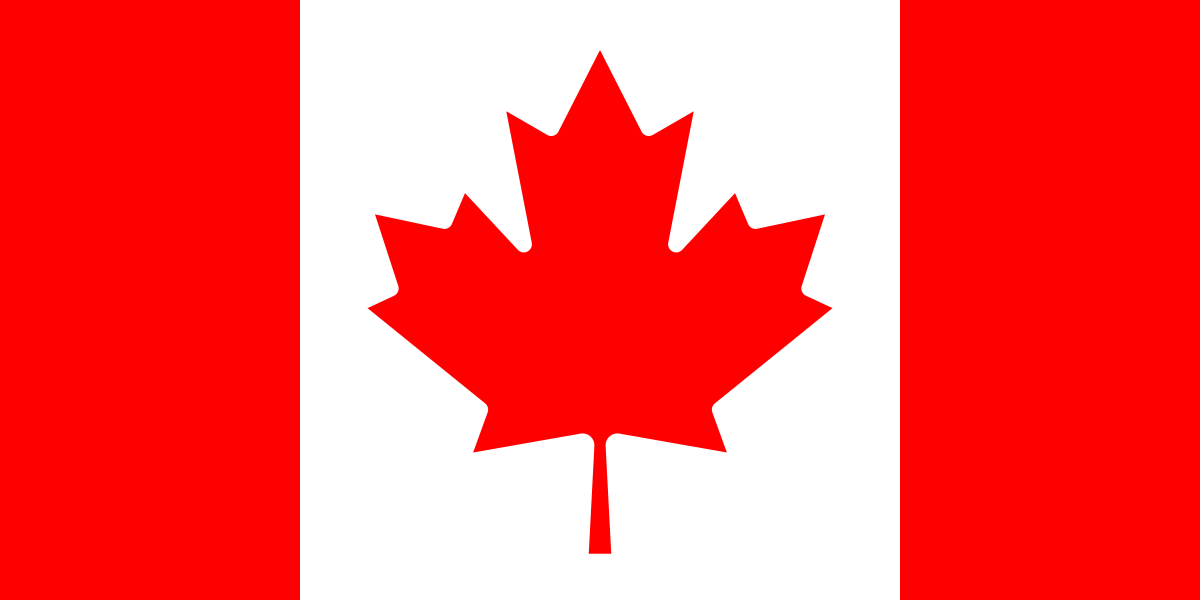
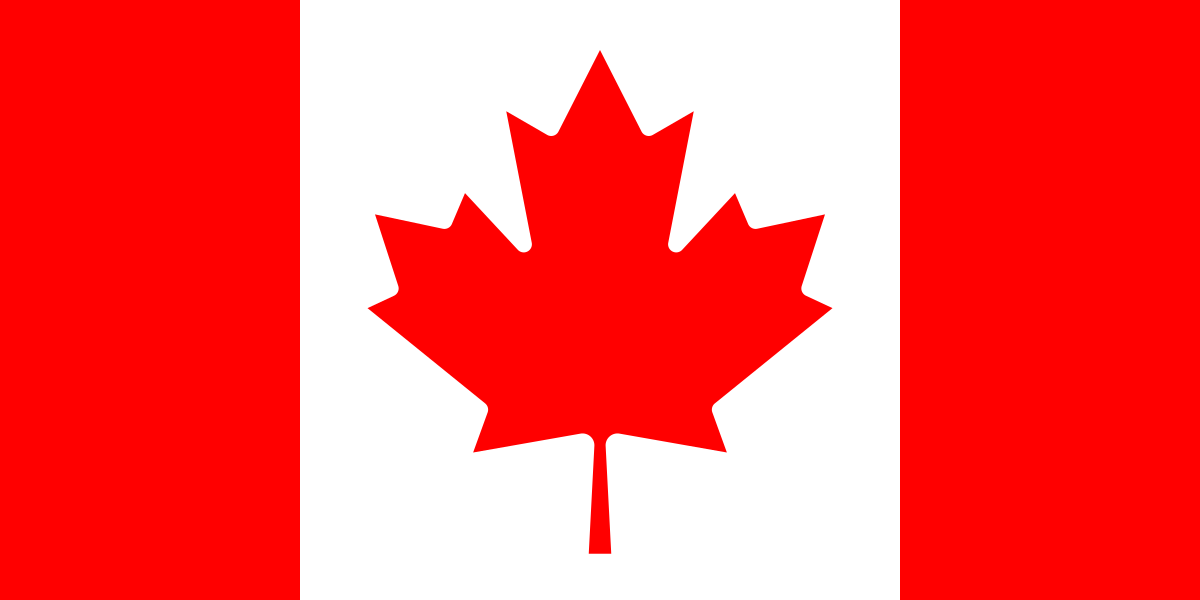
Canada's flag has a red maple leaf on it. There are red bands on each side and white in the middle. The maple leaf has 11 points.

Canada's flag has a single red maple leaf on a white field between red stripes on each side. The maple tree stands for Canada's forests and has long been used as a symbol of Canada. The maple leaf on the flag is designed with 11 points. It was chosen as the present flag through a public contest in 1965. With its simple, easy-to-recognize design, it is loved around the world.

Sources