World Geography Atlas › South America › South America

Argentina

Argentina

The country of tango and soccer · Patagonia.

Capital Buenos AiresPopulation About 46 millionArea 2,780,400 km²Language Spanish
Map

Reading the land

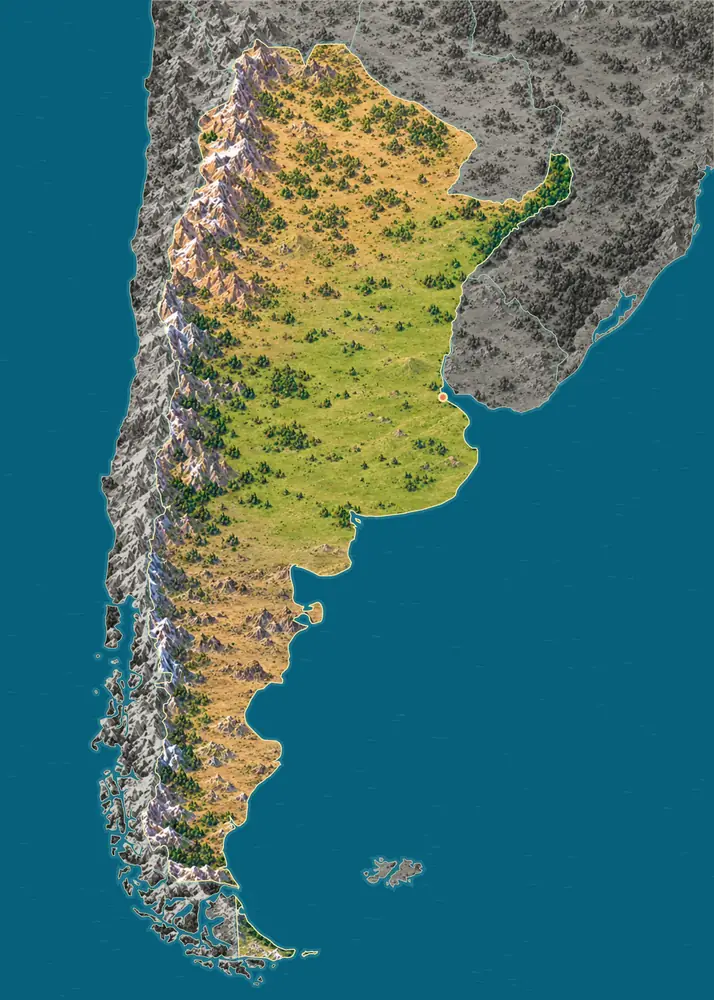
Illustrated map of Argentina
Illustrated map: yenalab. Country outlines: Natural Earth (public domain).

The high Andes run along the west of Argentina. In the middle, wide flat grasslands spread out. The south is dry, windy land.

The Andes run along the western border, the wide Pampas plains fill the middle, and the dry Patagonian plateau lies to the south. Iguazú Falls is at the far northeast.

Terrain

The flat Pampas and windy Patagonia

The Pampas in the middle are mostly flat with fertile soil, making large farmlands. Eastern Patagonia in the south is a high, dry plain (a plateau) with little rain and strong winds.

Source: Argentine Ministry of Foreign Affairs, Argentine regions

Water & coast

The horseshoe of Iguazú Falls

Iguazú Falls lies at the far northeast, on the border with Brazil. The river drops about 80 m over basalt cliffs that curve in a half circle about 2,700 m across.

Source: UNESCO, Iguazu National Park

Península Valdés, where whales visit

Península Valdés juts into the Atlantic, joined to the mainland by a narrow strip of land, with calm gulfs on either side. More than 1,500 southern right whales come here each year to breed.

Source: UNESCO, Península Valdés

Geology

Rocks from the dawn of the dinosaurs

At Ischigualasto and Talampaya in the northwest, rocks from the Triassic period, about 245 to 208 million years ago, lie exposed. Their layers hold fossils of early dinosaurs, ancestors of mammals and plants.

Source: UNESCO, Ischigualasto / Talampaya Natural Parks

Collection

Argentina Collection

A city, a heritage site, nature, a plant, culture, food, an animal, a greeting and the flag of Argentina, each drawn as pixel art.

Buenos Aires
City

Buenos Aires

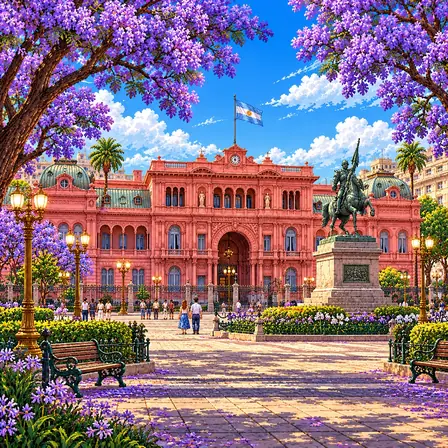
Buenos Aires is the capital of Argentina. Its wide avenues and grand old buildings earned it the nickname "Paris of South America." It is the city where tango dancing was born.

Buenos Aires is the capital of Argentina, with about 16 million people in its greater area. It was re-founded by Spain in 1580, and from the late 19th to the early 20th century it grew explosively as millions of immigrants from Spain, Italy, and Germany settled there. Modeled on Paris, it was built with wide avenues and European-style buildings, earning the name "the Paris of South America." One of the world's widest avenues, 9 de Julio Avenue (about 140 m across), runs through the city center.
Cueva de las Manos
Heritage

Cueva de las Manos

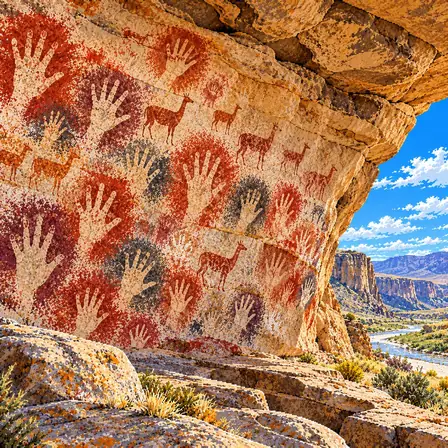
Cueva de las Manos means Cave of the Hands. Long ago, people put hands on the rock and sprayed color around them. Animal paintings are there too.

Cueva de las Manos is an archaeological site with ancient rock paintings in Argentine Patagonia. Prehistoric people placed hands against the rock and sprayed pigment around them, leaving hand-shaped stencils. Overlapping paintings use natural mineral pigments in red, white, black and other colors. Animal images, including guanacos, also tell us about the lives of these communities. The site was inscribed on the UNESCO World Heritage List in 1999 for its preserved rock art.

Patagonia
Nature

Patagonia

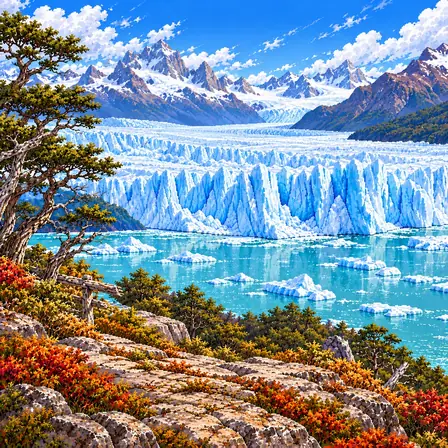
Patagonia is a huge land in southern Argentina. It has sharp rocky peaks and giant glaciers of ice. Wild animals such as pumas live there.

Patagonia is a vast natural region in southern Argentina. It is famous for the granite peak of Mount Fitz Roy and the Patagonian ice field, the third largest in the world. Because of global warming, the glaciers are retreating quickly. It was the traditional land of the Indigenous Tehuelche people of South America, and wild animals such as hoofed animals and pumas live there.

Iguazu Falls
Nature

Iguazu Falls

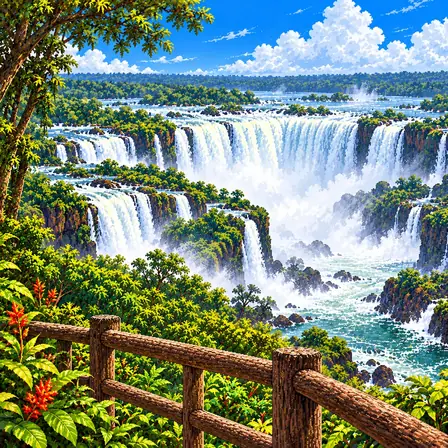
Iguazú Falls is a huge group of 275 waterfalls. It lies between Argentina and Brazil. The biggest fall is called the Devil's Throat.

Iguazu Falls, on the border of Argentina and Brazil, is the largest group of waterfalls in the world. The river wore down a basalt cliff formed by lava flows about 130 million years ago, spreading 275 waterfalls across 2.7 km. At its center is the "Devil's Throat," with a drop of up to 82 m. The Indigenous Guaraní people have seen these falls as a sacred place for thousands of years. It is a UNESCO World Natural Heritage site in both countries.

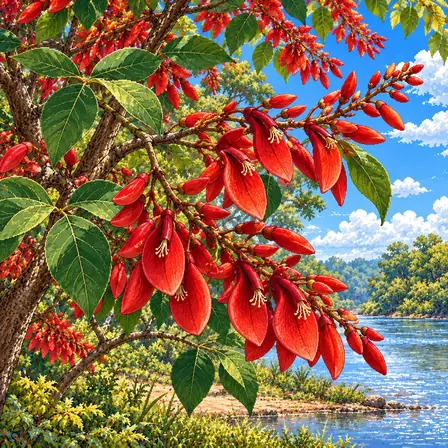
Ceibo
Plants

Ceibo

The ceibo is a tree that grows by rivers. Bunches of bright red flowers bloom at the tips of its branches. It appears in old Argentine stories.

The ceibo is a tree you can see by the rivers and wetlands of Argentina and Uruguay. Its red flowers bloom in clusters at the branch tips, standing out even from far away. In Argentine folk legend it is told as a flower that stands for the courage and love of Anahí, a Guaraní Indigenous woman. It is a tree that goes well with a warm climate and riverside scenery.

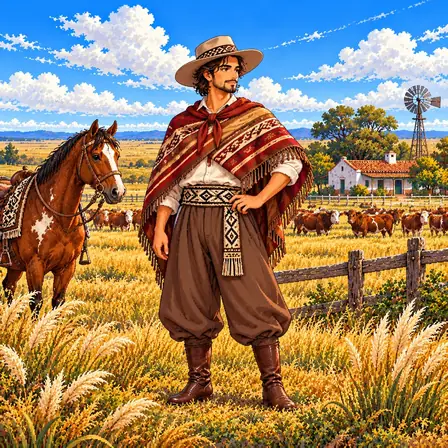
Gaucho & Traditional Dress
Culture

Gaucho & Traditional Dress

Gauchos are cowboys who rode horses and herded cattle on the wide grasslands. Their poncho is a cloak by day and a blanket by night. They still show off their riding skills at festivals.

The gaucho is a herder who has lived driving cattle on horseback on Argentina's Pampas grasslands. The traditional outfit is made of a brimmed hat, a poncho worn over the shoulders, and wide trousers called bombachas. The poncho is a must for grassland life - a cloak by day and a blanket by night. The Pampas where gauchos work is a wide grassland more than three times the size of the Korean peninsula. Even today gauchos show off horse-riding and lasso-throwing skills at traditional festivals.

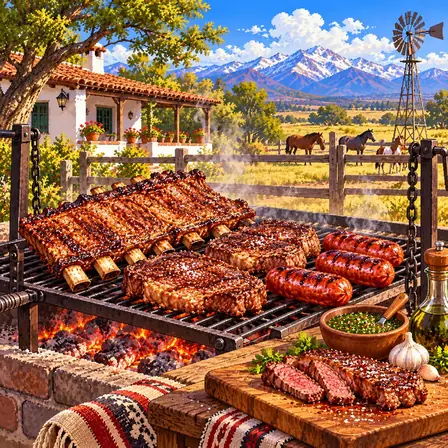
Asado
Food

Asado

Asado is beef slowly grilled over coals. It is seasoned only with salt to bring out the taste of the meat. On weekends, family and friends gather to grill it together.

Asado is the Argentine barbecue, where beef is grilled slowly over charcoal or a wood fire. It carries on from the way gauchos grilled meat on the Pampas grasslands. Ribs, sausage, and other cuts are placed on a big grill called a parrilla and cooked slowly for one or two hours, seasoned only with salt to bring out the meat's own flavor. It is eaten with chimichurri, a sauce of parsley and garlic. Every weekend families and friends gather to grill asado, and it is one of the countries that eat the most beef per person in the world.

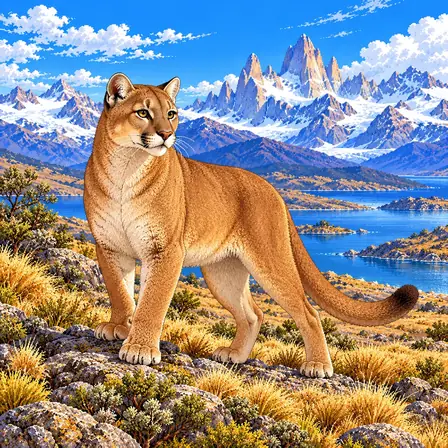
Puma
Animals

Puma

The puma is a large wild cat with sandy fur. It lives across a huge area, from Canada to the tip of South America. It can leap 5 m straight up.

The puma is a large member of the cat family with a slim body and sand-colored fur. From Canada to the southern tip of Argentina, it lives across the widest area of any wild land mammal in the Americas. In Argentina it hunts animals like guanacos on the rocky mountains and grasslands of Patagonia. Big as it is, it cannot roar and instead purrs like a cat. With strong hind legs, it can leap up to 5 m straight up from a standstill.

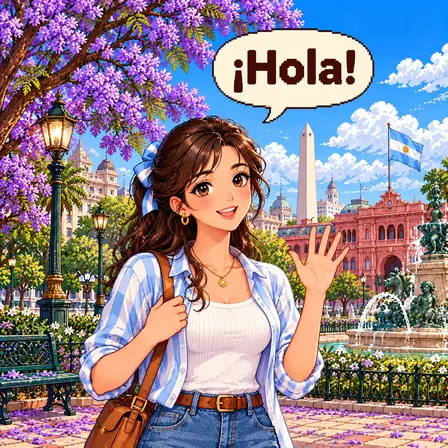
Hola
Greeting

Hola

¡Hola! means "hello" in Spanish. People in Argentina speak with a sing-song rise and fall. They call to a friend by saying "che!"

"¡Hola!" is a Spanish greeting, read "OH-lah." Argentine Spanish has a singsong rise-and-fall accent, from the influence of immigrants from Italy. It also has a special way of speaking called voseo, using "vos" instead of "tú" for "you." To call a friend, people say "che!," used so often that it became a nickname for Argentines. Spanish is an official language in about 20 countries, including Spain and many in Latin America, but the way of speaking differs a little from country to country.

Argentina's Flag
Flag

Argentina's Flag

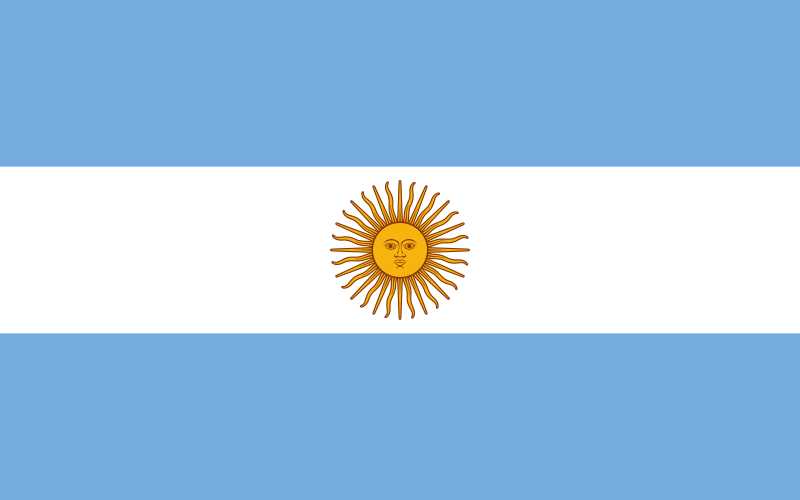
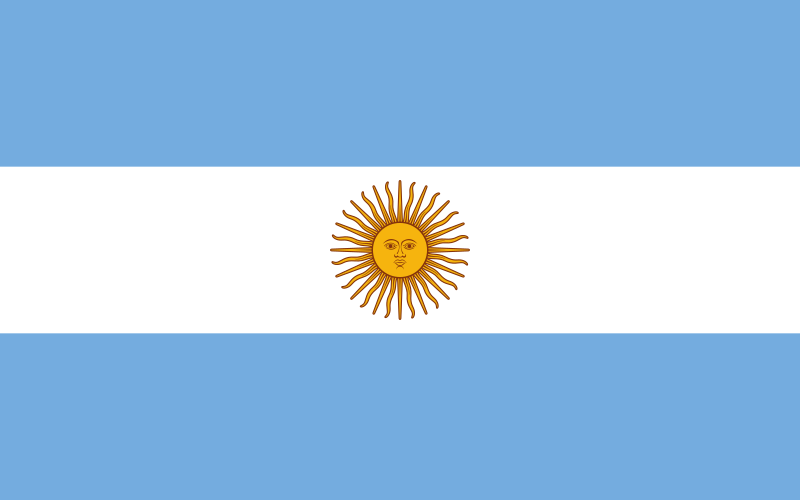
Argentina's flag has three stripes: light blue, white and light blue. In the middle is a golden sun with a face. It is called the Sun of May.

Argentina's flag is made of three level stripes - light blue, white, and light blue. On the middle white stripe is a golden sun with a human face, the "Sun of May." It is said to remember a story that the sun broke through the clouds on the day in May 1810 when the country made a fresh start. The sun's rays, taking turns between straight and wavy, number 32 in all. The light blue and white stripes began to be used in 1812.